Textile industry urges govt to refocus support
The government aims to revive the textile industry by facilitating financing from local banks for machinery upgrades, while considering tax incentives and establishing a special zone to integrate upstream and downstream production.
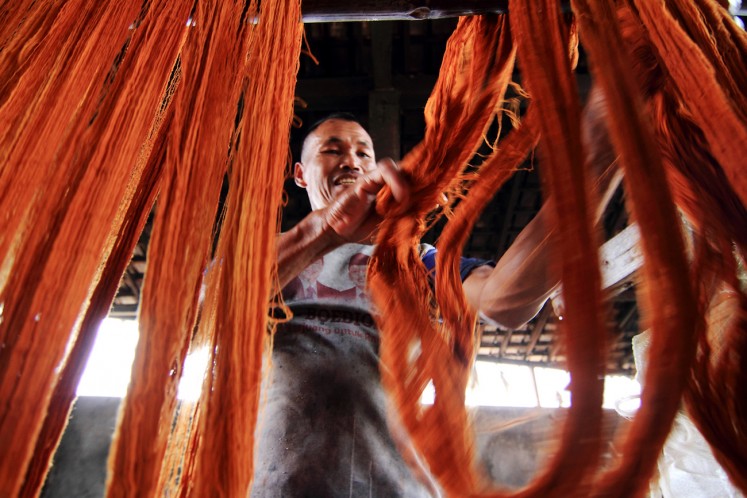
The industry that produces textiles is seeking the government's attention to reevaluate its support strategies. The government has set its sights on boosting the sector by making it easier for local banks to fund machinery upgrades, exploring tax incentives, and creating a special zone that would bring together different stages of production.
Industry experts have cautioned that this multi-faceted approach to revitalizing the textile industry may struggle to succeed if it fails to address the core problems, such as outdated machinery and insufficient investment in the upstream production processes. Moreover, they have cautioned against the government's plan to create a new state-owned textile company, arguing that it could face fierce competition from existing producers who are already grappling with survival challenges in the face of a flood of cheap imported garments.
Rosan Roeslani, the CEO of the state asset fund Danantara, clarified the government's plan to provide financial assistance to textile companies, which includes offering tax breaks. At the Presidential Palace on September 22, Rosan mentioned that the government would also look into enhancing existing textile companies by upgrading their machinery and technology.
Rosan reiterated that the primary focus would be on initiatives that yield substantial job creation while ensuring the investments generate significant returns, as Danantara remains committed to making financially sound choices. Coordinating Economy Minister Airlangga Hartarto revealed that the government is also revisiting technical rules governing imports to simplify the access to raw materials and tackle the issue of imports of used clothing that compete with local producers.
Additionally, the government is reviewing value-added tax arrangements for export-oriented textile and garment firms, along with contract employment policies to better manage seasonal orders.
Written by urgent.news from The Jakarta Post's reporting — not their text. Machine-written — may contain errors; check the original before relying on it.