Politik ada sempadan, akhlak dakwah tiada garisan penamat
Perbezaan politik tidak seharusnya mengatasi adab dan nilai kemanusiaan lebih-lebih lagi ketika berdepan kematian.
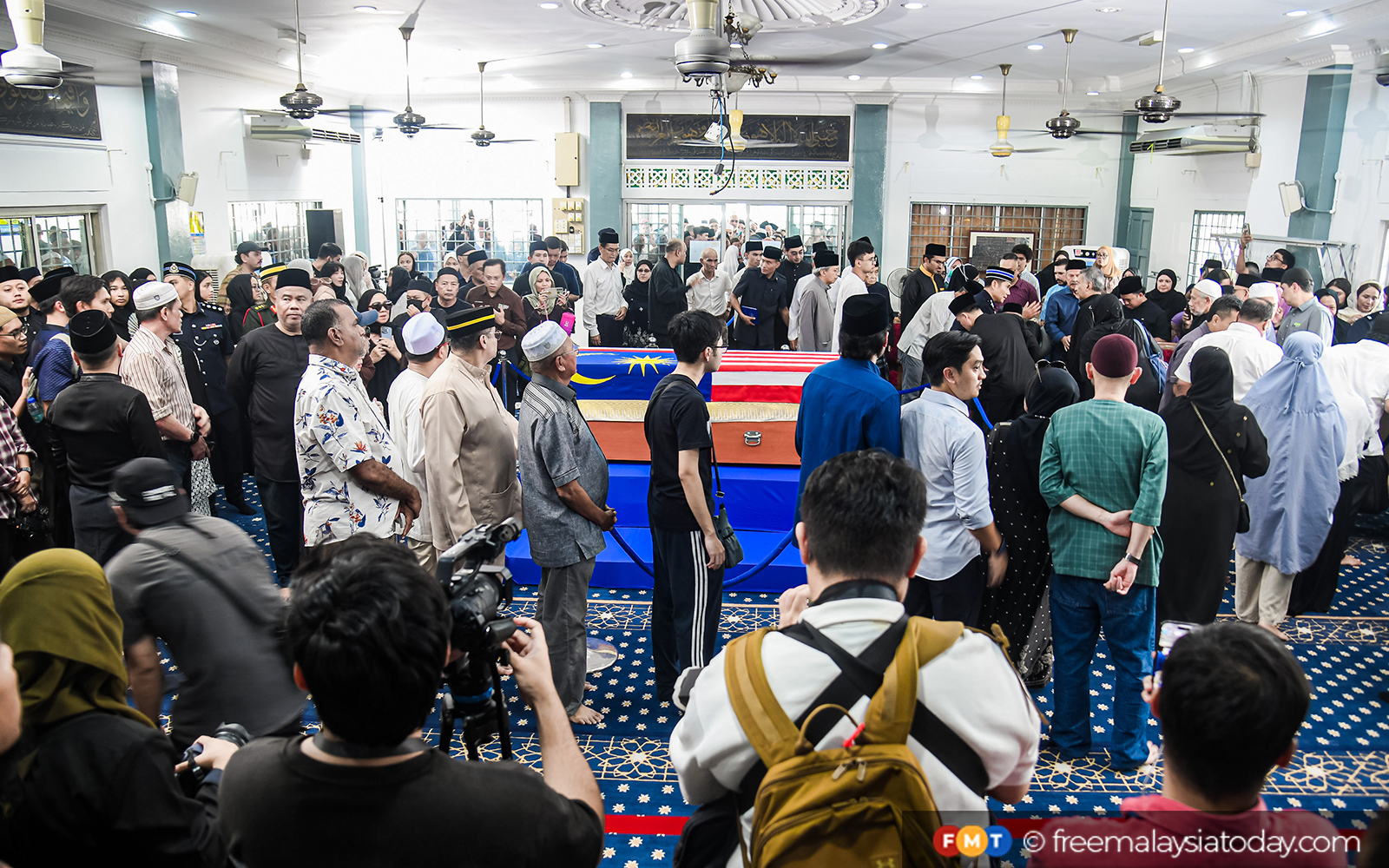
Kematian adalah penyatuan, bukannya pemisahan. It is unfortunate when a sworn witness, entrusted with spreading a message of peace, chooses to harbor ill will towards the presence of a head of ceremony at the final honorific gathering, Dr Hasmah Ali. This act of labeling such a respectful visit as a new attempt to display goodwill not only disregards the principle of shared responsibility (fardu kifayah), but also violates the moral guidelines outlined in Surah al-Hujurat verse 11, which forbids demeaning others' practices.
Politics has its boundaries, and that boundary ends when the hour of death arrives. In the fervor of domestic political temperatures, the line separating ideological differences and religious obligations can appear increasingly blurred. As a witness entrusted with delivering religious discourse, a crucial question must be pondered: Is it permissible for a messenger of faith to cast shadows on foes and question the act of journeying to the graves of the deceased due to political differences?
An examination of authentic Islamic guidance on da'wah reveals the answer is unequivocal. Casting shadows on foes, whether in political or personal realms, is a severely forbidden act. Conversely, the practice of paying respect to a deceased person, regardless of whether they were a friend or a political adversary, is an act of great commendation and moral virtue.
Speaking out against political enmity in da'wah is not a gray area; it is explicitly prohibited and should never come from the lips of a Muslim, let alone a witness. The primary duty of a da'ee is to invite humanity toward goodness through sincere wisdom and beneficial advice (al-mau'izah al-hasanah), rather than spewing venom upon the stage or social media.
Casting shadows only erects walls of animosity, drives communities away from guidance, and ultimately tarnishes the reputation of Islam itself. Furthermore, Allah SWT clearly prohibits Muslims from mocking, belittling, and insulting others, as stated in Surah al-Hujurat verse 11, demonstrating that Islam highly values harmony within religious discourse.
This principle is reinforced by the words of the Prophet Muhammad (PBUH), as narrated by Al-Tirmidzi: "A believer is not one who loves to mock, belittle, speak obscenely, or has a vile tongue." If disdaining ordinary humans is forbidden, how can the same tongue, used for da'wah, justify slander under the guise of political differences?
Death traverses the boundary of ideologies Amidst the often divisive political climate that separates society, death serves as an absolute reminder that transcends all worldly boundaries. Paying respect to the deceased, whether they were staunch supporters or the most ardent adversaries, embodies the highest manifestation of humanity and brotherhood.
For an Islamic deceased, ziarah (visiting the grave) fulfills the duty of fellow Muslims towards each other. But what about someone who is not a Muslim? Islam has never narrowed the space for benevolence. History records the immense virtue of the Prophet Muhammad's (PBUH) actions in respectfully honoring the grave of a Jewish man, brought before him.
When a companion asked, the Prophet replied with deep conviction: "Is he not also a human being (insan)?" When a political leader or witness attends a prestigious gathering of adversaries, they not only symbolize the aging of the soul, but also become a testament to the mercy capable of softening hardened hearts. When politics builds walls, a grave visitation builds bridges.
Returning politics to personal moral character means discarding the practice of breaking relationships among believers. The time has come for witnesses to champion the flow of political animosity. Stop casting shadows, preserve human connection, especially during times of calamity and death. After all, da'wah is judged by the beauty of its morality, while political partisanship will ultimately be swept away by the sands of time.
Moaz Nair is a contributor to FMT. This article represents the author's opinion and does not necessarily reflect the views of FMT.
Written by urgent.news from Free Malaysia Today's reporting — not their text. Machine-written — may contain errors; check the original before relying on it.
Also reported by 1 other outlet
- Politik ada sempadan, akhlak dakwah tiada garisan penamat freemalaysiatoday.com