HT Morning News Brief September 30: AI gets a new name from Trump; India crush China in archery
Your daily briefing is here, covering politics, world affairs, sports and entertainment.

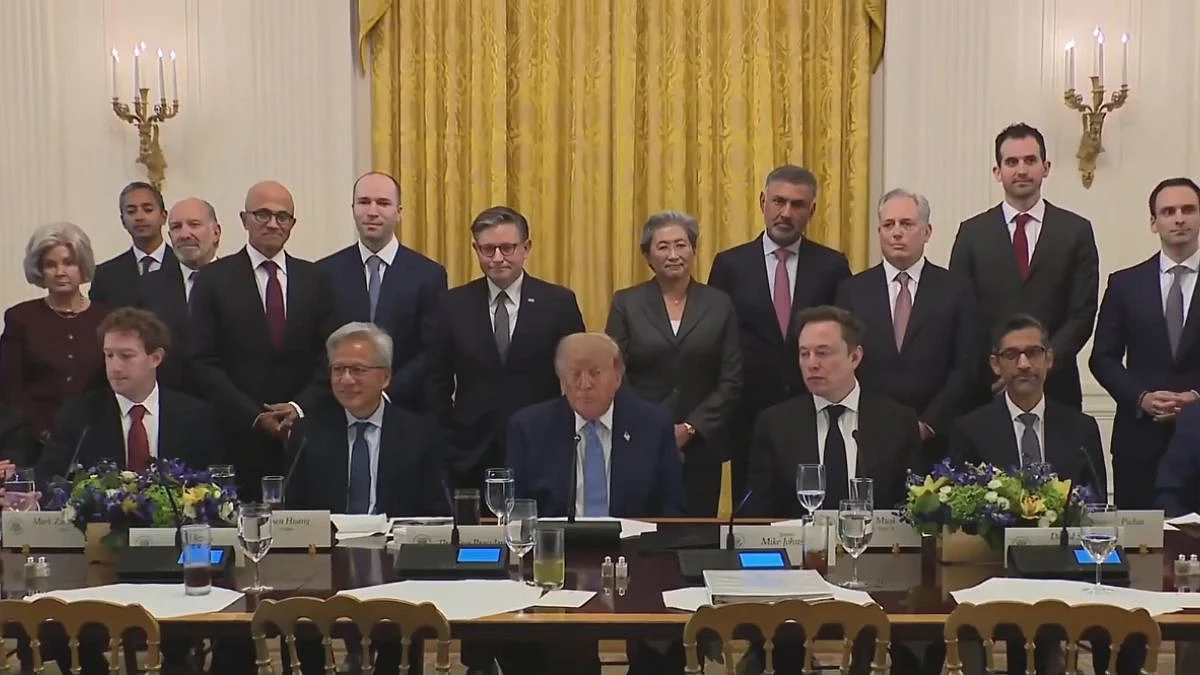
Former US President Donald Trump secured agreement from six major AI corporations to endorse the "White House Accord on Superintelligence," a regulation that lacks binding terms and is unclear in its requirements. The accord, signed by Meta, Google, OpenAI, Anthropic, Nvidia, and XAI, is available on Trump's Truth Social platform.
The joint commitment's headline reads "Joint Commitment on Frontier Responsibilities," and it begins with an acknowledgement that "every company is responsible for developing its own technology safely and in a way that builds trust with customers and the public."
The accord outlines four layers of controls and audits that the White House believes the signatories should establish. These include implementing robust internal controls to monitor models' capabilities and alignment during training and deployment, empowering an internal team to ensure the controls, monitoring, and detection are functioning correctly, partnering with an independent external auditor to carry out assessments, and designating an independent committee of the board of directors to oversee the process.
However, the accord fails to provide a definition of "robust" internal controls, does not specify the frequency of external auditors' inspections, and lacks details regarding the evaluation frequency. It does, though, state that the participating companies "will meet regularly to establish standards and best practices to improve the safety of their systems."
The accord suggests that the US government might eventually codify these steps into laws or regulations. For now, all parties involved "believe that implementing these controls and audits is critical to ensuring a safe future for everyone, and each of our companies are committed to doing this."
Trump's decision to sign the executive order to replace "Artificial Intelligence" (AI) with "Super Intelligence" (SI) stems from his belief that the AI industry doesn't require strong regulation. He tasked his Assistant for Science and Technology to work with other agencies on defining SI, which he believes justifies the federal government's involvement despite previous accusations of wastefulness.
Written by urgent.news from The Register Science's reporting — not their text. Machine-written — may contain errors; check the original before relying on it.
This story
This is one outlet's version. Read the fullest account.