FSCA builds AI guardrails as digital regulation expands
The Financial Sector Conduct Authority accelerates AI governance, as it responds to growing digital financial misconduct.
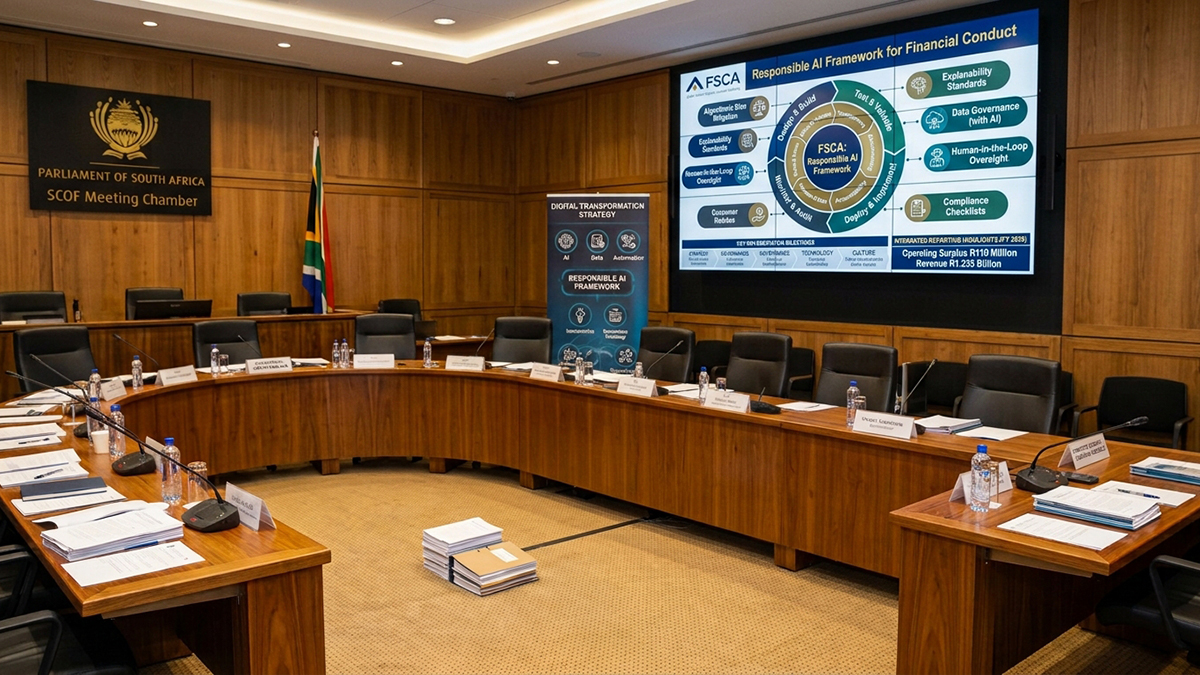
The Financial Sector Conduct Authority (FSCA) is constructing an artificial intelligence (AI) framework as it intensifies a digital transformation initiative aimed at making the regulator more data-driven and automated. This development was outlined in the FSCA's Integrated Report for the financial year ending 31 March 2026, presented by FSCA Commissioner Unathi Kamlana before Parliament's standing committee on finance.
The report highlights a year focused on strengthening the regulatory framework for financial institutions and market integrity, as well as the continuing emphasis on prudent financial management and organizational resilience. For the 2025/26 financial year, the FSCA reported revenue of R1.235 billion and a net surplus of R119 million.
Technology is increasingly seen as part of the FSCA's regulatory infrastructure, with digital transformation identified as one of six critical factors affecting its ability to create and preserve value. The development of the AI framework is part of the regulator's efforts to modernize its operations and supervision of the financial sector.
The FSCA has adopted a digital transformation strategy to become a more digital, data-driven, secure, and innovative organization through increased automation and AI usage to enhance digital services, stakeholder engagement, and business process integration. The AI framework is being developed to provide guidelines and approaches for the responsible development and deployment of AI.
The regulator faces a dual challenge: modernizing its operations while ensuring the security, reliability, and proper governance of the technology that underpins its supervision. The FSCA's risk disclosures identify digitalization as a specific risk due to its increasing reliance on technology, digital platforms, and emerging technologies, including AI.
The growing use of digital channels has increased the FSCA's exposure to technology-enabled financial misconduct, making digital monitoring, data analysis, and timely regulatory intervention crucial for consumer protection. The regulator's approach to supervision must adapt to a financial sector increasingly characterized by digital assets and technology-based business models.
During the reporting period, the FSCA expanded its oversight of crypto asset service providers (CASPs), conducting more inspections and establishing a Crypto Asset Supervisory Engagement Forum to enhance information sharing and engagement between regulators and the CASP industry.
Written by urgent.news from ITWeb's reporting — not their text. Machine-written — may contain errors; check the original before relying on it.