Explainer: What is El Niño?
Every few years, a disturbance in the Pacific Ocean is amplified by feedback mechanisms in the atmosphere, unleashing heat and extreme weather around the globe
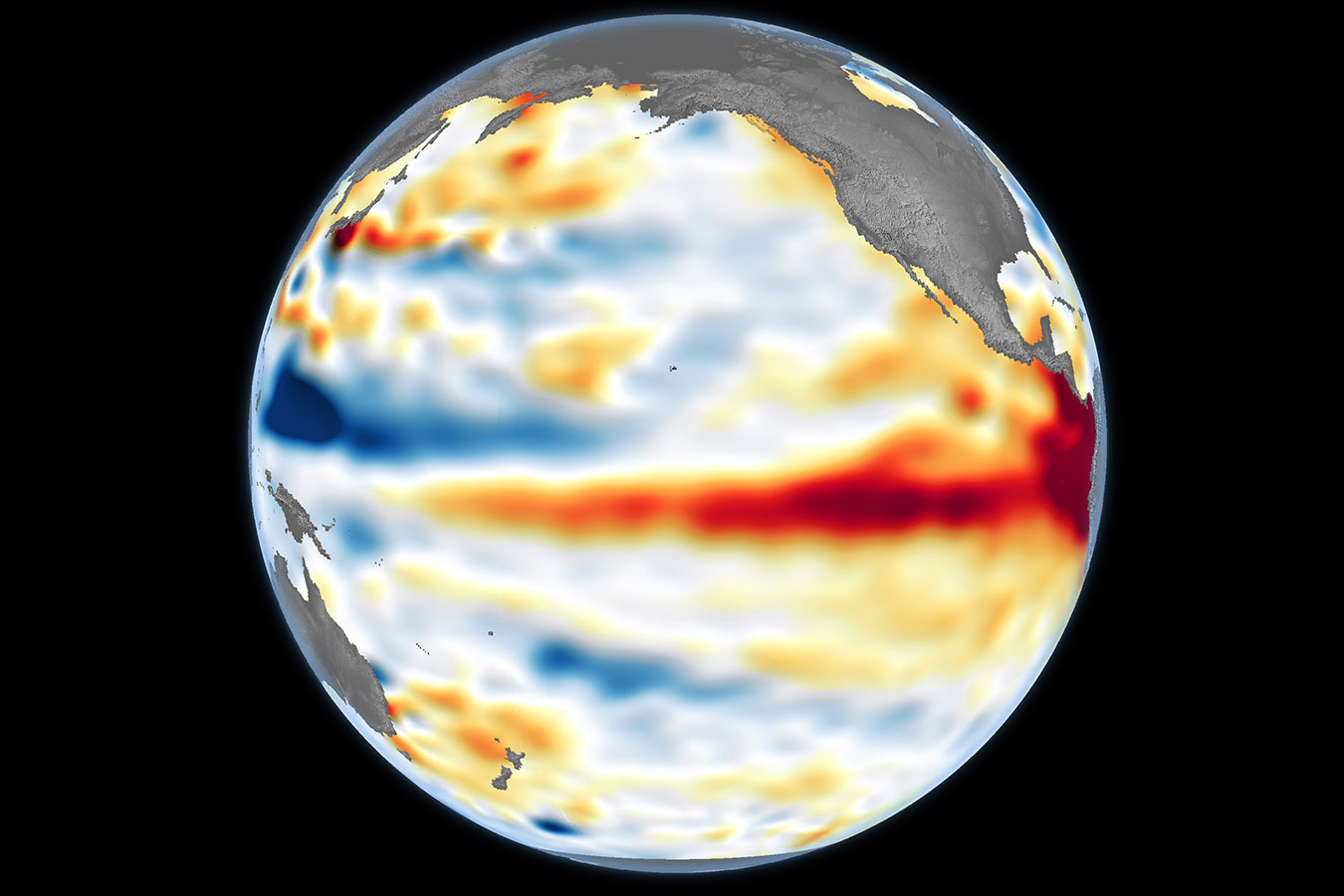
El Niño is a climate phenomenon triggered by the warming of sea surface temperatures in the central and eastern Pacific Ocean, typically occurring every two to seven years. The term "El Niño" originates from Peruvian fishermen's observations in the 1600s of warmer waters and reduced anchovy catches around Christmastime. In the early 20th century, physicist Gilbert Walker noted the periodic reversal of atmospheric pressure patterns between the western and eastern Pacific, but it wasn't until 1969 that meteorologist Jacob Bjerknes established the connection between the two.
Under normal conditions, the sun's heat and Earth's spin drive east-to-west trade winds around the tropics, pushing warm water into a "warm pool" near Indonesia. As this pool expands, it builds up energy, preparing for an El Niño event. Every few years, natural disturbances release this energy, causing bursts of westerly winds that slow the easterly trade winds and allow swells of warm water, known as Kelvin waves, to roll across the Pacific.
This leads to a self-reinforcing cycle called the Bjerknes feedback. The warm water suppresses the upwelling of cold, nutrient-rich deep water off Peru, further warming the surface. The extra heat in the atmosphere reinforces the trade winds' slowdown, allowing more warm water to flow into the eastern Pacific. This ultimately releases trillions of joules of heat energy into the atmosphere, contributing to global warming.
The resulting shifts in atmospheric patterns cause severe weather changes worldwide. Drought and wildfires strike regions like Indonesia and the Amazon, while eastern Africa experiences increased rainfall and flooding. In the southern United States, stronger jet streams and more storms accompany the warming waters, while the UK may also experience more storms and rain in certain situations.
Consequently, El Niño is a significant event, influencing local and global weather patterns, making it a critical factor in the climate crisis.
Written by urgent.news from New Scientist's reporting — not their text. Machine-written — may contain errors; check the original before relying on it.