First petals installed in the ATLAS Inner Tracker Strips Endcap
Ongoing upgrades on the road to HiLumi (Image: ATLAS) First petals installed in the ATLAS Inner Tracker Strips Endcap 28 July 2026 A major milestone has been reached in the construction of the ATLAS Inner Tracker (ITk), with the installation of the first nine ‘petals’ of the ITk Strips Endcap at DESY in Germany. Installation began on 14 September, and on 28 September the ninth petal was…
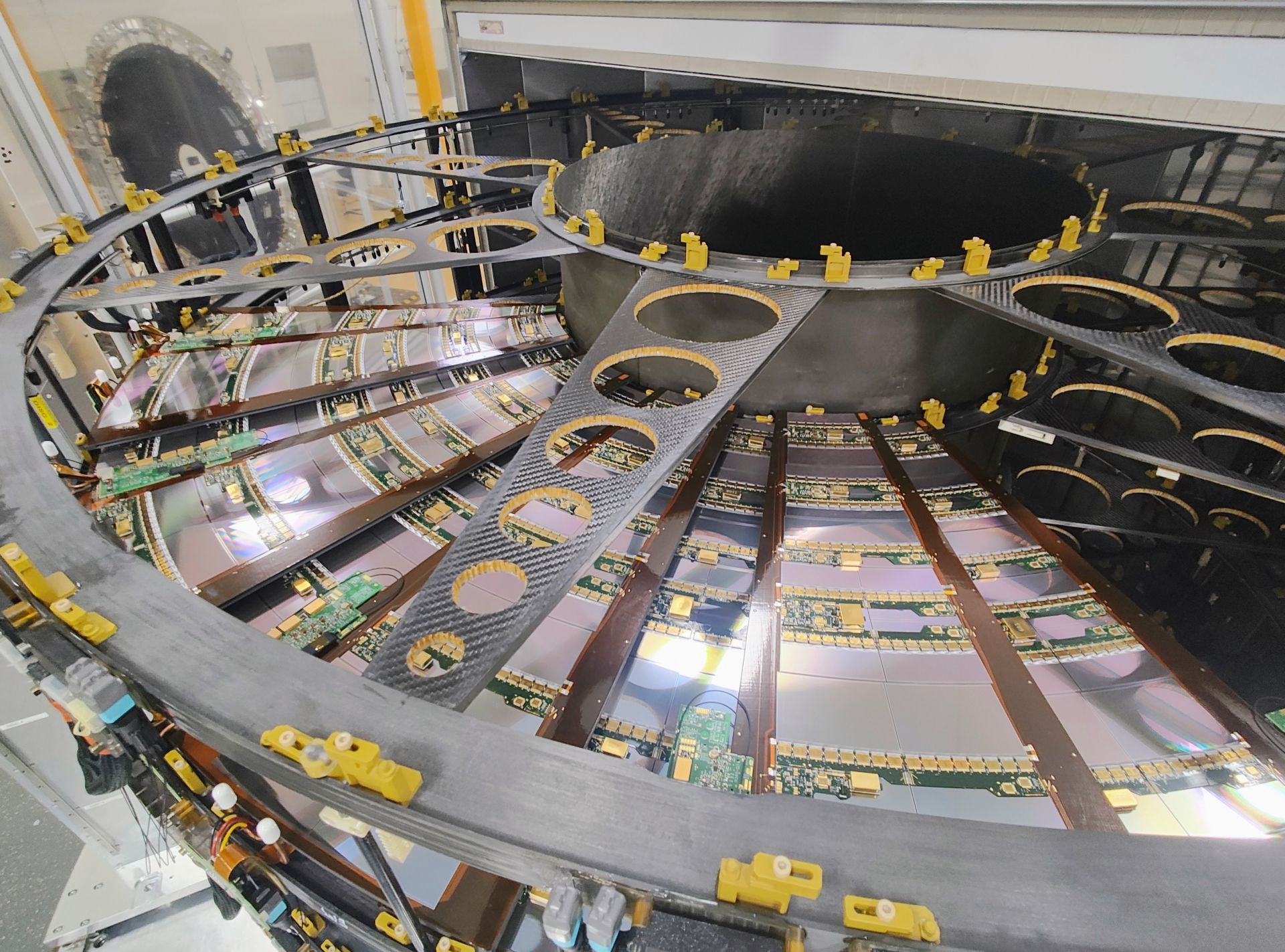
Construction of the ATLAS Inner Tracker (ITk) reached a significant milestone as the first nine 'petals' of the ITk Strips Endcap were installed at DESY in Germany. The installation began on September 14th and concluded with the successful insertion of the ninth petal on September 28th, signaling the start of the full-scale integration phase.
Each petal is a wedge-shaped structure, measuring approximately 60 cm in length. It houses six silicon detector modules on each side. The petal is a lightweight assembly that also integrates various electronic, cooling, and other essential infrastructure elements.
The Strips subsystem, a crucial component of the ITk detector, will comprise two endcaps. Each endcap will be adorned with 192 petals arranged across six disks. The initial nine petals, assembled at DESY, are now in place, with the remaining 184 petals set to be integrated later.
The second endcap is currently being assembled at Nikhef in the Netherlands, where a further 192 petals will be installed. As petal by petal, the endcaps are beginning to take shape, drawing the ITk closer to its key role within ATLAS. This role will be pivotal in exploring the physics of the High-Luminosity Large Hadron Collider (HiLumi LHC).
Written by urgent.news from CERN's reporting — not their text. Machine-written — may contain errors; check the original before relying on it.