Closer To Nature, Further From Loneliness, IIM Indore Study Finds Among Students Living Away From Home
Indore (Madhya Pradesh): A study by the Indian Institute of Management Indore has found that a stronger connection with nature is associated with lower levels of loneliness among university students living away from their families. The study, titled “Impact of Nature Connectedness on Loneliness Among University Students Living Away from Home: The Mediating Roles of Meaningfulness, Peace of Mind,…
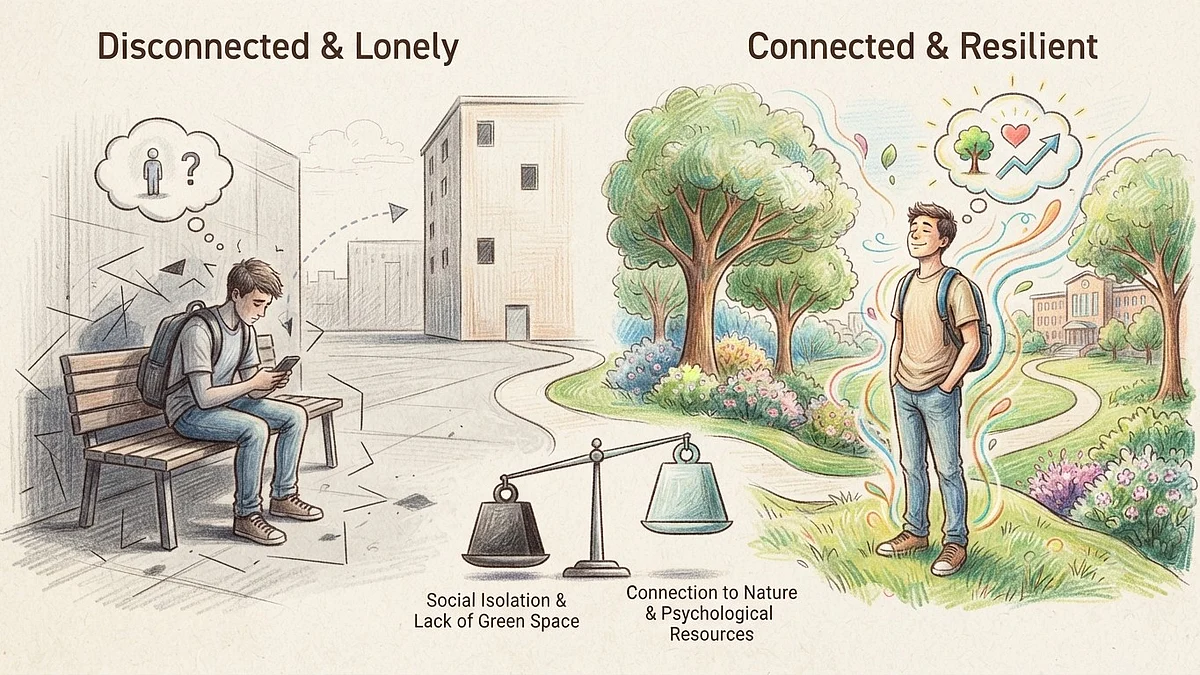
Indore-based researchers have discovered that students living away from home at Indian universities can reduce feelings of loneliness by developing a deeper connection with nature. The study, titled “Impact of Nature Connectedness on Loneliness Among University Students Living Away from Home: The Mediating Roles of Meaningfulness, Peace of Mind, and Resilience,” found a significant negative association between emotional and cognitive bonds with the natural world and loneliness.
Students who reported a stronger bond with nature also tended to report lower levels of loneliness. Moreover, the emotional and psychological resources of meaningfulness, peace of mind, and resilience were positively linked to nature connection and negatively correlated with loneliness. These three factors, respectively, acted as mediators in the relationship between nature connection and loneliness.
However, resilience alone did not emerge as a significant factor in reducing loneliness. The research also highlighted that while most students had access to urban green spaces, only a third of them visited these areas regularly. Over 80% of participants lived alone, indicating the unique challenges faced by students away from their families.
The findings suggest that cities and educational institutions could promote accessible parks, green corridors, and nature-based programs to help students navigate the social and emotional challenges of studying away from home.
Written by urgent.news from Free Press Journal's reporting — not their text. Machine-written — may contain errors; check the original before relying on it.