AIIB plans to double financing by 2030. Can it bridge Asia’s infrastructure gap?
The Asian Infrastructure Investment Bank (AIIB) plans to double its annual financing to about US$20 billion by 2030 as the Beijing-headquartered multilateral lender enters its second decade, its president said on Monday. Announcing the target at the opening of the bank’s 11th annual meeting in Doha, Qatar, AIIB President Zou Jiayi said member economies had voiced a “remarkably consistent” need…
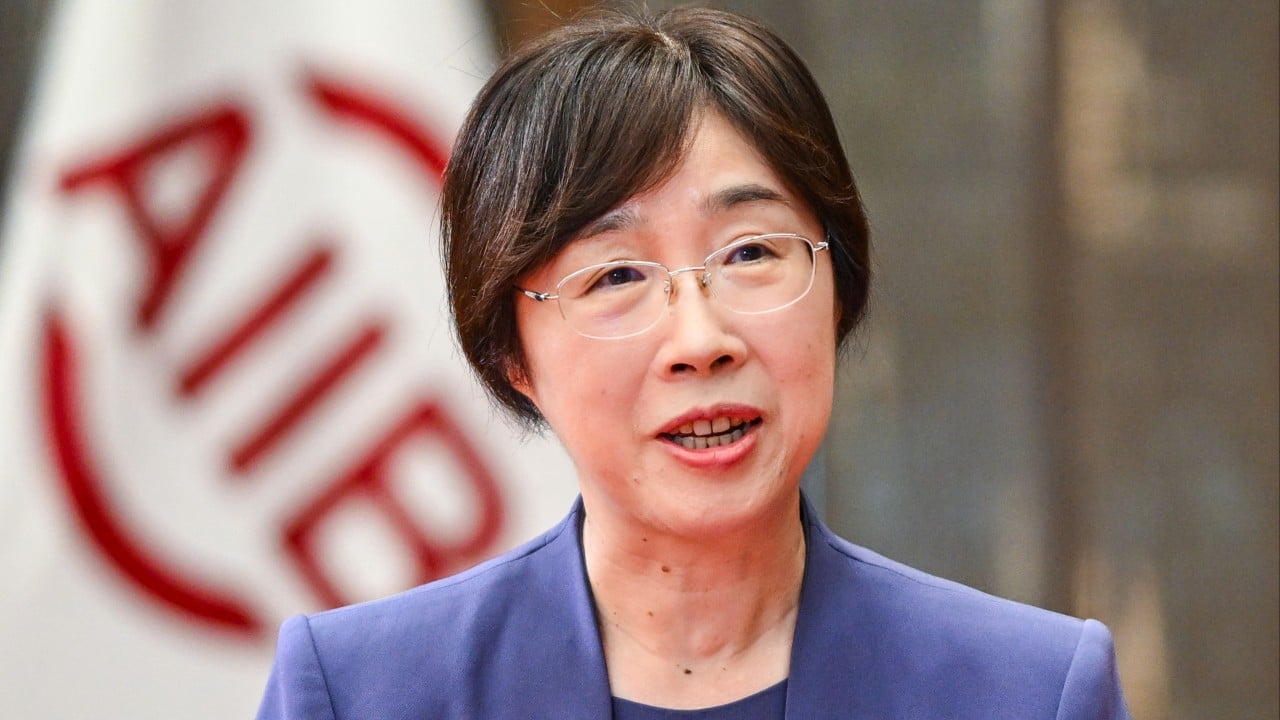
The Asian Infrastructure Investment Bank (AIIB) aims to double its annual financing to around US$20 billion by 2030, as it enters its second decade, according to its president Zou Jiayi. Speaking at the bank’s 11th annual meeting in Doha, Qatar, Zou stated that member economies consistently expressed a strong demand for additional project funding.
She had visited about 30 member countries since assuming office, highlighting the growing perception of modern infrastructure as a catalyst for economic transformation rather than merely a collection of physical assets.
AIIB President Zou outlined a framework centered around the "triple I's" of impact, innovation, and integrity to steer the bank’s next phase. This would involve prioritizing project quality, climate action, adapting financial instruments and business models, and upholding high banking standards. However, she acknowledged that addressing Asia’s substantial infrastructure funding shortfall would demand resources beyond what any single institution or government could provide.
Zou highlighted the need to attract more private investment and deepen partnerships with multilateral and bilateral institutions to fund projects collectively.
Established in 2016, the AIIB has sought to foster sustainable development in Asia and globally. Initially viewed as a potential alternative to Western-dominated financial institutions like the World Bank and the Asian Development Bank, the bank expanded its membership to 111 economies and approved over US$79 billion in financing for 400 projects during its first decade, while maintaining AAA credit ratings.
Looking ahead, Zou noted that traditional sectors such as roads, railways, ports, and airports are becoming increasingly integrated with digital technologies and artificial intelligence. She emphasized the importance of universal access to AI capabilities, stating that technology should benefit everyone and not just a select few.
Zou also stressed the urgent need to incorporate climate adaptation measures into infrastructure projects, citing recent deadly floods in Nepal as a reminder of the critical importance of preparing for climate impacts alongside emission reductions. Despite the diverse geopolitical perspectives among member countries, Zou reaffirmed the bank’s commitment to consensus-building and dialogue, describing multilateralism as "the infrastructure for building trust."
She reiterated that development must regain its top priority on the global agenda, achievable through cooperation.
Written by urgent.news from South China Morning Post's reporting — not their text. Machine-written — may contain errors; check the original before relying on it.