The US-China relationship has stabilised but on Beijing’s terms
For all the solemnity of the B-2 flyover with four F‑22 Raptors and a silent South Lawn drill, the real business of US President Donald Trump’s meeting with Chinese President Xi Jinping last week was narrower than the choreography. The Chinese readout reiterated the concept that should frame the relationship’s next phase: constructive strategic stability – cooperation as the primary track,…
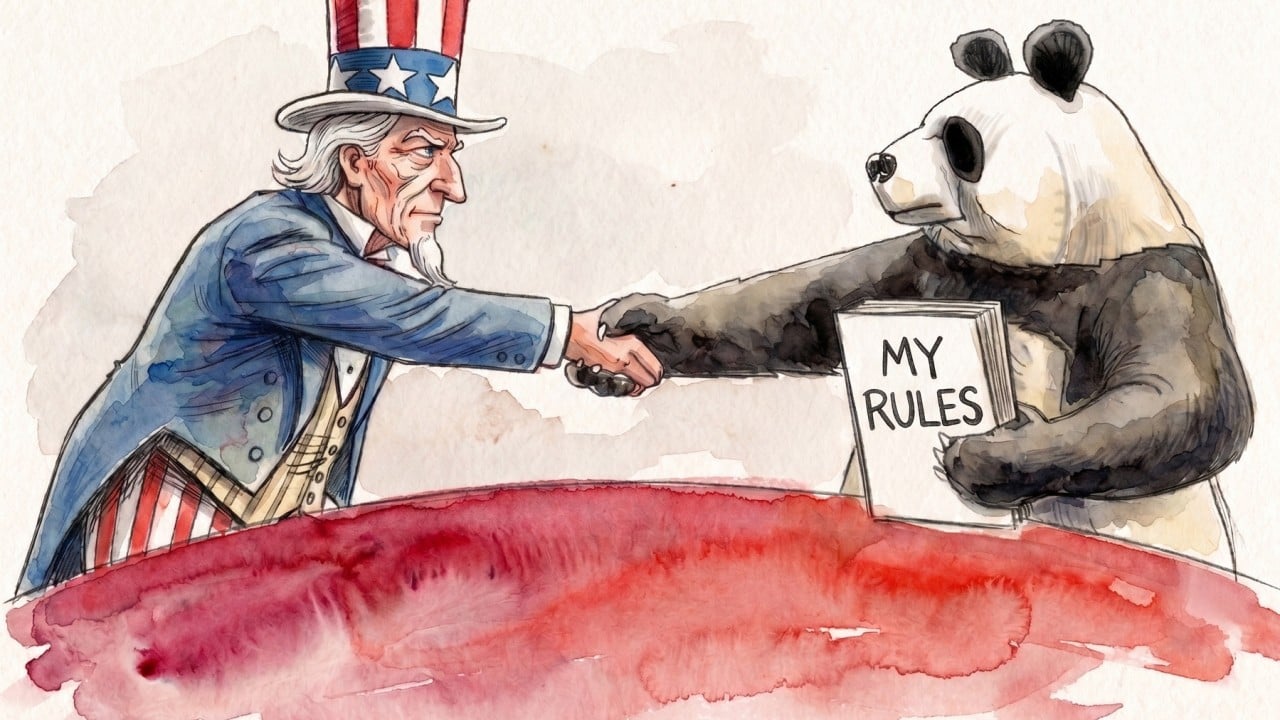
The US-China relationship has stabilized following President Donald Trump's meeting with Chinese President Xi Jinping, but on Beijing's terms. The Chinese readout emphasized "constructive strategic stability," cooperation as the primary track, controlled competition, difference management, and conflict avoidance. This managed rivalry allows China to set boundaries, while Washington accepts stabilisation over confrontation.
Trump called it a "great meeting" and even revived the "friendship" trope, while Xi focused on a doctrinal approach. He asserted that the "Thucydides Trap" – the risk of conflict between a rising power and a hegemon – could be overcome, and competition should be a "race of catching up" rather than a "wrestle in which one either wins or loses."
China's control over rare earths, refining, and magnet output gave Beijing leverage, explaining why Trump did not make new tariff threats. The AI sector showcased a significant gap, with US tech executives attending but no Chinese AI company representatives. Xi pressed Trump to oppose Taiwanese independence and manage the issue cautiously, while Washington kept the support for Taiwan at $11.1 billion while holding off on a larger $14 billion sale.
On Iran, discussions were symbolic, with no breakthrough or agreement on navigation. Chinese red decorations, historical props, and diplomatic visits aimed to provide a sense of inevitability in the relationship, keeping the focus on managed rivalry rather than a grand bargain. Critics noted the pageantry but questioned whether Washington could live with a settlement not designed by them.
Written by urgent.news from South China Morning Post's reporting — not their text. Machine-written — may contain errors; check the original before relying on it.