Traditional Korean wrapping cloth 'bojagi' wins over younger generations
A noticeable change has emerged among the gift sets flooding the market around Chuseok holidays: a sharp increase in traditional "bojagi" wrapping. From trendy coffee brands and fruit-filled rice cakes popular among the MZ Generation — a term encompassing Millennials and Generation Z — to renowned dessert shops, a growing range of fashionable products is being wrapped in bojagi, a traditional…
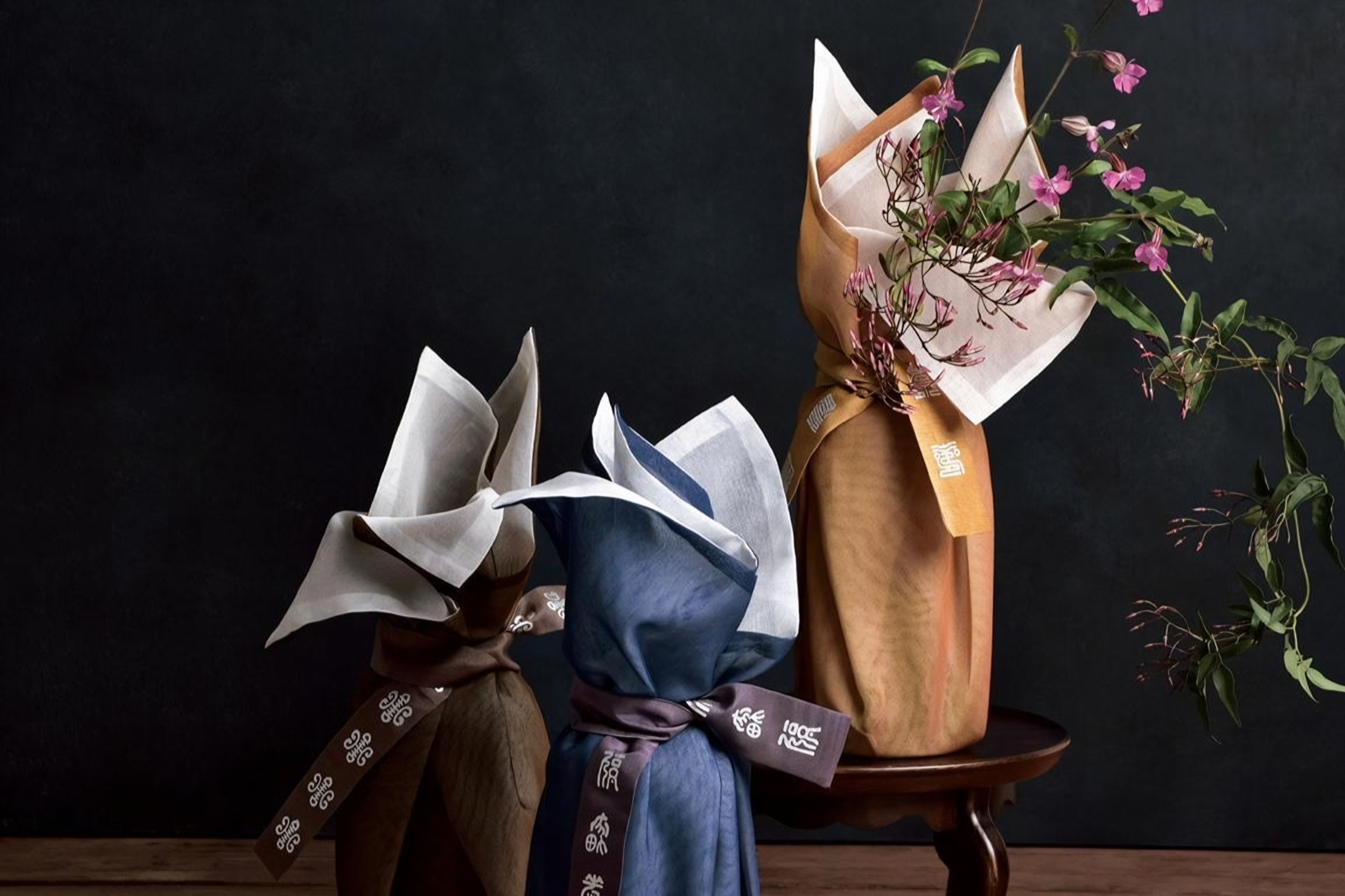
A noteworthy shift has been observed in the gift sets proliferating the market during the Chuseok holidays: a significant surge in traditional bojagi wrapping. This trend is evident across various fashion-forward brands, from trendy coffee establishments to fruit-filled rice cakes popular among the MZ Generation — a term encompassing Millennials and Generation Z — to esteemed dessert shops. A diverse array of fashionable products is now being enveloped in bojagi, a traditional Korean wrapping cloth.
The outdated appearance of the gold-colored satin cloth that once supplemented holiday gift sets has been replaced by an assortment of materials and modern color schemes, effectively dispelling the fabric's outdated image. Bojagi, which translates to a square piece of fabric used for wrapping, storing, or transporting items, was once a staple household item when bags, plastic packaging, and cardboard boxes were scarce.
However, as Korea underwent modernization, it appeared poised to become a relic of the past. It had largely become synonymous with formal events such as weddings and holiday gift-giving, owing to its symbolism of conveying good fortune.
The revival of bojagi wrapping has been primarily attributed to its adaptation to contemporary tastes and preferences.
Written by urgent.news from The Korea Times's reporting — not their text. Machine-written — may contain errors; check the original before relying on it.