Supreme Court rejects a Trump-backed Missouri congressional map for the third time
JEFFERSON CITY, Mo. (AP) — The Supreme Court on Friday dismissed an effort to utilize a new Missouri congressional map supported by former President Donald Trump, concluding a prolonged legal battle as absentee voting is currently taking place during the midterm elections. This decision effectively brings an end to the ongoing dispute.
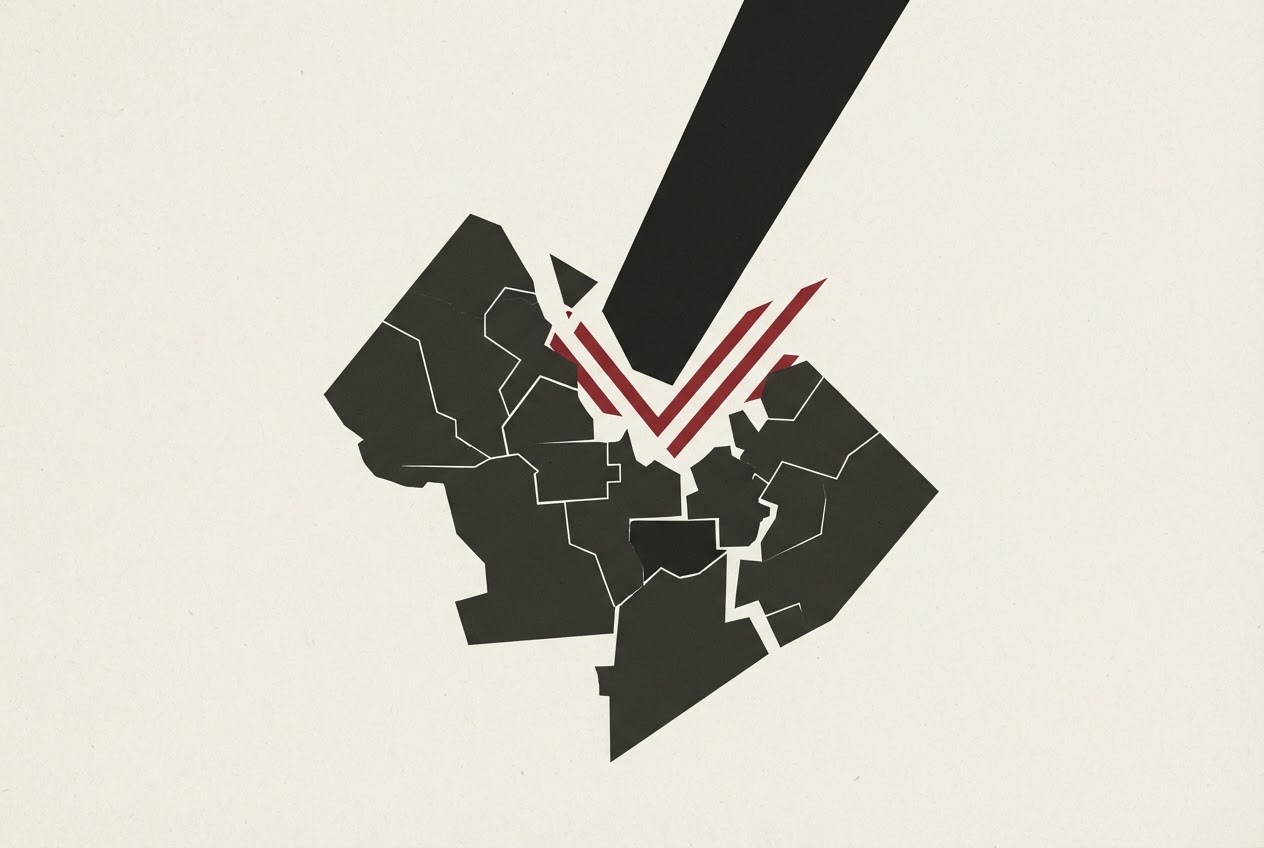
The justices halted a federal appeals court order that would have reinstated the Republican-friendly map for the November elections, which will determine control of Congress. No dissents were recorded. Instead, the Supreme Court upheld a ruling by the Missouri Supreme Court, which earlier this month determined that a citizen petition prevents the use of the new map unless it is approved by voters in a November referendum.
Consequently, Missouri residents will continue to use the same congressional districts from the 2024 and 2022 elections. "At this late date, ordering reversion to the 2025 map in the midst of an ongoing election would create electoral chaos," the high court stated in an unsigned opinion. "The District Court and Court of Appeals should not obstruct the use of the 2022 map in the 2026 congressional election in Missouri."
Republicans had anticipated that the new House map, which was also utilized in the August primaries, could aid them in gaining an additional seat as part of a nationwide redistricting campaign spearheaded by Trump to gain an advantage in the midterms. An 8th U.S. Circuit Court of Appeals panel declared on Monday that altering districts between the primary and general elections would contravene the U.S. Constitution.
The panel instructed a district judge to prohibit Missouri from employing any map other than the new one, but delayed the order's impact until the following Monday to allow for an appeal to the Supreme Court. This legal entanglement has caused confusion for over a million potential Missouri voters, equivalent to nearly one-fourth of the entire state, who were moved to different districts, resulting in various candidates appearing on their ballots.
Absentee voting commenced on Tuesday under the 2022 congressional districts. Thousands of ballots had already been mailed, and some had already been cast. The Supreme Court's decision is seen as a significant relief by Kansas City election director Shawn Kieffer, who remarked, "We just want it over, so we can do our job properly."
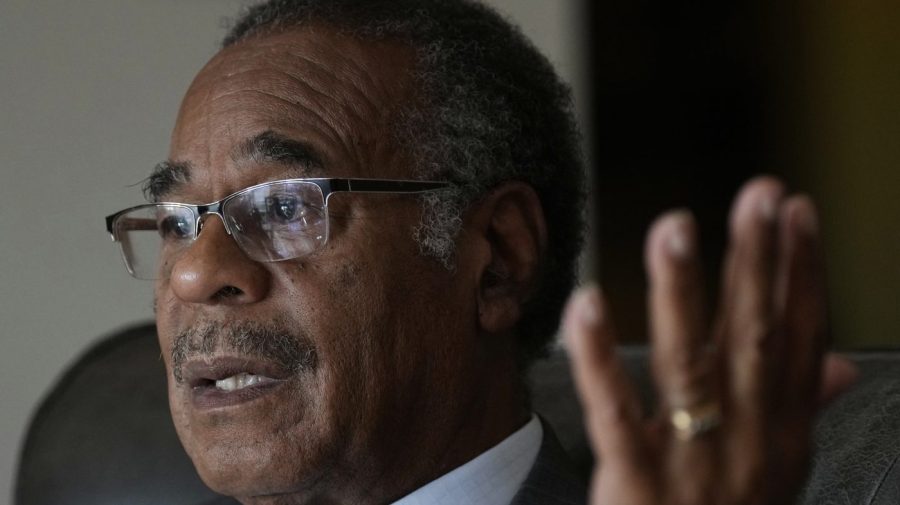
Recently, Republican redistricting efforts focused on Kansas City, where Republicans currently hold six of Missouri’s eight House districts. Following their significant reshaping in September, Missouri lawmakers passed revised districts in an attempt to secure seven seats in the midterms. These redistricting changes drastically altered a Kansas City-based district that had been represented by long-standing Democratic Rep. Emanuel Cleaver.
It was altered by transferring sections of Kansas City to adjacent districts with Republican incumbents and extending the remainder of Cleaver’s 5th Congressional District eastward into rural Republican areas. The outcome was approximately 59% of potential voters being new to the district, according to an Associated Press estimate.
These consequences also shifted some voters in most of Missouri’s other congressional districts. Cleaver faced no opposition in the Democratic primary. Republican state Sen. Rick Brattin secured a six-way Republican primary under the revised districts. They remain the candidates for the general election, despite the district boundaries reverting to their original lines.
Brattin, along with Republican Rep. Bob Onder and two other voters, was a plaintiff in a federal lawsuit that led to the 8th Circuit’s ruling and the last two appeals to the Supreme Court. Missouri's redistricting prompted a substantial legal dispute, with at least 16 lawsuits filed in state and federal courts related to the state's congressional redistricting.
The conflict has been the most extensive and intricate among roughly a dozen states seeking to alter their U.S. House districts over the past year. Missouri's new map endured most of the lawsuits, including those arguing that mid-decade redistricting violated the state constitution and that the new districts did not comply with compactness requirements.
In one case, the Missouri Supreme Court permitted the use of the new districts while election officials worked to validate petition signatures seeking to place the map before Missouri voters in a statewide referendum. Republican Secretary of State Denny Hoskins delayed his decision until the legal deadline on August 4, the day the new districts were employed in the primaries, to reject the petition.
Written by urgent.news from Winnipeg Free Press's reporting — not their text. Machine-written — may contain errors; check the original before relying on it.
Also reported by 6 other outlets
- Supreme court blocks Trump-backed Missouri congressional map from use in midterms theguardian.com
- What the Supreme Court's voter-citizenship database decision means for the midterms pbs.org
- Ogun 2027: APC twisting Supreme Court judgment to stop Iyabo Obasanjo – PDP chieftain dailypost.ng
- 2020 Delhi riots case: Supreme Court relaxes specific bail condition for about-to-be-married accused thehindu.com
- Supreme Court allows use of database to review voter rolls cbsnews.com
- Supreme Court shuts down Missouri redistricting saga in final rebuff to GOP abcnews.com