No certainty over UN's central role in global affairs
IT is that time of the year when heads of state and government take their turn on the podium of the United Nations General Assembly in New York to pronounce on world peace, or the lack of it, and other global issues that preoccupy them individually.
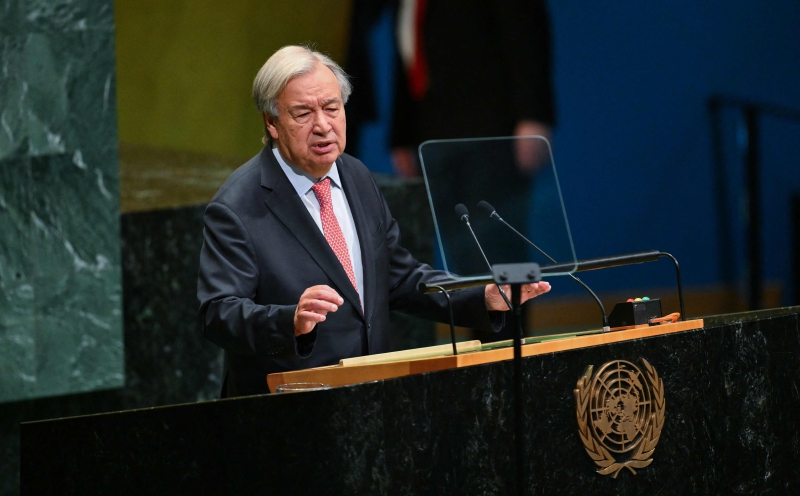
As the annual gathering of world leaders at the United Nations General Assembly commences, the longstanding central role of the UN in global affairs is once again under scrutiny. The pressing issues that dominate discussions, such as the ongoing conflicts in the Middle East and Eastern Europe, have not shifted significantly. However, the extent to which the UN holds sway over these matters has become increasingly questionable.
While US President Donald Trump may still utilize the UN for his political agenda, key actions like the war on Iran and previous interventions in Venezuela have been pursued unilaterally, without UN authorization. Similarly, the US-led efforts to broker peace between Russia and Ukraine have transpired outside the UN framework. This is primarily due to the US withholding vital funding, a move that has severely hampered the UN's operations and those of its affiliated organizations worldwide.
The US, being the largest contributor to the UN, has taken steps to reduce its financial support, citing the body's perceived inefficiencies and wastefulness. This includes withdrawing from several UN agencies and cutting back its contributions to others. The UN finds itself in a precarious position, being the sole international organization comprising all 193 sovereign nations. While it is often criticized, there is a consensus among member countries that the UN needs reform.
The most contentious issue revolves around the Security Council, the body responsible for maintaining global peace. There are calls to make the Council more representative of the modern world, with the primary obstacle being the need to increase the number of permanent members from the current five. Central to this debate is the veto power held by each of the five permanent members, a feature that even the most dominant nation within the UN, the United States, deems ineffective.
The complexities of balancing an ideal and functional UN are evident. The power dynamics among nations make it challenging to envision a system where smaller countries have equal voting rights as the most influential ones. The author, writing from Kuching, recognizes the inherent difficulties in reforming such an important international organization, acknowledging that a balance must be struck between an ideal vision and a pragmatic reality.
Written by urgent.news from New Straits Times's reporting — not their text. Machine-written — may contain errors; check the original before relying on it.