US and China in five charts: How trade, oil and rare earths shape their rivalry
As Chinese President Xi Jinping meets US President Donald Trump in New York, the economic relationship between the world’s two largest economies is increasingly a contest over which has more leverage – and where each remains vulnerable. Years of tariffs and efforts to reduce dependence have reshaped US-China trade. Washington is seeking greater leverage over Beijing’s access to energy, while…
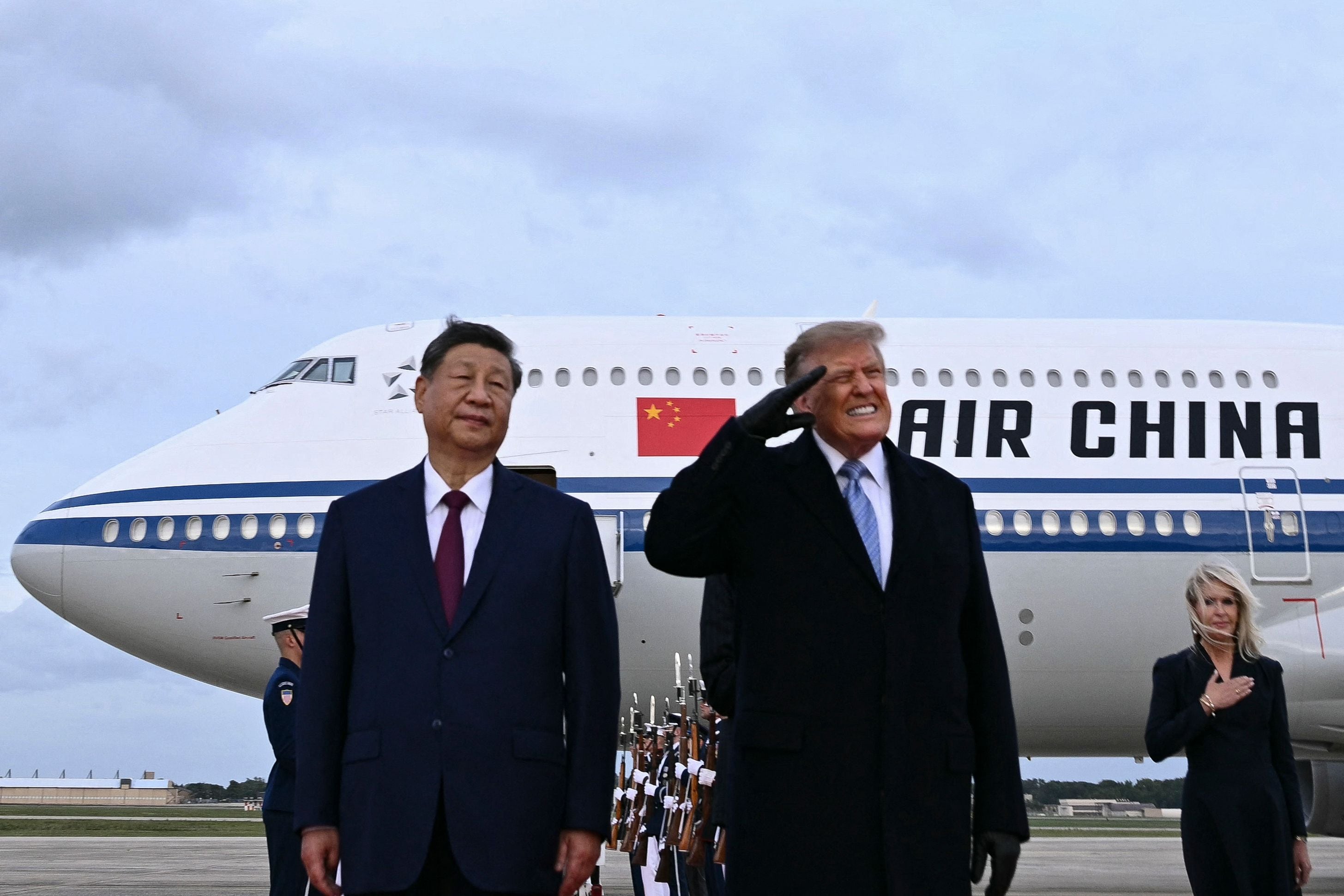
As Chinese President Xi Jinping met with US President Donald Trump in New York, the economic relationship between the world's two largest economies became a contest over leverage and vulnerability. Over the years, trade tensions and attempts to reduce dependence reshaped US-China trade. American officials aim to gain leverage over Beijing's energy access while China retains significant control over rare earths and critical minerals.
The US trade deficit with China narrowed dramatically, with some of the imbalance now shifting to other trading partners. Examining the five key areas – trade, oil, rare earths, and military spending – reveals where dependencies remain and how the power balance has evolved. Trade relations between the two nations remain robust despite a series of tit-for-tat disputes during the Trump administration (2017-2021).
According to Baci data, China ranked second in the United States' total imports in 2024, accounting for 14.1% of US imports, while the US made up 7.18% of China's imports. US purchases from China primarily consist of machinery and electronics, textiles, and plastics, while China relies on imported vegetables, chemicals, and machinery.
The US trade deficit with China has more than halved since its peak in 2018, with the imbalance increasingly shifting towards other Asian economies and Mexico. The deficit with China fell from $418 billion in 2018 to $203 billion in 2025. China's oil trade has become more vulnerable as the Iran war disrupts Middle Eastern supplies.
Beijing, prior to the Iran war, imported an average of 13.2 million barrels of crude per day. Since April, when Middle East supply, including Iran's, became severely restricted, China's oil imports fell 38% to about 8.2 million barrels per day. China's strategic reserves of around one billion barrels and discounted Iranian and Russian oil helped the country endure the early months of the Iran war.
The United States has sought to tighten pressure on China's oil purchases from sanctioned countries. While the Trump administration avoided imposing secondary sanctions on Beijing, the recently passed Lindsay Graham Sanctioning Russia Act gives Trump the authority to impose 100% tariffs on major buyers that knowingly purchase oil or gas from Russia.
Beijing opposes unilateral sanctions and has criticized the new law, which is widely seen as giving Washington more leverage in talks. Rare earths provide China with considerable economic leverage. Beijing holds the world's largest reserves and is dominant in processing and magnet manufacturing. These materials are crucial to various industries such as electric vehicles, renewable energy, electronics, and defense, giving China significant influence over supply chains that the US seeks to diversify.
In terms of military expenditure, the US and China together account for 44% of the world's total military spending, which amounted to $2.87 trillion in 2025. Although the US decreased its spending, it remains the top spender and is still billions of dollars ahead of China. However, China's military expenditure has increased each year since 2000 and is expected to continue growing due to geopolitical tensions and long-term military spending goals.
Written by urgent.news from The National Business's reporting — not their text. Machine-written — may contain errors; check the original before relying on it.
Also reported by 4 other outlets
- US, China prolong trade truce through January thearabianpost.com
- US, China agree two-month trade truce extension ahead of summit scmp.com
- Trump trade rules apply differently to China, Canada, and Xi, Carney thehill.com
- U.S.-China summit highlights the 'hypocrisy' of American trade policy, experts say cbc.ca