Over 30,000 told they cannot return home to Nepal’s flood-hit danger zones
KATHMANDU, Sept 24 — Nepal’s top disaster official said an estimated 33,000 people affected by last month&rs...
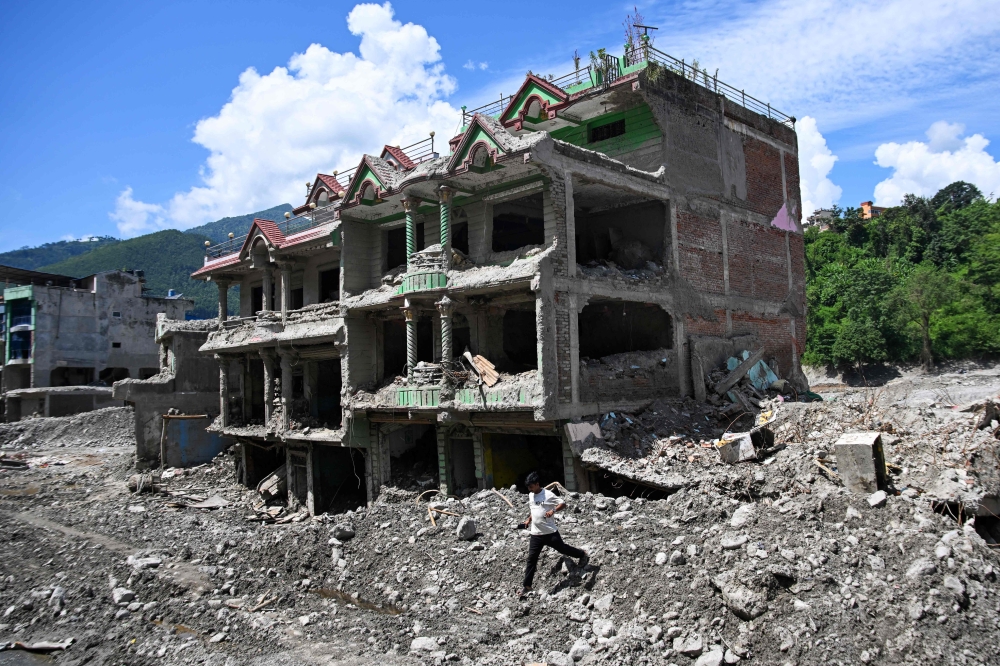
KATHMANDU, September 24 — An estimated 33,000 individuals impacted by the catastrophic floods last month are anticipated to need relocation instead of returning to their homes, as Nepal confronts the aftermath of the disaster, according to news agency Kyodo News. The National Disaster Risk Reduction and Management Authority's chief, Dharam Raj Uprety, disclosed this in an exclusive interview with Kyodo News.
He explained that areas with flood marks, some reaching 13 meters higher than typical river levels, will be designated as "danger zones." Uprety emphasized that the administration wishes to avoid further risks, hence resettle the affected populace. The flood, triggered on August 26 by an ice-and-rock avalanche in the upper Lhende Khola watershed in Tibet, resulted in 1,451 deaths and thousands of missing people, including five Japanese nationals.
Uprety acknowledged the emotional bond people have with their hometowns as a barrier to persuading them to move to safer locations, yet assured that teams have already identified safer areas near the danger zones for relocation. Search operations in the aftermath of the avalanche debris in hydropower projects are nearing completion, with authorities planning to announce their conclusion and shift focus to post-disaster recovery by the end of the week.
The government has decided to provide an immediate assistance grant of approximately US$2,600 (RM10,600) or 400,000 Nepalese rupees per family, along with a monthly livelihood and rental support of US$98 (15,000 Nepalese rupees) for families of up to four members. Additional members will receive 2,000 rupees each. Uprety stated that the initial recovery needs are estimated at US$4.77 billion, but anticipates that this figure could double, as the initial estimate does not account for compensation for the nationalization of privately-owned land now classified as a danger zone.
Nepal, grappling with a financial crunch, is counting on its development partners, including Japan, China, India, Britain, the World Bank, and the Asian Development Bank, for financial support.
Written by urgent.news from Malay Mail's reporting — not their text. Machine-written — may contain errors; check the original before relying on it.