Archaeological ‘breakthrough’ could confirm origins of Paris
A wall dating to the Gallo-Roman period was discovered in Paris this summer and is thought to be part of the ramparts of Lutetia, the ancient name for Paris.
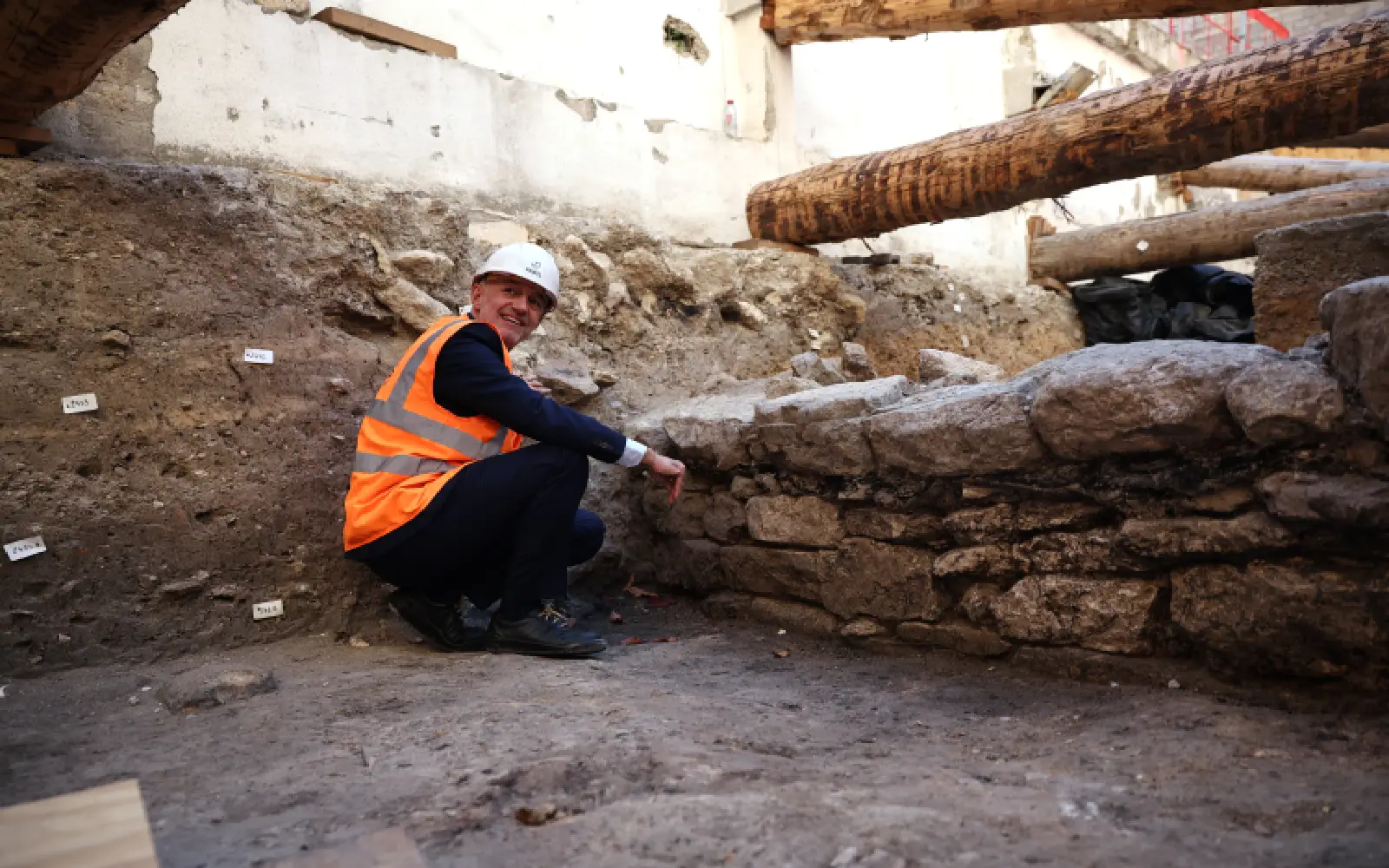
In a significant archaeological discovery, a 20-meter-long wall from the Gallo-Roman era has been found beneath the Hotel-Dieu hospital in central Paris. This wall could potentially confirm the origins of Paris, as it is believed to be a portion of the ramparts of Lutetia, the ancient name for the city. The discovery, made this summer beneath the hospital on the Île de la Cité, has been hailed as a major breakthrough by Paris Mayor Emmanuel Gregoire and Culture Minister Catherine Pegard.
The wall, dating back to the 10-200 BC timeframe, bears traces of fire which may correspond to the account of the Gauls setting fire to their town before the Battle of Lutetia in 52 BC against the Romans. This carbon-dated evidence aligns with the timeframe mentioned in Julius Caesar's Gallic Wars, adding to the significance of the find.
While the site's location has traditionally been regarded as the center of Lutetia, a rival theory contends that it was actually in Nanterre, a suburb to the west. The convergence of evidence surrounding the discovery suggests that this could be one of the most important remains ever found for understanding Gallic Lutetia. Paris Mayor Gregoire expressed his excitement about the find, stating that it is "dizzying to find oneself here and to discover what is probably the origin of the city of Paris."
Written by urgent.news from Free Malaysia Today's reporting — not their text. Machine-written — may contain errors; check the original before relying on it.
This story
This is one outlet's version. Read the fullest account.
- Archaeological ‘breakthrough’ could confirm origins of Paris freemalaysiatoday.com
- Archaeological 'breakthrough' could confirm origins of Paris nst.com.my