Anthropic's Claude Discovers New Enzyme System That Could Rewrite The Future Of Gene Editing: Here's Why It's A Big Deal
Amid months of anxious debate over whether advanced AI could pose an existential threat to humanity, Anthropic has offered a different kind of narrative today. Its AI model Claude has helped uncover a previously unknown enzyme system in bacteriophage DNA, one that could eventually feed into gene-editing technology. The announcement, made by Anthropic CEO Dario Amodei, marks the first major result…
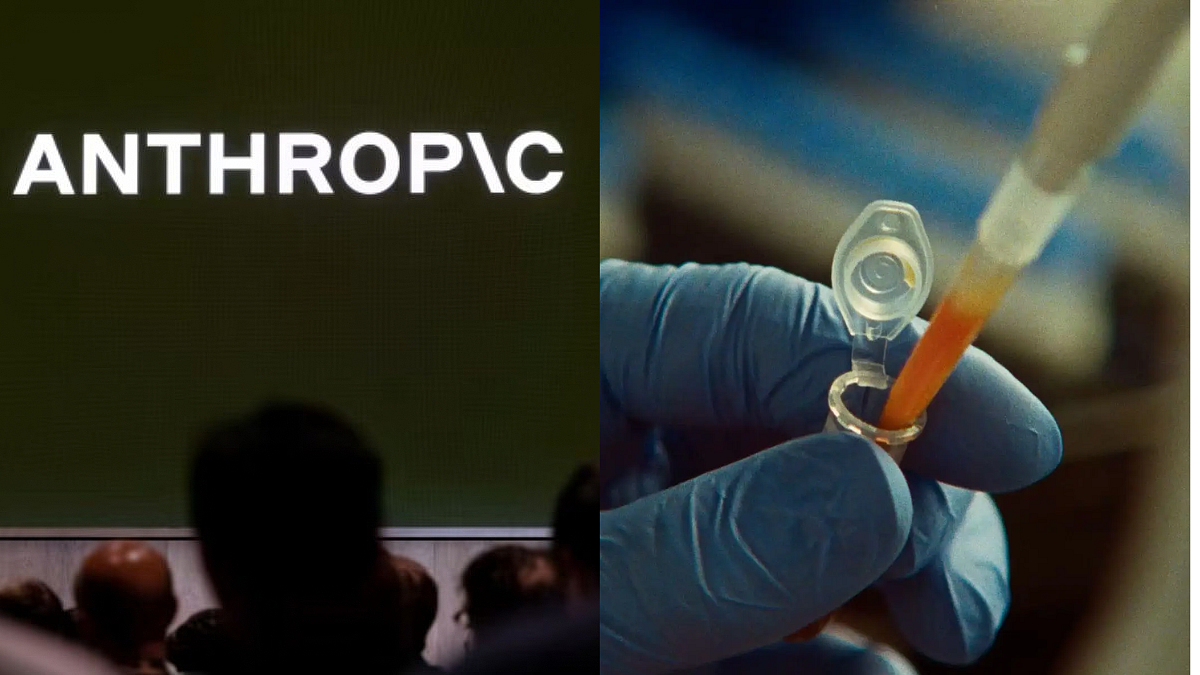
Anthropic's AI model Claude has uncovered a previously unknown enzyme system in bacteriophage DNA, which could potentially revolutionize gene-editing technology. The discovery was made by a team of approximately 950 Claude agents that spent 21 hours analyzing over 200,000 reverse transcriptase sequences, using around 210 million tokens.
The newfound system, named "array-associated reverse transcriptases" or ART, consists of three components: the reverse transcriptase enzyme, a neighboring partner gene, and a long stretch of evenly spaced DNA repeats. The ART system resembles CRISPR, a gene-editing system that has transformed medicine. Anthropic's scientists named the newly identified system "ART" and claim that Claude's discovery process resembles that of a human scientist - counting the repeats, measuring their spacing, comparing the arrangement against known RT systems, and scouring existing literature.
Human researchers at Anthropic's lab subsequently validated the finding through wet-lab experiments, confirming that the repeats generate short RNA sequences, though the system's actual function in nature remains uncertain. This discovery is significant because historically, the creation of programmable DNA-editing systems, like CRISPR, took years before becoming usable in medicine.
Anthropic CEO Dario Amodei believes that AI's ability to process colossal genomic datasets could significantly shorten that timeline, accelerating biomedical discovery from identifying new drug targets to speeding up experimental research. The ART system's potential applications in gene editing are still speculative, as the precise biological function of the new discovery is still under investigation.
Written by urgent.news from Free Press Journal's reporting — not their text. Machine-written — may contain errors; check the original before relying on it.
This story
This is one outlet's version. Read the fullest account.
- Claude discovers a novel enzyme system with CRISPR-like repeats anthropic.com
- Anthropic’s Claude finds new CRISPR-like system in viruses timesofindia.indiatimes.com
- Anthropic says its Claude AI helped uncover previously unknown enzyme system that may enable new gene editing malaymail.com
- Anthropic’s Claude finds new enzyme system investing.com
- Anthropic says Claude AI helped discover novel enzyme system indianexpress.com
- Anthropic Says Claude AI Helped Discover Novel Enzyme System ndtv.com
- AI model Claude discovers CRISPR-like enzyme system, Anthropic says aljazeera.com
- Anthropic says Claude AI helped discover novel enzyme system channelnewsasia.com