Tarifrunde für 3,7 Millionen: IG Metall will fünf Prozent mehr Lohn für Metallbeschäftigte
Die Preise steigen, nun sollen die Löhne folgen: Die IG Metall fordert mehr Geld für 3,7 Millionen Beschäftigte. Die Arbeitgeber warnt sie vor einer „Kriegserklärung“ bei der 35-Stunden-Woche.
The IG Metall union is seeking a five percent increase in wages for the approximately 3.7 million workers across Germany's metal and electrical industries. In addition to this, the union aims to secure profit-sharing for employees in "boom companies" and negotiate the protection of jobs and locations in the largest industrial sector.
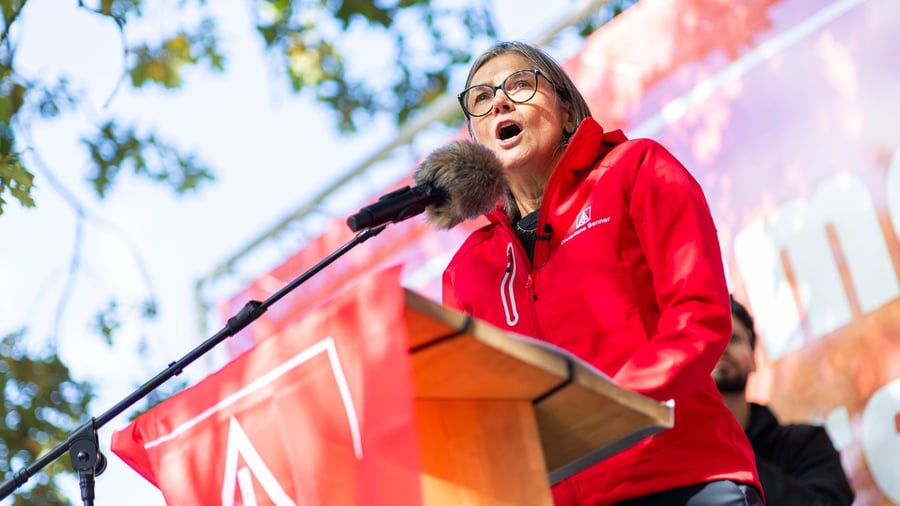
The new collective agreement is expected to have a twelve-month duration, according to the union. IG Metall president Christiane Benner stated that the union approaches negotiations with a fighting realism, calling for safe jobs, compensation for rising prices, and a fair share of company profits. Benner strongly opposes threats of plant closures or demands for unpaid overtime, stating that relocation threats are not acceptable due to management failure.
The first negotiations with employer associations at a regional level are planned to begin on October 7th. Current collective agreements are set to expire on October 31st, after which immediate strike warnings would be possible, as no peace obligation has been waived in this round. Concerns arise about plant closures due to mass layoffs in the automotive industry, where plant closures are already being threatened, such as at VW.
The IG Metall mobilized around 175,000 employees on a federal action day on Monday. These negotiations will not include employees at the struggling Volkswagen AG, for whom a separate collective agreement applies. IG Metall also seeks a five percent wage increase for a twelve-month period at Volkswagen. The complex situation in the metal and electrical industries is further complicated by the fact that the automotive industry is in crisis, while the machine-building industry is struggling, while the electronics industry is thriving due to government spending on armaments and other vehicle manufacturing benefits from state spending.
IG Metall president Nadine Boguslawski noted that workers are experiencing rising living costs, so a significant wage increase is needed. "For growth to take hold, we need purchasing power," Boguslawski said. This will also support domestic growth. IG Metall Tariff Vice President Boguslawski stated that the employees feel the rising cost of living, hence a noticeable wage increase is needed.
"For growth to take hold, we need purchasing power," Boguslawski emphasized. The union's demand provides enough room to differentiate the situation. Tariff Vice President Boguslawski stated that employees feel the 35-hour week as a war declaration. Tariff Vice President Boguslawski stated that if the employers terminate the blanket collective agreement, it would be a war declaration.
Mercedes-Benz executive board chairman Martin Brudermüller had previously suggested returning to a 40-hour week for the same pay. In German automotive companies, the 35-hour week is standard, but it is not legally binding. Mercedes-Benz threatened to close two plants in Germany if costs did not decrease. In the previous round of collective bargaining for the metal and electrical industries in 2024, the IG Metall demanded seven percent more money and a two-stage increase of 5.1 percent. Back then, the times were better in the major industries.
Written by urgent.news from Handelsblatt's reporting — not their text. Machine-written — may contain errors; check the original before relying on it.