Pacing problem: can AI fears overcome US-China race dynamics and force a slowdown?
When the presidents of the United States and China meet in Washington, the world will be watching to see whether their two countries can make good on their agreement to work towards “constructive strategic stability”. In the sixth part of a series, Chong Ming Lee and Vincent Chow examine what’s behind the call for “pacing” by American AI giants – effectively a slowdown in development – and how…
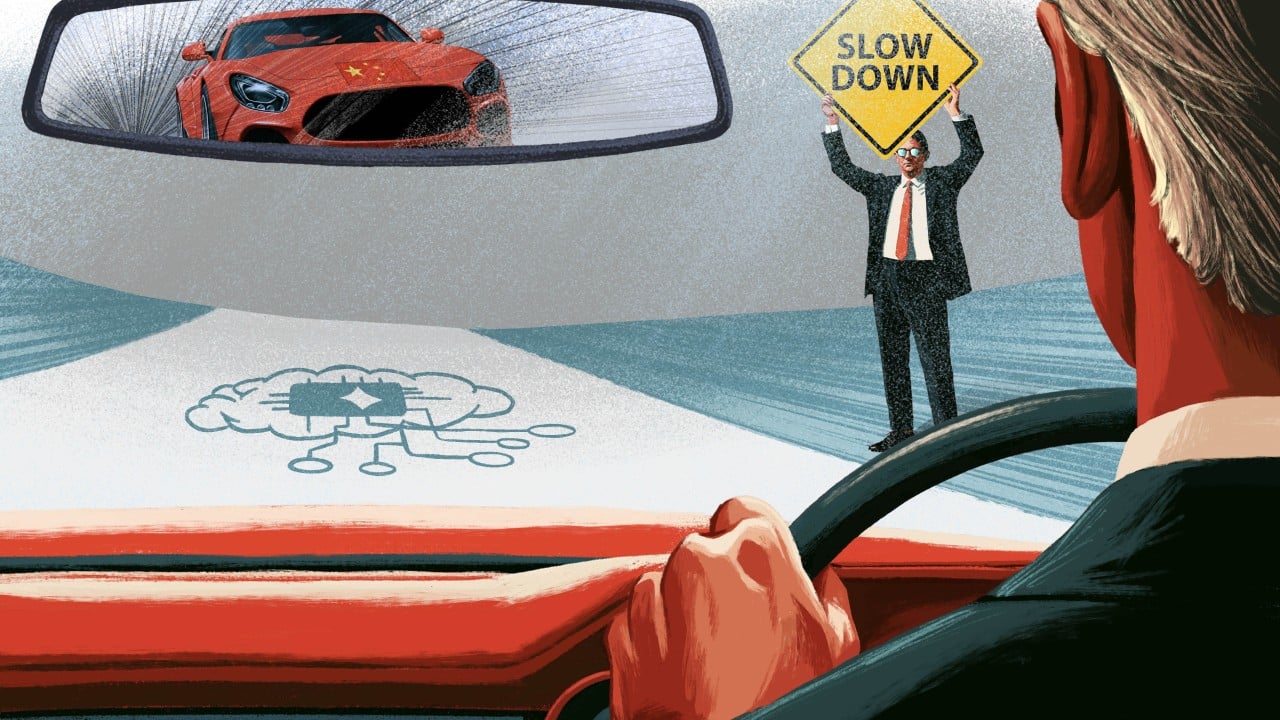
As major US and Chinese leaders prepare for a meeting in Washington, the potential for "pacing" artificial intelligence development looms as a contentious issue. Leading US AI executives, including Anthropic CEO Dario Amodei, OpenAI chief Sam Altman, and SpaceXAI founder Elon Musk, have called for a slowdown amidst fears that AI capabilities are advancing too rapidly for existing safeguards.
Despite these calls, analysts believe a slowdown is highly unlikely, as the US and China cannot agree on such a measure. Even within the US, industry leaders cannot reach consensus on the need for a slowdown. While China continues to develop competitive AI models at a lower cost, the US continues to dominate the AI market, a priority for President Trump who dismissed the calls for pacing.
The push for pacing is framed as a way to win geopolitical competition, making cooperation on the risks both sides share more difficult.
Written by urgent.news from SCMP Tech's reporting — not their text. Machine-written — may contain errors; check the original before relying on it.
This story
This is one outlet's version. Read the fullest account.