Eastern Africa horticulture sector launches regional council to tackle trade barriers
Horticulture stakeholders from across Eastern Africa have launched a regional council to address trade barriers, improve logistics and strengthen the sector’s access to international markets. The council was officially launched in Nairobi during a Regional Public-Private Dialogue on Horticultural Logistics and Trade Facilitation, bringing together government officials, private-sector players,…
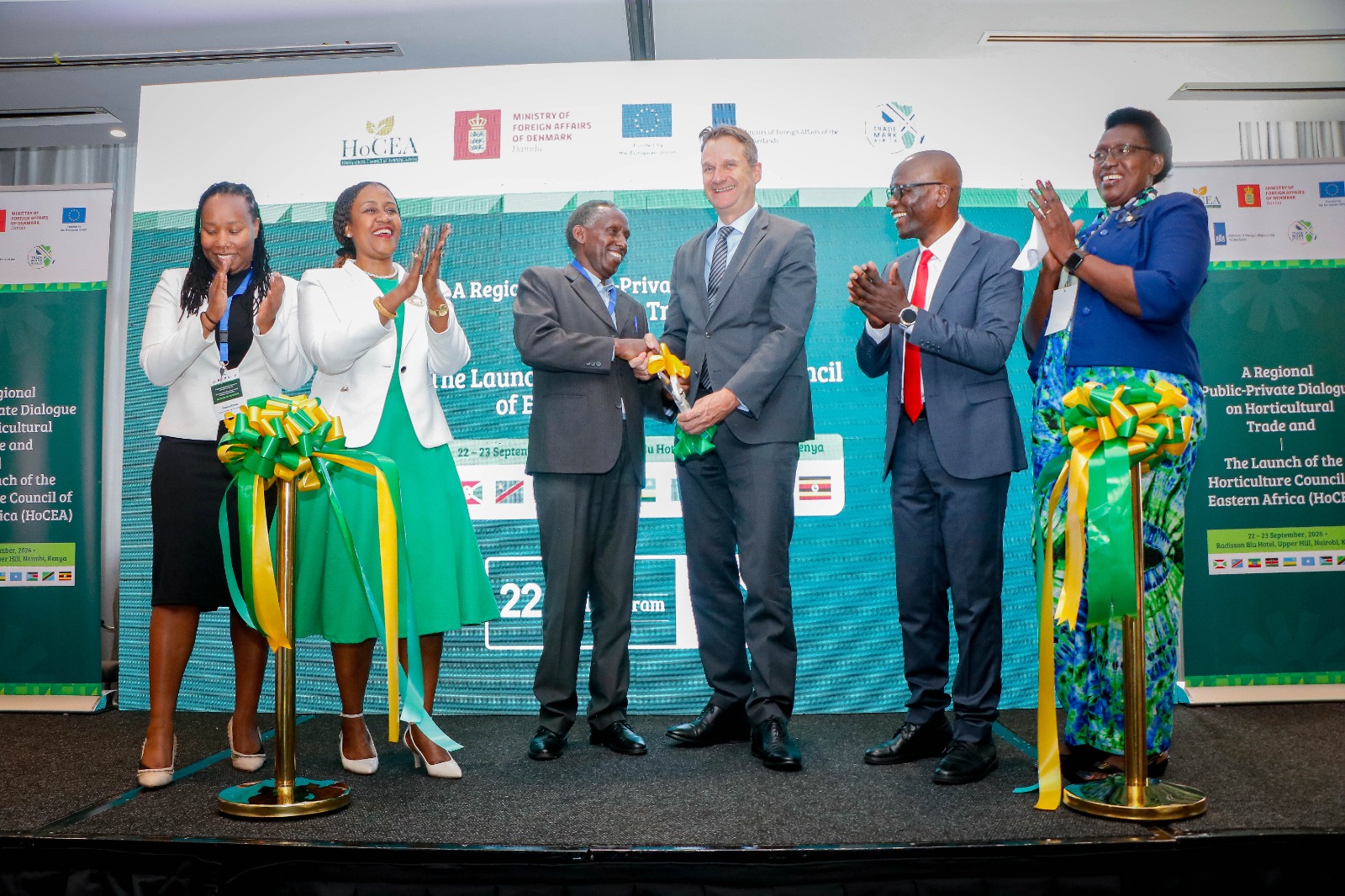
Eastern African horticulture stakeholders have established a regional council to tackle trade barriers, enhance logistics, and broaden market access. The council was inaugurated in Nairobi during a public-private dialogue aimed at improving horticultural trade logistics and regulations. The Horticulture Council for Eastern Africa (HoCEA) will tackle issues such as trade restrictions, logistics enhancements, standard harmonization, market expansion, and technology adoption across nine Eastern African nations.
HoCEA's Secretary General, Clement Tulezi, emphasized that the council's challenges are regional, and the response must be equally regional. He stressed that nations should produce locally, connect regionally, and compete globally. The council comprises government officials, private-sector participants, development partners, regulators, logistics operators, and regional institutions.
Deputy Director for Internal Trade at the State Department of Trade, Matthew Komen, highlighted that addressing horticultural trade challenges requires coordinated regional efforts. He added that no single country or firm can resolve these issues alone. The sector's importance is reflected in Kenya's exports of 467,000 metric tonnes of horticultural produce annually, valued at approximately 1.143 billion US dollars.
HoCEA Chairperson Dr. Jacqueline Mkindi emphasized the need for a shift from fragmented national efforts to coordinated regional action. She urged stakeholders to utilize HortiLogistica Africa in Arusha as a platform for connecting African horticulture producers and businesses with global buyers and investors. Denmark reaffirmed its commitment to sustainable trade, stronger cold-chain efficiency, reduced post-harvest losses, and improved coordination among development partners.
Stakeholders called for increased investment in cold chains, digital systems, border infrastructure, and improved sanitary and phytosanitary standards. A Nairobi Horticulture Action Roadmap and Nairobi Communiqué are expected to be produced, outlining priority actions, institutional responsibilities, and timelines to convert identified priorities into concrete, measurable outcomes for horticultural producers and exporters across Eastern Africa.
Written by urgent.news from KBC's reporting — not their text. Machine-written — may contain errors; check the original before relying on it.