Discordians now subject to whims of new age verification technology
Discord users asked to prove they’re adults get less intrusive options
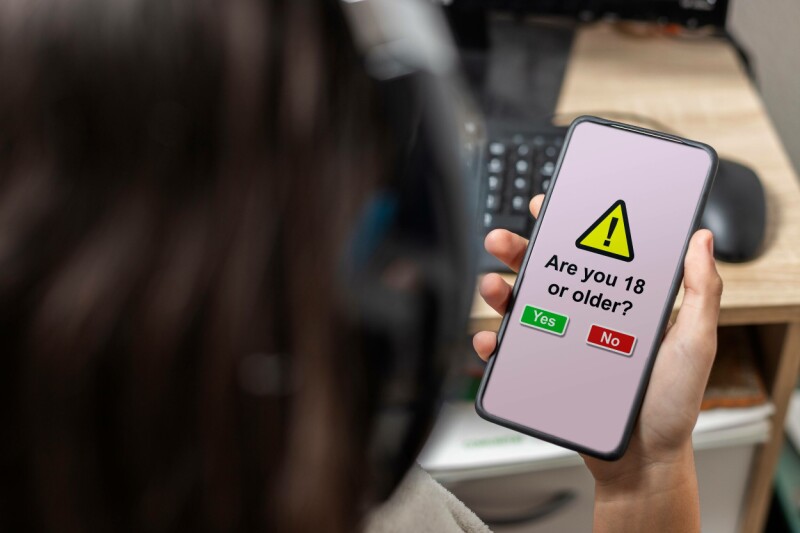
After more than six months of delaying the implementation of age verification due to community backlash, Discord has finally launched its new system, with several modifications aimed at addressing user concerns. Discord's chief technology officer, Stanislav Vishnevskiy, detailed the final version of the platform's age verification policy on the company's blog.
The core idea remains unchanged: the platform will now employ algorithms to determine whether accounts belong to adults or minors. Discord assures users that over 90 percent of them will not have to confirm their ages, a commitment that has remained consistent. The new element, as Vishnevskiy explained, is the technical intricacies behind Discord's age verification model and several innovative methods for age verification that do not require users to provide ID scans or selfies to third parties.
Discord's primary concern was that its AI would start reviewing user posts and other content to determine their age. The company reassured users that this is not the case, explicitly stating that their model focuses on patterns of account behavior rather than content analysis. Various factors contribute to Discord's estimation of user age groups without scrutinizing their interactions, including account metadata, engagement metrics, community context, device information, and social-graph embeddings.
The most significant factor, however, is Discord's Entity-Relationship Embeddings (DERE), which involves a "Discord social graph" that encodes relationships between users, servers, and the games users claim to play. This representation, called DERE, is a 32-dimensional numerical embedding based on a user's position in the graph.
Discord claims that DERE is highly predictive of age because users of similar ages tend to form organic social clusters without ever being trained on age data.
To make the age verification process less intrusive, Discord introduced additional verification options. Users can still opt for a service called AgeKey, which allows them to create an age verification passkey stored locally on their device and reusable on various supported sites. Discord can also utilize a credit-card check as an adult-age signal or leverage age ranges already associated with supported accounts or digital IDs from Apple and Google.
Users can choose between a credit-card check processed through Stripe or utilize services like Google Wallet, Google Play, or Apple's App Store, which share an age range with Discord. These options aim to avoid introducing another age-verification provider into the process.
Teen accounts will still be subject to restrictions, with messages from non-friends being directed to a request inbox, friend requests being flagged if they come from someone without mutual friends or servers, and adult verification being required to disable these features. Age-restricted servers and channels will also be inaccessible to teen accounts, and sensitive images will be blurred or blocked.
Furthermore, Vishnevskiy acknowledged that age verification is a contentious issue and emphasized that Discord is not simply complying with government demands for web providers to add age verification. Instead, the company is addressing a more significant problem in the broader landscape of internet legislation. Vishnevskiy invited users to hold Discord accountable for its rollout and to evaluate the company based on its performance, accuracy in age group estimation, speed in fixing errors, and its commitment to transparency.
Discord's age verification system went live on Wednesday and will be progressively implemented across more accounts throughout the week.
Written by urgent.news from The Register's reporting — not their text. Machine-written — may contain errors; check the original before relying on it.
This story
This is one outlet's version. Read the fullest account.