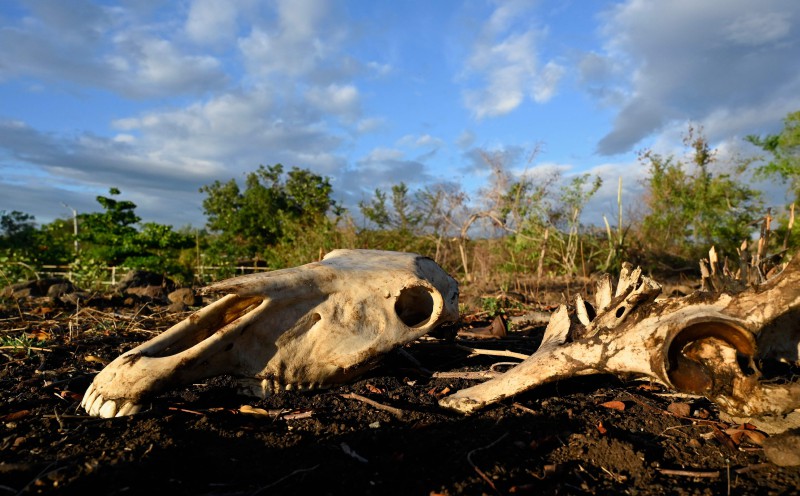
Countries still way behind on UN biodiversity targets, research shows
In late 2022, nearly 200 countries signed on to the "30 by 30" goal, pledging to mobilize at least $200 billion a year to reverse decades of biodiversity loss.
Governments are expected to miss a crucial UN goal to safeguard at least 30% of the planet's land and seas by 2030, according to research released on Wednesday. This target was part of the Kunming-Montreal Global Biodiversity Framework, which 200 nations agreed to in late 2022, alongside a pledge to allocate at least $200 billion annually to combat biodiversity loss.
Despite this, only 20% of land and 10% of marine areas have been formally protected since the agreement's inception, as per research by environmental groups led by Campaign for Nature. The findings correspond with a forthcoming UN report due in Yerevan, Armenia. A draft report from July cautioned that none of the 23 goals in the agreement would be met by 2030 without a significant acceleration in collective efforts.
While some progress is evident, it remains uneven and insufficient to meet the Framework's 23 targets by the deadline, according to Astrid Schomaker, executive secretary of the UNCBD. The research indicates that 26% of terrestrial and inland water areas would be covered by protected zones if all existing pledges were fulfilled by 2030, but only 13% of marine ecosystems.
The funding gap is substantial, estimated at $75 billion to $150 billion annually, with marine protection spending at just $1.8 billion, far below the required $16 billion. Even if the 30x30 targets were attained, further measures would be necessary to ensure genuine ecosystem protection, noting that 3.5% of the ocean currently under protection plans is deemed effectively protected.
Pauli Merriman, senior director for oceans at WWF International, emphasizes the disparity between protected areas on paper and in practice, stating that a line on a map does not equate to effective protection in the water.
Written by urgent.news from Jerusalem Post's reporting — not their text. Machine-written — may contain errors; check the original before relying on it.