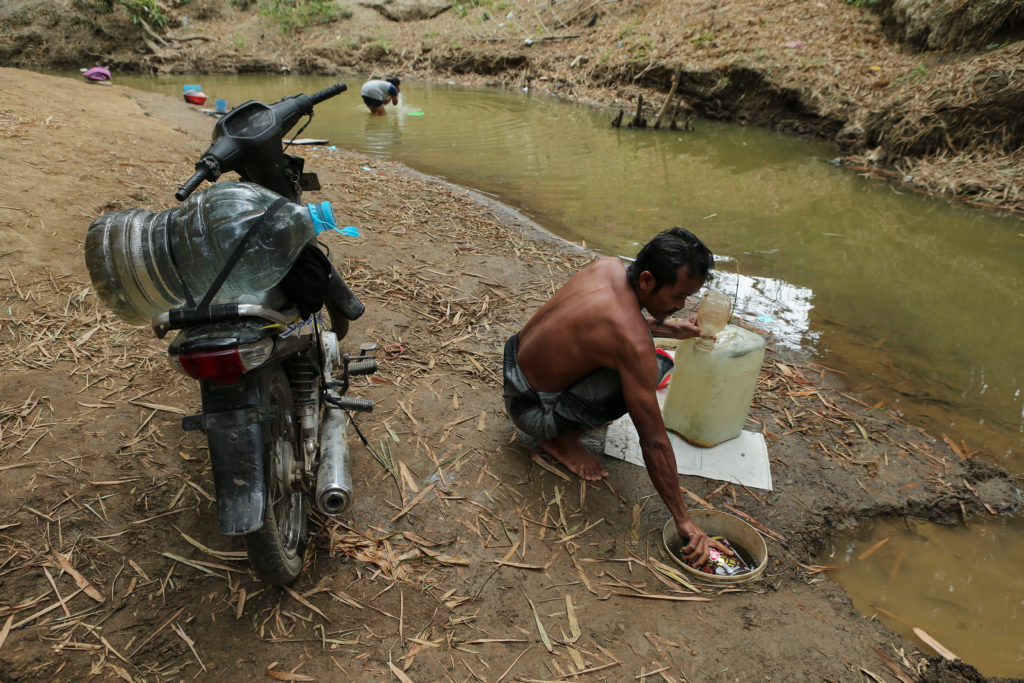
Worsening El Nino threatens Asia with severe drought, potentially threatening global food security
El Nino already is depleting water supplies, hurting fish catches and jeopardizing Asia's globally important agriculture industry.
Amid growing apprehension about food security implications of the El Nino weather pattern, Chinese authorities have sought to allay public concerns by emphasizing the robustness of the nation's grain reserves. Speaking at a press conference on Tuesday, Li Chao, a representative from the National Development and Reform Commission, stated that China possesses a "solid foundation and sufficient capacity" to withstand risks and challenges like El Nino.
This sentiment mirrored comments made by Liu Huanxin, head of the National Food and Strategic Reserves Administration, who noted that the domestic grain market had remained steady despite fluctuations in global food markets.
Liu stressed that China operates a multi-tiered reserve system, encompassing central and local government stockpiles as well as private sector inventories. He emphasized that the nation's stock-to-consumption ratio – the proportion of stored grain relative to demand – remained "significantly above" the 17 to 18 percent benchmark recommended by international agencies. These reserves could be mobilized to balance supply and demand, providing stability during unforeseen market volatility.
Production-wise, Liu reported that grain output had also remained stable, with annual grain output reaching 715 million tonnes in 2025. Furthermore, per capita grain availability exceeded 500kg (1,102.3 pounds), surpassing the global average. "China's vast territory allows different regions to offset fluctuations in production, strengthening the overall resilience of the country's grain supply," Liu added.
These official assurances came at a challenging moment for the global community. Earlier this month, the World Meteorological Organisation reported that El Nino was "firmly established" and projected it would "intensify into a very strong event in the coming months", warning of severe weather disruptions. Simultaneously, supply chain disruptions in commodity and fertilizer shipments – linked to the US-Israel conflict with Iran – drove up the UN Food and Agriculture Organization global food price index in August, following a peak in July.
Liu also noted that China's food processing industry had ample capacity to produce staple goods such as flour, rice, and cooking oil to meet domestic consumption needs. He reiterated that ensuring national food security remains an ongoing task, requiring sustained confidence and readiness to respond proactively to potential risks.
Beijing has long championed agricultural self-sufficiency, with top officials repeatedly emphasizing the need to "keep its rice bowl firmly in its own hands". Under its planning targets, China aims to expand comprehensive grain production capacity to around 725 million tonnes by 2030.
Written by urgent.news from South China Morning Post's reporting — not their text. Machine-written — may contain errors; check the original before relying on it.
This story
This is one outlet's version. Read the fullest account.
- Worsening El Nino threatens Asia with drought, potentially raising food prices globally mainichi.jp
- Can China’s grain reserves protect food security against El Nino? scmp.com
- Worsening El Nino threatens Asia with drought, potentially raising food prices globally phys.org
- Worsening El Nino threatens Asia with severe drought, potentially threatening global food security pbs.org
- Worsening El Nino threatens Asia with drought, potentially raising food prices globally winnipegfreepress.com