Donald Trump and Xi see tensions flare over AI, trade and Iran but still seek stability
AgenciesState visits usually occur when two countries are on warm terms, but US President Donald Trump is hosting Chinese leader Xi Jinping in Washington this week as their economi...
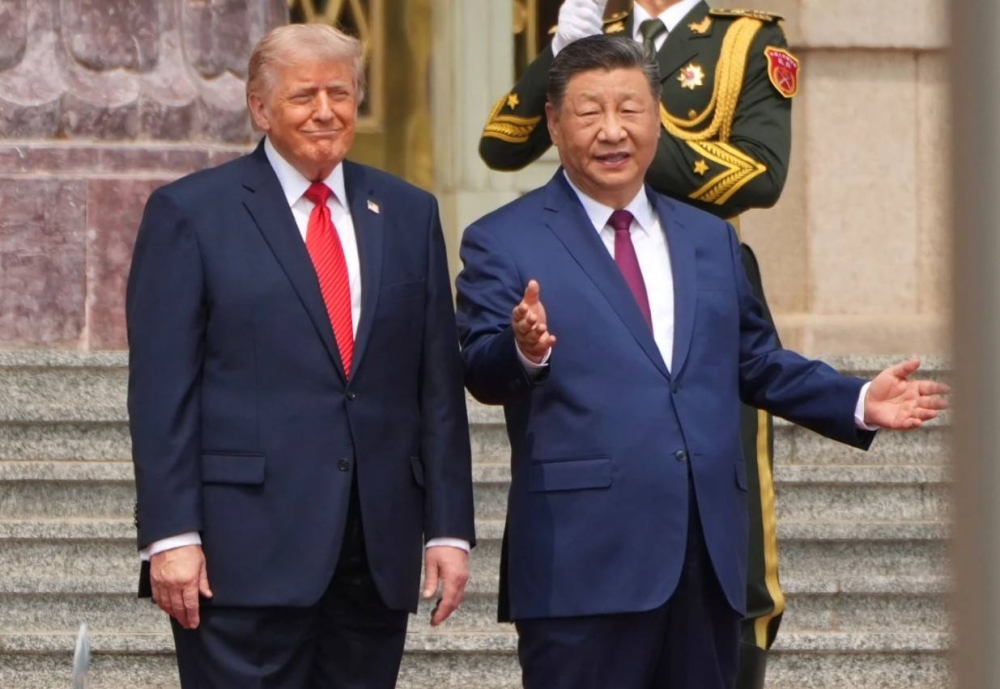
Donald Trump and Xi Jinping, the leaders of the United States and China respectively, are engaging in discussions to address tensions surrounding artificial intelligence, trade, and Iran, while still aiming to maintain stability in their relationship. This meeting marks their third since Trump returned to the White House, as both countries continue to vie for dominance in various arenas.
Despite the escalating competition, especially in the AI race, the leaders are expected to maintain a level of civility during their summit. Sen. Steve Daines, a Republican advisor to Trump on China, emphasizes the importance of their dialogue in building the relationship. Cui Tiankai, a former Chinese ambassador to the US, acknowledges the presence of "big problems" between the two nations but stresses the need to maintain overall stability.
The visit, which is Xi's first in 10 years, comes after both countries ended their intense trade war last year, which threatened the global economy. China has also restricted its supplies of critical minerals needed for products such as electric cars and fighter jets. Both nations seek to solidify their positions in the global order, with China striving to maintain its economic, technological, and military power.
Stability is sought for "deeply competitive reasons," according to Evan Medeiros, a senior adviser at The Asia Group consultancy. The leaders are expected to produce agreements that their governments can implement, with a focus on fast-moving developments in AI technology. Developing AI has become a key battleground, with both countries showing little interest in slowing down despite concerns about the potential threats of rogue AI.
The US has restricted exports of advanced AI chips to China and accused Chinese developers of accessing American AI models at an industrial scale. China, in turn, is upset about U.S. efforts to build an AI alliance without it and is seeking global AI guardrails by appealing to developing nations. The US and China are taking a small step toward cooperation on AI by proposing a notification mechanism for AI incidents that could affect national security.
While both sides have refrained from taking broad, punitive actions that would break their trade truce, they have blacklisted individual companies and banned specific products, including Chinese telecommunications and surveillance equipment, advanced robots, and drones.
Written by urgent.news from Qatar Tribune Business's reporting — not their text. Machine-written — may contain errors; check the original before relying on it.
Also reported by 3 other outlets
- Trump praises relations with Burnham despite tensions over AI and Iran theguardian.com
- Donald Trump calls AI ‘super intelligence’ as leaders jostle over dangers torontosun.com
- Trump rants to UN about Iran and AI crikey.com.au