As Russian strikes destroy millions of books, Ukraine's literary future hangs in the balance
More than 13 million books, a third of the country’s annual print run, were destroyed in two months this summer, causing at least €34.2 million in damage, the Ministry of Culture said.
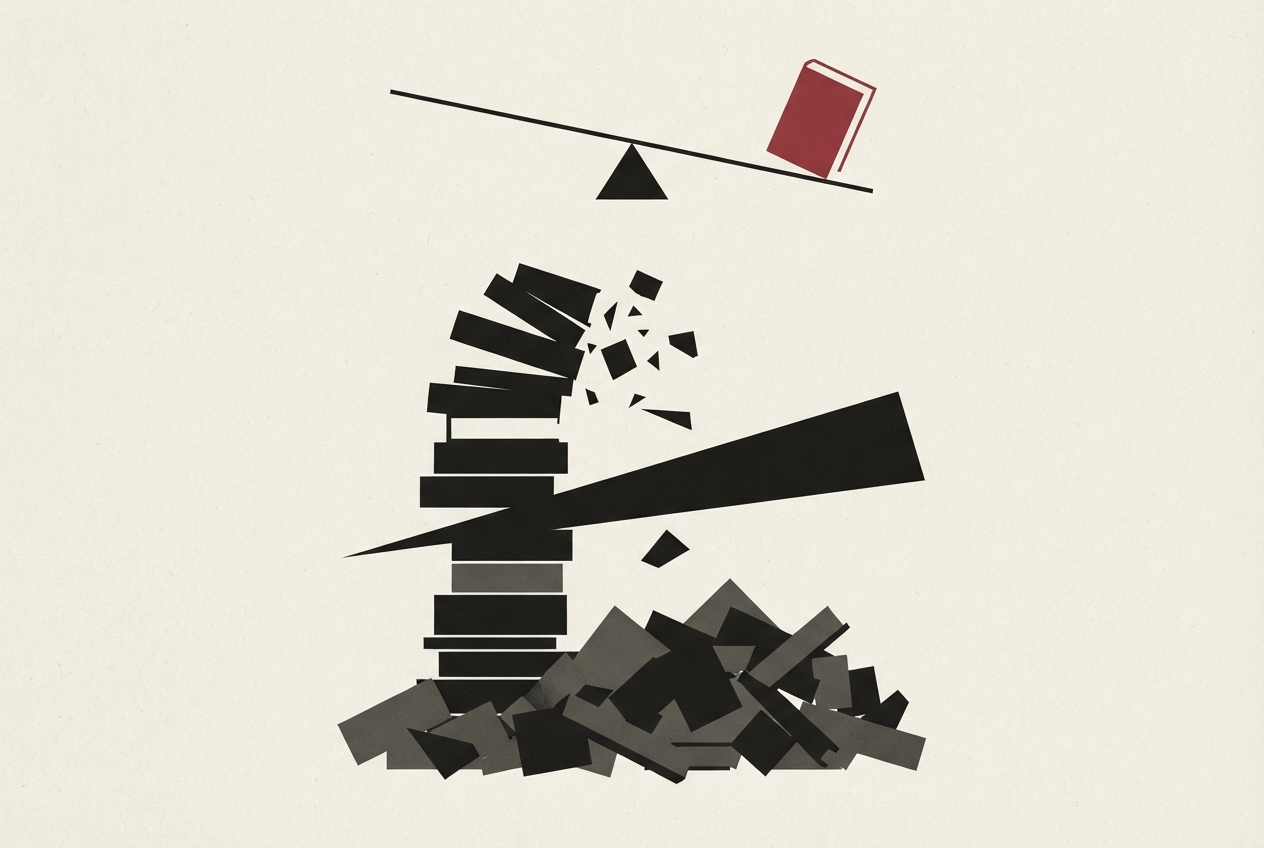
Ukraine's publishing sector is grappling with its most severe crisis to date, triggered by deliberate Russian assaults on cultural institutions. Since the summer of 2022, over 13 million books, roughly a third of the country's annual print run, have been destroyed, resulting in damages exceeding $39.3 million (€34.2 million). This destructive wave has not only inflicted economic harm but also jeopardized the future of Ukrainian literature.
In response to these events, publishers are anticipated to invest less in debut authors, potentially stifling the growth of new voices and narrowing the market for readers. Large publishing houses, wary of taking risks, are increasingly focusing on bestsellers and established translated works. Tetiana Berezhna, Ukraine's culture minister, emphasized that the Russian strategy is a calculated one, aimed at weakening the resilience of the Ukrainian people by eroding their cultural identity.
The attacks have inflicted significant damage on at least 40 publishing houses and numerous bookstores. Viktor Kruglov, head of Ranok publishing house, described the loss as "a huge blow to the industry," warning that without swift intervention, the sector could collapse entirely. Ranok's Kharkiv warehouse, which opened in 2013 as an automated logistics hub for books, sustained damage from Russian strikes during the summer of 2022, destroying approximately 8 million books, including 620,000 essential textbooks used in Ukrainian schools.
Despite possessing backup warehouses and cloud-stored files, Ranok has maintained its operations by repurposing destroyed materials and preserving its workforce. However, theoretically, this resilience may not be enough to counteract the broader challenges facing the industry.
Culture Minister Berezhna highlighted that Russia's campaign against Ukrainian heritage spans centuries, citing historical decrees that restricted publishing and public speaking in the Ukrainian language during the Russian Empire. Nevertheless, she remains hopeful that Ukraine's literary legacy will endure, citing the preservation of books in libraries and secret collections throughout history.
Nevertheless, immediate challenges persist. Publishers are facing financial strains that hinder their ability to invest in new authors. Debut writers, who face higher costs compared to publishing established works, may see reduced support, potentially diminishing the pool of fresh literary talent. The ministry is developing a financial aid package, which includes state purchases of Ukrainian books for school libraries, grants to assist small publishers with printing costs, rent compensation for bookstores, and insurance programs to mitigate the financial impact of wartime disruptions.
However, some industry insiders argue that these measures fall short of what is needed. For instance, the Konvi print shop, which produced educational material and fiction, suffered extensive damage in July 2022, rendering its printing press unusable. The shop's commercial director, Viktoriia Haidai, estimated that restoring the press would cost €1.2 million and take four to five years.
She emphasized that the destruction of printing facilities undermines national security, as these facilities play a crucial role in education, culture, and historical preservation.
Small, independent publishers, many of which do not attract widespread attention, are also at risk. The loss of these entities could lead to a decline in market diversity, particularly in niche and experimental genres. Children's literature is facing its own set of challenges, with many publishers diversifying away from children's books to other genres as families migrate abroad. This shift could further diminish the variety of literary offerings available to Ukrainian readers.
Experts predict that while the Ukrainian government may allocate resources to sustain textbook production, the future of other literary genres remains uncertain. Given Ukraine's limited financial resources, rebuilding infrastructure such as printing facilities and warehouses may prove challenging. Therefore, the long-term viability of Ukraine's publishing industry hangs in the balance, contingent upon both domestic and international support.
Written by urgent.news from Euronews's reporting — not their text. Machine-written — may contain errors; check the original before relying on it.