Vessels trickle through Hormuz strait as Middle East conflict persists
Visible traffic through the strait fell to a dozen commodity vessels from 35 the previous weekend.
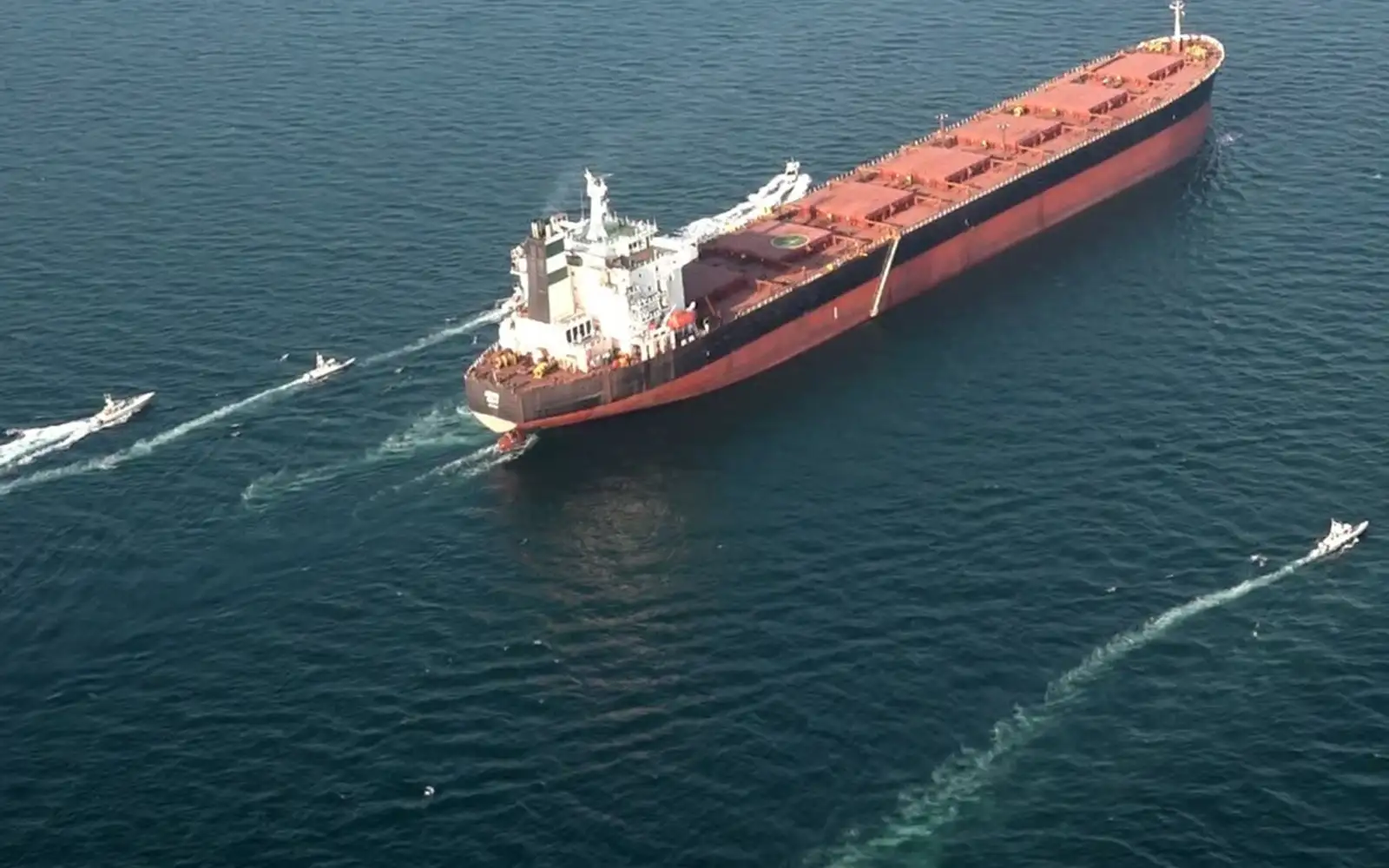
The Strait of Hormuz, a crucial conduit for a fifth of the world's oil and liquefied natural gas, has witnessed a sharp decline in vessel traffic due to ongoing tensions between the United States and Iran. According to shipping data, only a dozen commodity vessels transited the strait during the previous weekend, a significant drop from 35 vessels the prior weekend.
This reduction has resulted in a "trickle" of traffic through the strategic waterway, which typically handled about 125 large commercial vessels per day before the conflict escalated. Despite the diminished presence of vessels, Middle Eastern producers continue to export oil, with trackable ships still making use of their transponders to navigate the waters.
Data from analytics firm Kpler reveals that four vessels, including two tankers carrying refined oil products and two empty carriers for bulk goods and gas, exited the strait on Sunday, while another two smaller oil tankers entered the Gulf on the same day. On Saturday, five vessels carrying agricultural products, liquefied petroleum gas, and fertilizers exited the Gulf, while a very large gas carrier entered on the same day.
Prior to the US-Israeli war with Iran, which began on February 28, the strait usually accommodated approximately 125 large commercial vessels daily. The ongoing conflict has prompted Saudi state energy firm, Saudi Aramco, to increase oil exports through the Strait of Hormuz following attacks on their East-West pipeline by the Houthis.
As a result, Saudi crude exports have surged, reaching over 4 million barrels per day in September, a substantial increase from 2.4 million barrels per day in August, the lowest level since at least 2013. This surge in exports is primarily attributed to Saudi Arabia, which accounted for half of the total volume. Other significant exporters include Iraq, contributing to 35% of the volume.
Despite the disruptions to Saudi Arabia's East-West pipeline, Middle East oil flows remain surprisingly robust, averaging 17.1 million barrels per day over the past 10 days, falling short of the 2025 average by just 6.1 million barrels.
Written by urgent.news from Free Malaysia Today's reporting — not their text. Machine-written — may contain errors; check the original before relying on it.
This story
This is one outlet's version. Read the fullest account.
- Dior opens Dubai distribution hub to speed up Middle East deliveries gulfnews.com
- Gold slips as focus remains on Middle East, rate outlook brecorder.com
- US-Iran war LIVE Updates: US issues Iran travel warning, Tehran warns of 'continuous, painful' attacks on US bases if... livemint.com
- US warns Middle East war could 'escalate rapidly' after missile attack on Riyadh iol.co.za
- Gold slips as focus remains on Middle East, rate outlook nst.com.my
- As war in the Middle East widens, Saudi Arabia’s new defence pact could face a major test theconversation.com
- Vessels trickle through Hormuz strait as Middle East conflict persists freemalaysiatoday.com
- Trump, Netanyahu curtail weekend trips as Middle East tensions escalate indianexpress.com