The Book of Alison Knowles
A retrospective traces the language of bookmaking in her expansive work and its radical influence on American art.
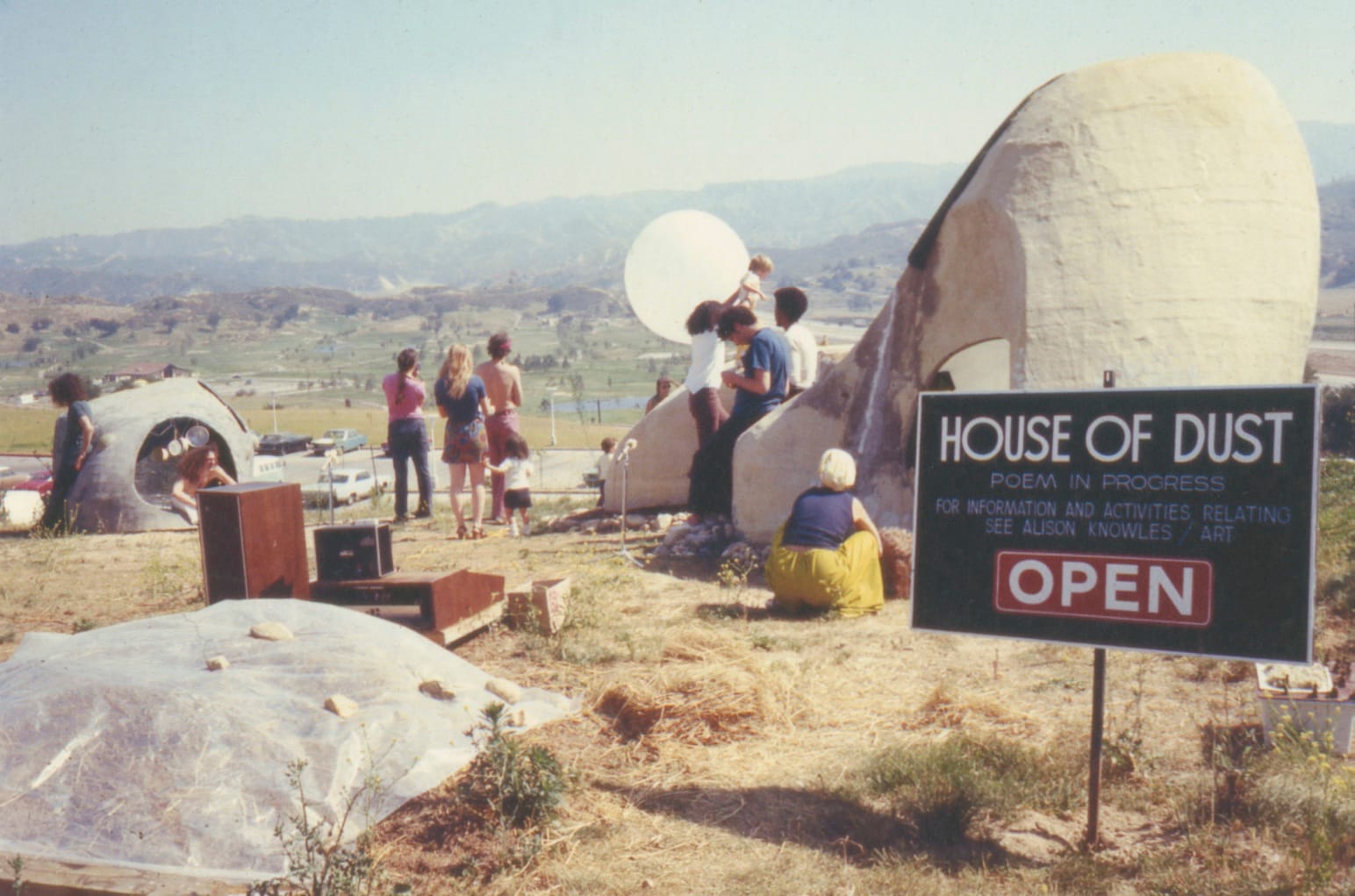
An exhibition titled "Alison Knowles: A Retrospective (1960–2022)" is currently on display at the Berkeley Art Museum and Pacific Film Archive (BAMPFA), traveling from its original venue. Curated by Karen Moss, the retrospective positions the late Fluxus artist as an author, tracing her lifetime of output through the lens of bookmaking and its impact on American art from the 1960s to the present.
Knowles played a pivotal role in introducing the interdisciplinary, avant-garde, and performance-based tenets of Fluxus to American art in the early 1960s. Her capacity to absorb, translate, and communicate her surroundings proved essential to this movement, which emphasized collaboration, ephemerality, and the use of wide-ranging materials.
The exhibition's first section introduces Knowles as a distinct artist and an influential part of Fluxus. It showcases her early works, including a newsprint-hued screenprint titled "Room" (1960), created with artist and composer George Brecht. The work is displayed above a vitrine with announcements from Knowles's first shows, including her 1962 exhibition at Judson Gallery, which was a hub of the New York performance scene at the time.
Known for her works dealing with food, such as 1964's "Variation #1: Make a Soup," 1963–64's scroll book "Bean Rolls," and the recurring work "Identical Lunch," Knowles elevated banality to the extraordinary. Her preferred material was often fiber, but her interest was in participation, as seen in multi-media sculptures, architecture, and grandiose computer-generated works.
However, some of Knowles's more recent works, such as "Live computer printout of the House of Dust (1971/2022)" and "Computer Poem Drop Event" (1971), seem more divorced from the sociopolitical conditions of the everyday. These works, while impressive, may feel too privileged in terms of 1970s technology. The artist's more humble and open works, such as the Three Songs series and "Proposition #6: Shoes of Your Choice" (1963), reveal her use of books and the kitchen as resources and means for mark-making.
Written by urgent.news from Hyperallergic's reporting — not their text. Machine-written — may contain errors; check the original before relying on it.