Some of China’s 11,000 mega bridges could be at risk from small drones: study
Scientists in China have simulated a drone attack on one of the country’s major suspension bridges to determine the vulnerability of key transport hubs to modern warfare tactics. The researchers found that a drone carrying just 30kg (66lb) of TNT could trigger a bridge collapse if it detonated within inches of the main suspension cable at the point where it meets a support tower. The targeted…
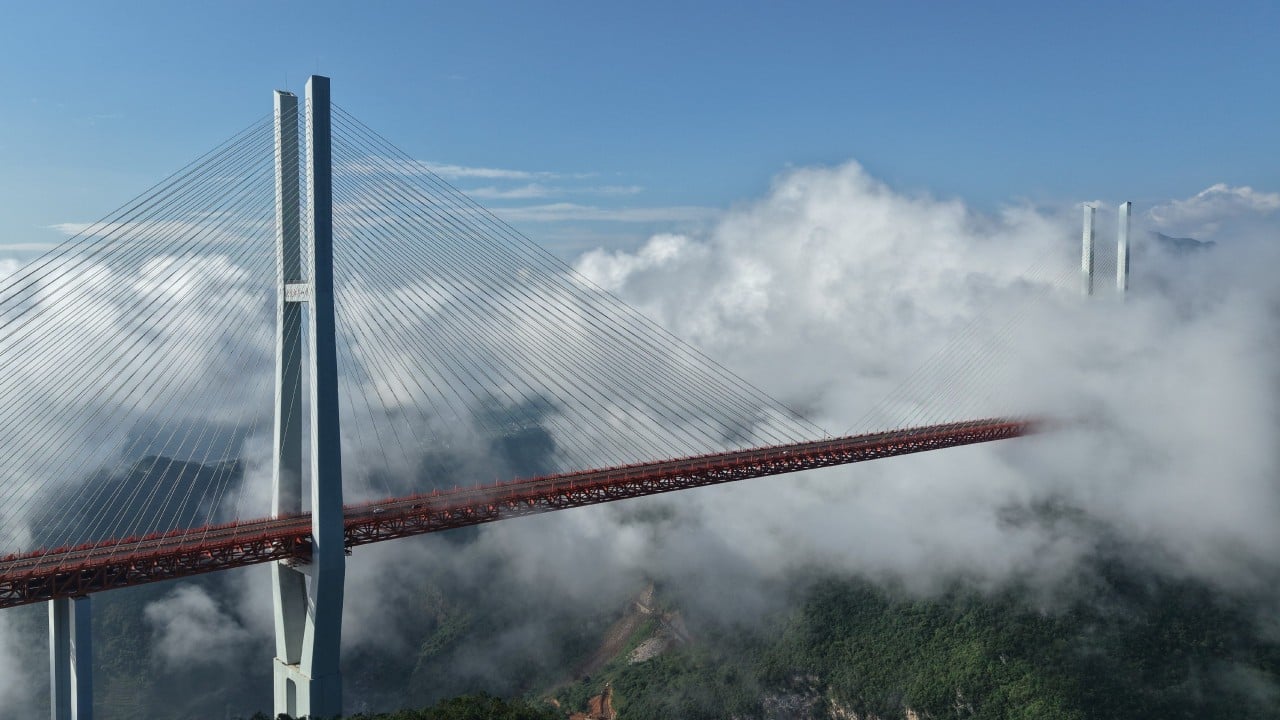
A recent study conducted by scientists in China has revealed the susceptibility of the nation's extensive suspension bridge network to potential threats from small drones carrying explosives. The research team from Southwest Jiaotong University and the China Railway Major Bridge Reconnaissance & Design Institute Company simulated drone attacks on a 538-meter-long bridge, akin to the renowned Dimuhe River Bridge in Guizhou province.
Their findings suggest that a mere 30kg of TNT detonated within 8 inches of the main suspension cable at its connection to a support tower could cause the entire bridge to collapse. This highlights the extreme vulnerability of modern bridges to precision aerial attacks, particularly drones, which have become a significant shift in warfare tactics.
China boasts over 11,000 mega or super-large suspension bridges, including the world's highest and longest structures, such as the Huajiang Canyon Bridge and the Zhangjinggao Yangtze River Bridge. The study's researchers emphasized that while conventional safety thresholds for individual bridge components have been established, there is a significant gap in knowledge regarding the collective system's susceptibility to complete bridge breakdown due to drone strikes.
They simulated a 50kg TNT blast near key structural elements, such as the main cables and support towers, which led to a catastrophic chain reaction, including snapping cables, flipped decks, and eventual bridge collapse. The research underscored that the primary vulnerability lies in the area where the suspension cables attach to the towers, where a precise drone strike could trigger a devastating chain reaction.
While increasing cable dimensions could theoretically mitigate blast damage, retrofitting existing cables with protective high-density polythene sheaths presents a more practical solution for strengthening the current infrastructure against such threats.
Written by urgent.news from Reuters Business via SCMP's reporting — not their text. Machine-written — may contain errors; check the original before relying on it.
This story
This is one outlet's version. Read the fullest account.