Some of China’s 11,000 mega bridges could be at risk from small drones: study
Scientists in China have simulated a drone attack on one of the country’s major suspension bridges to determine the vulnerability of key transport hubs to modern warfare tactics. The researchers found that a drone carrying just 30kg (66lb) of TNT could trigger a bridge collapse if it detonated within inches of the main suspension cable at the point where it meets a support tower. The targeted…
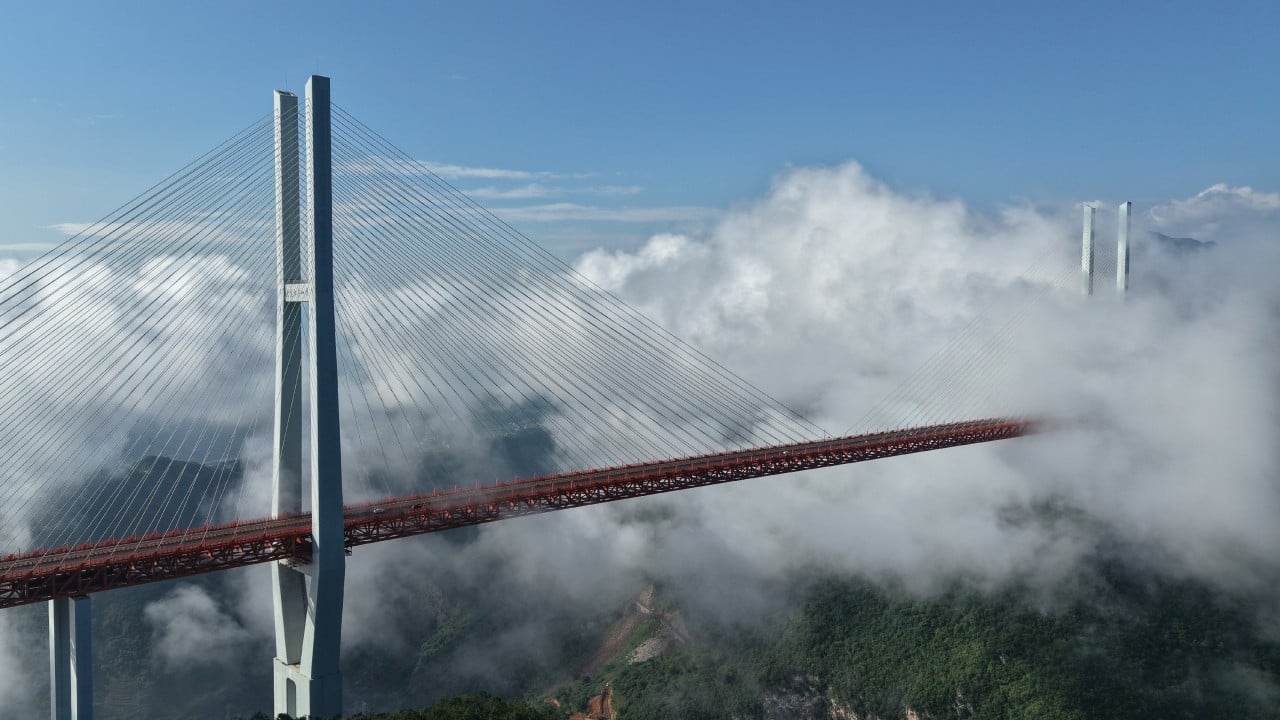
Scientists in China conducted a simulation of a drone attack on a major suspension bridge to assess the vulnerability of key transportation hubs to modern warfare tactics. Their findings revealed that a drone carrying as little as 30kg of TNT could cause a bridge collapse if detonated near the main suspension cable close to a support tower.
This study, published in the September issue of the Chinese-language Journal of Railway Science and Engineering, emphasizes the urgent need for engineering solutions to protect suspension bridges from precision unmanned aerial vehicle (UAV)-delivered explosive attacks. China boasts over 11,000 mega bridges, including most of the world's largest, longest, and highest structures.
The research was inspired by ongoing conflicts like the Russian war on Ukraine, where drones have been used to target essential bridges such as the Antonovsky Bridge in Russia and the Crimean Bridge in Crimea. The study modeled a 50kg TNT blast near the main cables and support towers, demonstrating how a near-field explosion could cause a chain reaction, snapping cables, flipping the bridge deck, and ultimately leading to the bridge's collapse.
The researchers concluded that protecting the main cable anchorage zones and retrofitting existing bridges with protective sheaths are critical measures to mitigate the risks posed by drone strikes.
Written by urgent.news from South China Morning Post's reporting — not their text. Machine-written — may contain errors; check the original before relying on it.