Embracing the Equinox
Depending on your locale, equinoxes can be seen as harbingers of longer nights and gloomy weather, or promising beacons of nicer temperatures and more sunlight. Observing and predicting equinoxes is one of the earliest skills in humanity’s astronomical toolkit. Many ancient observatories around the world observed equinoxes along with the more pronounced solstices. These days, […]
Embracing the Equinox: A Journey Through Nature's Balance
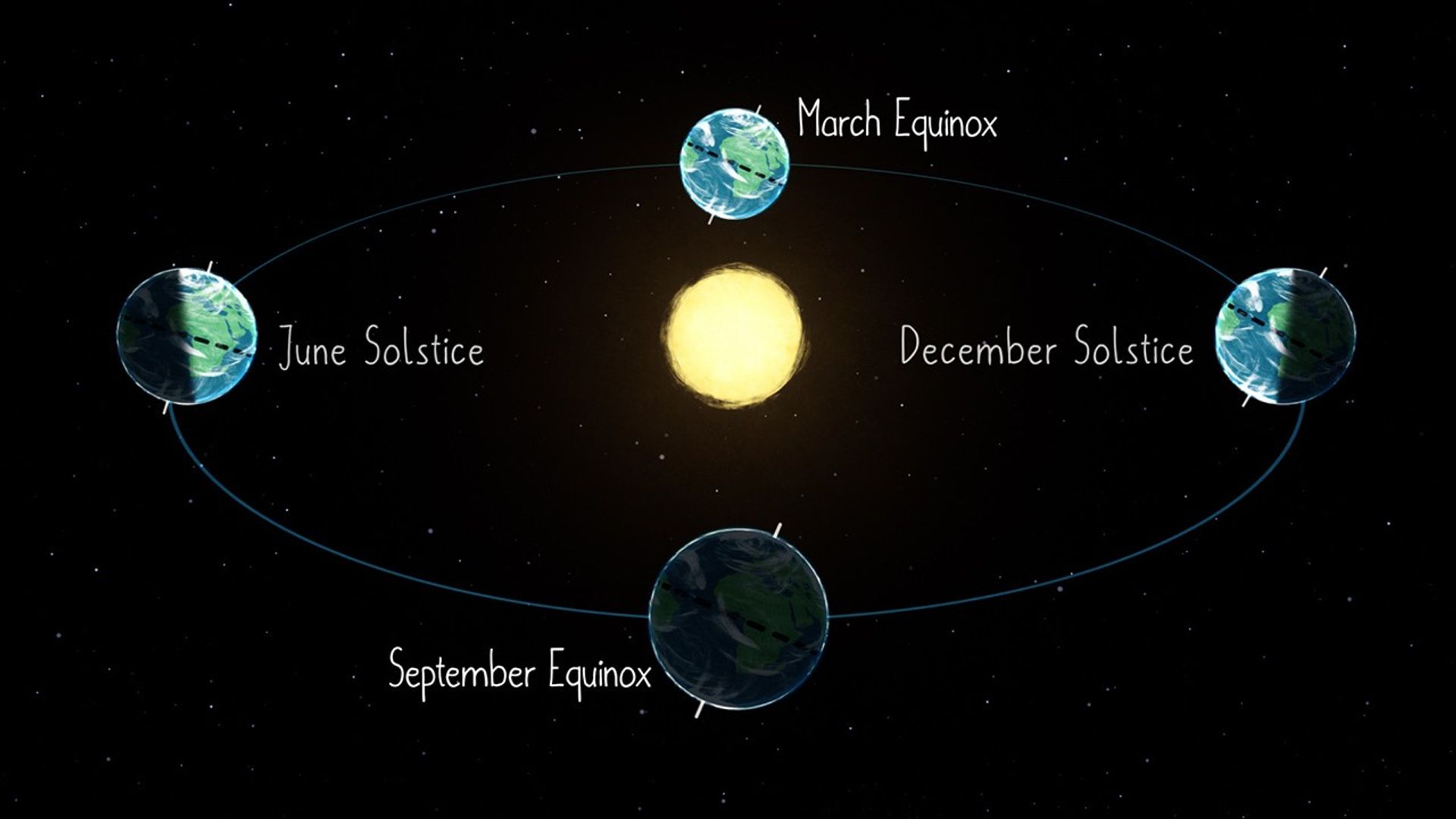
The equinox, a celestial event that occurs twice a year, marks a moment of cosmic equilibrium for our planet. As explained by NASA, this phenomenon happens when the Sun's center aligns with Earth's equator, resulting in equal day and night lengths across the globe. This year, the March equinox arrives on March 20, 2026, at precisely 14:46 UTC, while the September equinox graces us on September 23, 2026, at 00:05 UTC.
The word "equinox" derives from the Latin roots "equal" (equi-) and "night" (-nox), signifying the balance between day and night. Interestingly, the lengths of day and night on the equinox are not perfectly equal, as the Sun's size and atmospheric refraction cause slight variations. These factors often result in the day extending a few minutes longer than the night, even on the equinox itself.
The equinoxes are not merely astronomical milestones; they also signal the changing seasons. In March, the Northern Hemisphere celebrates the vernal, or spring, equinox, which heralds longer, warmer days. Conversely, the Southern Hemisphere experiences the autumnal, or fall, equinox, marked by shorter days and cooler nights. By September, the roles reverse, with the Northern Hemisphere basking in longer days and the Southern Hemisphere enjoying the opposite.
Observing equinoxes has been a fundamental aspect of humanity's astronomical toolkit since ancient times. Many early observatories around the world meticulously tracked these events alongside their more pronounced counterparts, the solstices. Today, calendars provide us with the necessary information to mark these occasions, making it unnecessary for us to possess a personal observatory to witness this fascinating celestial occurrence.
Written by urgent.news from NASA's reporting — not their text. Machine-written — may contain errors; check the original before relying on it.
This story
This is one outlet's version. Read the fullest account.
- Embracing the Equinox science.nasa.gov