Embracing the Equinox
Depending on your locale, equinoxes can be seen as harbingers of longer nights and gloomy weather, or promising beacons of nicer temperatures and more sunlight. Observing and predicting equinoxes is one of the earliest skills in humanity’s astronomical toolkit. Many ancient observatories around the world observed equinoxes along with the more pronounced solstices. These days, […] The post…
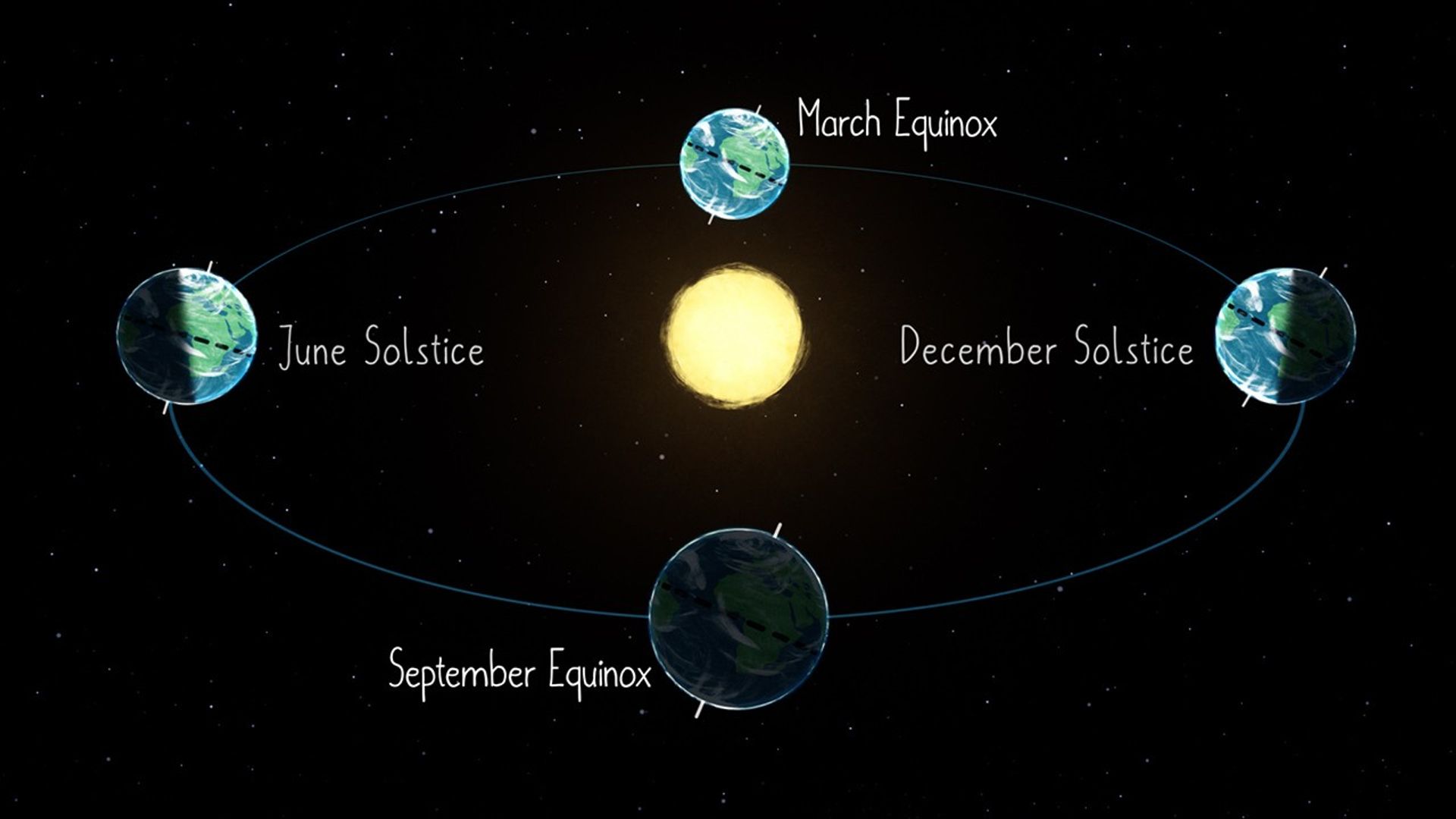
The Earth's position in relation to the Sun changes throughout the year, resulting in equinoxes that occur twice annually in March and September. During an equinox, neither hemisphere of the Earth is tilted more towards the Sun, leading to both hemispheres receiving an equal amount of sunlight. In 2026, the March equinox will occur on March 20 at 14:46 UTC (7:46 AM EDT), while the September equinox will transpire on September 23 at 00:05 UTC (5:05 PM PDT).
The term "equinox" originates from Latin, meaning "equal night." However, the length of day and night is not precisely equal on the equinox, as it depends on an individual's latitude. The Sun's size and atmospheric refraction also contribute to the near-simultaneous rise and set of the Sun, adding several minutes of light to each day.
The Earth's movement in relation to the Sun causes the Sun's path across the sky to shift northward after the March equinox, reaching its northernmost point during the June solstice. Following the June solstice, the Sun begins its southward journey, culminating in the December solstice. The September equinox marks the beginning of this southward movement, with the Sun continuing its southward trajectory until the December solstice.
Written by urgent.news from NASA Science's reporting — not their text. Machine-written — may contain errors; check the original before relying on it.
Also reported by 1 other outlet
- Embracing the Equinox science.nasa.gov