China tests first practical submarine solar power plant at 10-metre depth in the open sea
In a breakthrough that could power the future of underwater operations, Chinese scientists have built and tested the world’s first submarine solar farm, successfully operating a perovskite-based photovoltaic system at a depth of 10 metres (33 feet) in the open sea. The submerged array charged batteries and powered a LED panel, proving that solar energy can be harvested even in the dim, blue-green…
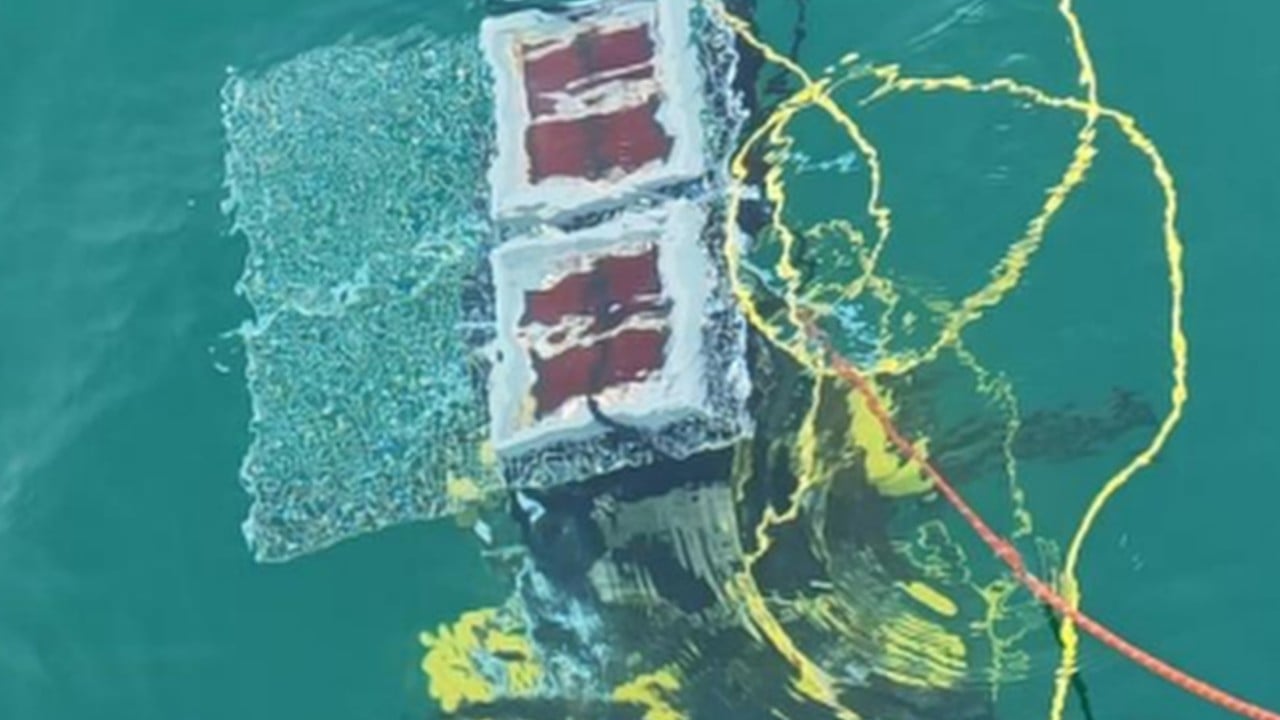
Chinese researchers have successfully tested the world's first practical underwater solar power system, capable of generating electricity at depths of up to 10 metres beneath the ocean surface. Published in the journal Joule on September 11, the breakthrough by a team from Yunnan University overcomes the challenge of sunlight's rapid decay in water.
Utilizing lead halide perovskite solar cells with a wide band gap, the researchers achieved a power conversion efficiency of up to 34.71 percent in laboratory tests, demonstrating the potential for underwater solar applications. Encapsulated with a protective layer, the cells remained highly efficient (99.58 percent) after 1,000 hours of continuous exposure to simulated underwater conditions.
Field tests near Weizhou Island in the South China Sea showed the system could charge a lithium-ion battery and power an LED panel, highlighting the practical viability of submerged solar power for various marine applications. The technology could enhance underwater sensors, communication systems, and autonomous underwater devices, paving the way for self-sustained marine energy solutions.
Written by urgent.news from Reuters Business via SCMP's reporting — not their text. Machine-written — may contain errors; check the original before relying on it.
This story
This is one outlet's version. Read the fullest account.