China tests first practical submarine solar power plant at 10-metre depth in the open sea
In a breakthrough that could power the future of underwater operations, Chinese scientists have built and tested the world’s first submarine solar farm, successfully operating a perovskite-based photovoltaic system at a depth of 10 metres (33 feet) in the open sea. The submerged array charged batteries and powered a LED panel, proving that solar energy can be harvested even in the dim, blue-green…
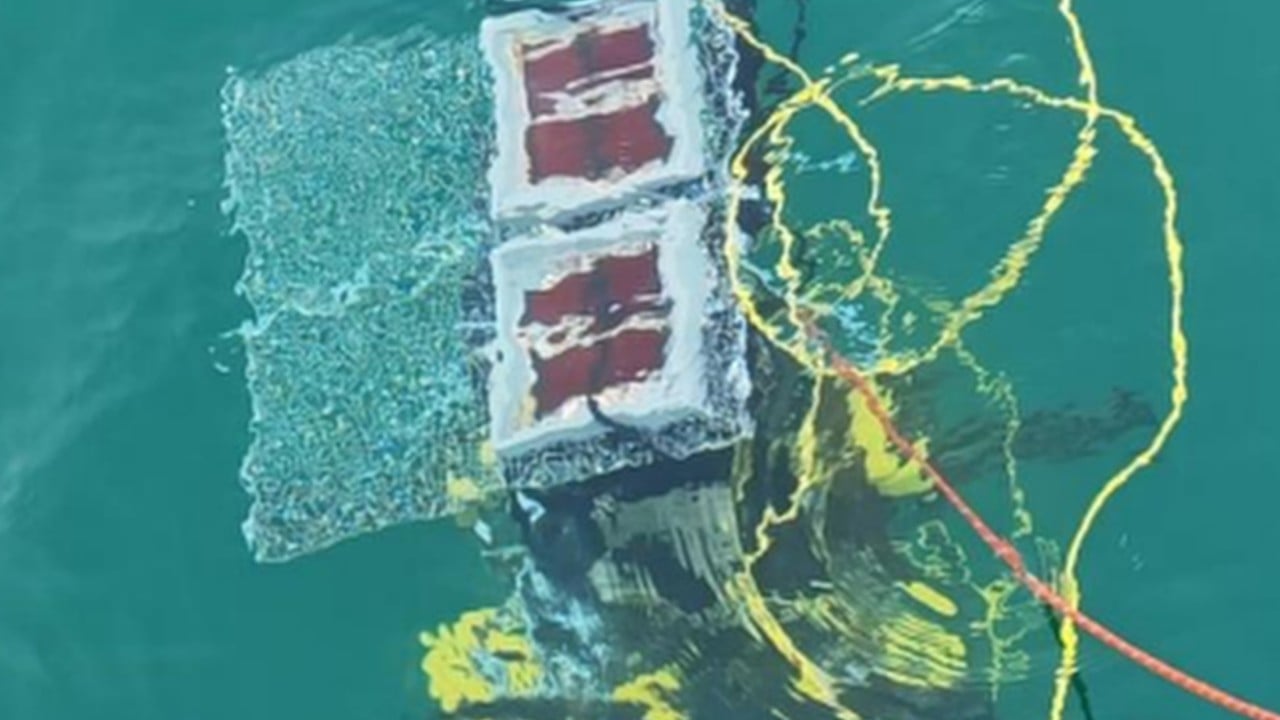
Chinese researchers have successfully constructed and trialed the world's first underwater solar farm, showcasing a perovskite-based photovoltaic system operating at a depth of 10 meters in the open sea. The innovative solar array charged batteries and illuminated a LED panel, demonstrating that solar energy can be harvested even in the dim, blue-green twilight of the ocean.
Published in the journal Joule on September 11, the groundbreaking work by a team from Yunnan University overcomes a significant barrier: sunlight diminishes rapidly underwater, and traditional silicon solar cells are ill-suited to the narrow spectrum remaining at depth. At 10 meters below the surface, only around 10% of sunlight penetrates, and red light, where silicon cells excel, is nearly entirely absorbed.
The scientists selected lead halide perovskite solar cells with a broad band gap of approximately 1.96 electron volts, which aligns well with blue-green light underwater. Though perovskites can be unstable in seawater due to corrosion, pressure, packaging issues, and possible lead leakage, the team mitigated these problems by incorporating polyhexamethylene guanidine hydrochloride (PHMG) as a crystallization additive to enhance stability in seawater.
Previous underwater solar cells focused on shallow water depths, far from practical applications. This research marks the first functional validation of submerged solar cells capable of operating at depths of up to about 10 meters. In lab tests simulating sunlight at 10 meters, a small cell with an area of 0.0895 square centimeters achieved a power conversion efficiency of 34.71%, while a larger module with an area of 28.79 square centimeters reached 29.40%.
The encapsulated device retained 99.58% of its initial power conversion efficiency after 1,000 hours of continuous immersion under simulated seawater illumination at 10 meters. Real underwater tests near Weizhou Island in the South China Sea further validated the technology's potential. Perovskite solar cells were integrated with an underwater robot, which transported the modules to charge lithium-ion batteries at depths of 2, 6, and 10 meters.
Under two hours of light, the system charged 1,416 mWh at 2 meters, 752 mWh at 6 meters, and 324 mWh at 10 meters, successfully powering an LED panel. The researchers believe this technology could be utilized in various underwater applications, such as sensors, detectors, cameras, communication systems, underwater robots, and submersibles, providing a reliable long-term power source in the increasingly human-occupied underwater world.
Written by urgent.news from South China Morning Post's reporting — not their text. Machine-written — may contain errors; check the original before relying on it.