After 8 Years in Space, ‘BepiColombo’ Is Finally Approaching Mercury
Following a difficult journey, the probe will soon begin unravelling the mysteries of Mercury’s magnetic field and internal structure.
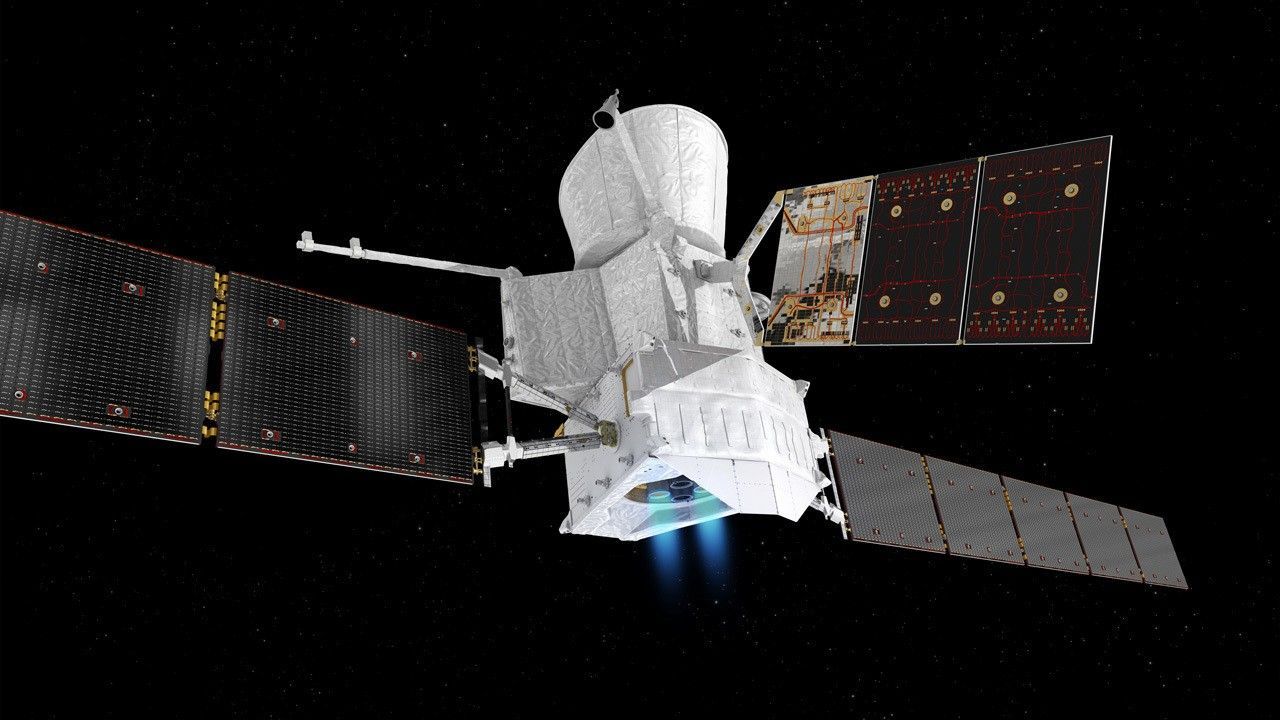
On September 3, the European Space Agency's BepiColombo mission came closer to its target of Mercury after successfully separating its propulsion module, marking the concluding phase of this joint effort between ESA and Japan's JAXA. The spacecraft had traveled over 200 million kilometers from Earth, with all systems functioning as expected.
Mercury, the closest planet to our Sun, has only been explored twice before, both times by NASA probes. Despite its proximity, reaching Mercury is particularly challenging due to the intense gravitational pull of the Sun, which requires significant fuel to decelerate the spacecraft. BepiColombo has so far covered approximately 6 billion miles (9.9 billion kilometers), utilizing nine gravity assist maneuvers around Earth, Venus, and Mercury to control its velocity.
The planet's surface temperature can reach over 800 degrees Fahrenheit (430 degrees Celsius) during the day and plummet to -290 degrees Fahrenheit (-180 degrees Celsius) at night, necessitating the probe's ability to withstand these extreme conditions. Upon reaching its destination, BepiColombo will separate into two distinct orbiters: the Mercury Planetary Orbiter (MPO), which will focus on studying Mercury's surface and internal structure, and the Mercury Magnetospheric Orbiter (Mio), tasked with investigating the planet's magnetic field and its tenuous atmosphere.
This mission will be the first time multiple probes orbit Mercury simultaneously, allowing for a more comprehensive understanding of the planet than any single probe could provide. Mio will adopt a higher elliptical orbit to circle the poles, while MPO will lower its altitude and is scheduled for a final orbit in March 2027. Before commencing scientific observations, the probes must undergo a series of procedures, including the deployment of Mio's essential sunshield.
The probes are expected to commence observations in April 2027, aiming to answer key questions about Mercury's formation and evolution within the solar system, as well as test Einstein's general theory of relativity due to Mercury's unique proximity to the Sun.
Written by urgent.news from Wired's reporting — not their text. Machine-written — may contain errors; check the original before relying on it.