China space surge: 4 orbital rockets launched within 45 hours in satellite blitz
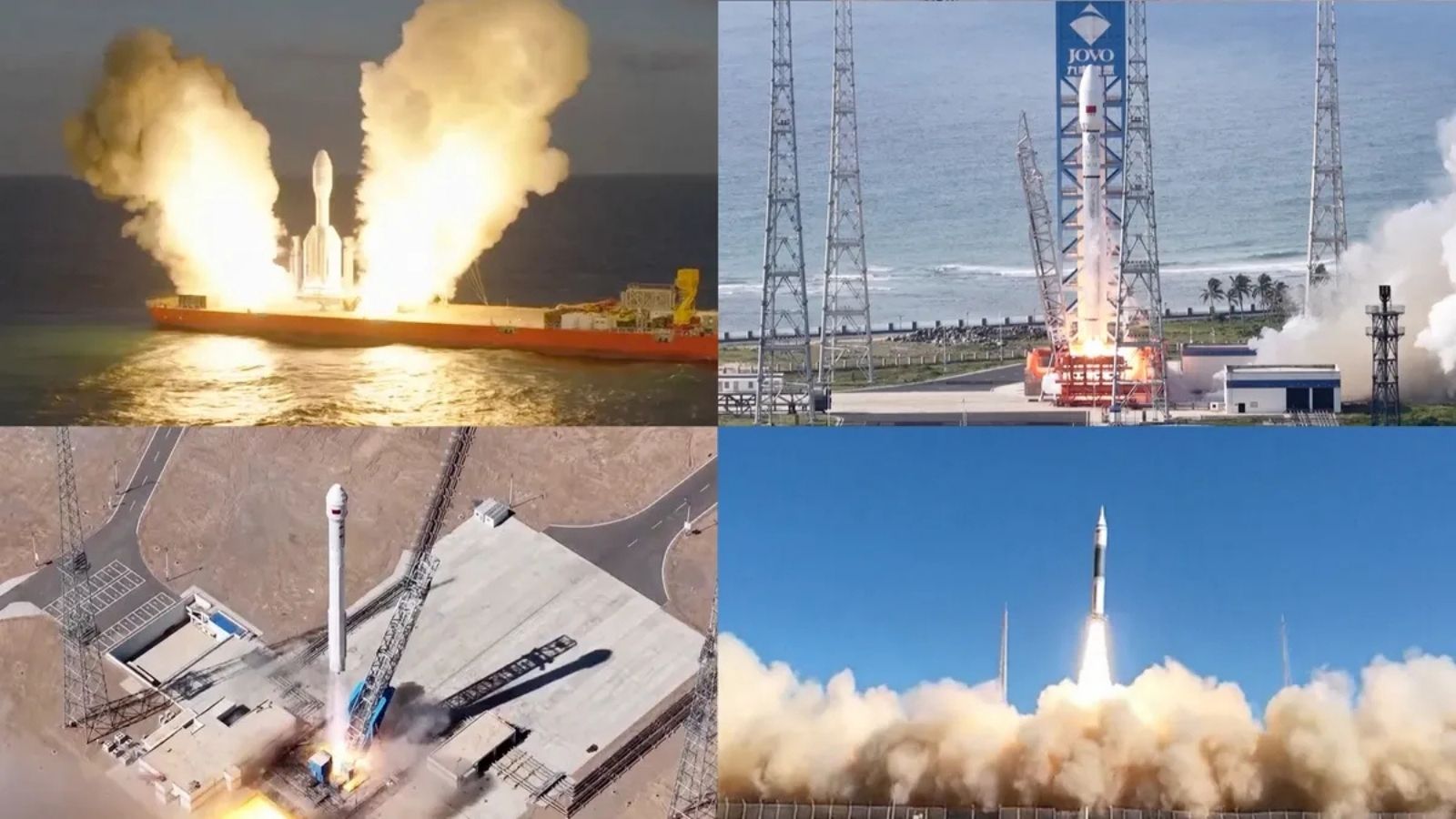
In a rapid sequence of launches between September 15 and 16, China executed four orbital rocket missions from three distinct sites. This surge underscores the rapid expansion of China's space sector, fueled by a blend of state-owned aerospace firms and private commercial providers. Each mission was successful, deploying satellites for Earth observation and major Chinese broadband megaconstellations.
LandSpace's Zhuque-2E rocket, launched from Jiuquan Satellite Launch Center, carried ten low Earth orbit satellites for the Qianfan broadband constellation. Later that day, Orienspace's Gravity-1 rocket, launched from a Shanghai sea platform, deployed nine more Qianfan satellites. The solid-fuel rocket's distinctive design and powerful propulsion set it apart.
On September 16, the Long March 12 rocket from the state-owned China Aerospace Science and Technology Corporation (CASC), launched from Hainan Island, launched nine spacecraft for SatNet, another broadband constellation planned to eventually comprise 13,000 satellites. Two hours later, Kuaizhou-11, operated by a subsidiary of China Aerospace Science and Industry Corporation, completed the four-launch sequence by deploying two Earth-observing radar satellites for Spacety.
While the four launches demonstrated China's capability for multiple orbital missions in a short span, none attempted to land first stages. However, recent progress in reusable rocket technology includes successful landings of first stages by LandSpace's Zhuque-3 and CASC's Long March 10B during orbital missions. The varied rocket types showcased in this sequence highlight the growing diversity within China's launch sector, with the Qianfan and SatNet constellations representing plans for tens of thousands of spacecraft in low Earth orbit.
Written by urgent.news from The Indian Express's reporting — not their text. Machine-written — may contain errors; check the original before relying on it.