When every second matters: how CPR can save a child’s life
Institut Jantung Negara’s Dr Soo Kok Wai and Dr Pan Kok Onn explain the warning signs of cardiac arrest and how to perform CPR until medical help arrives.
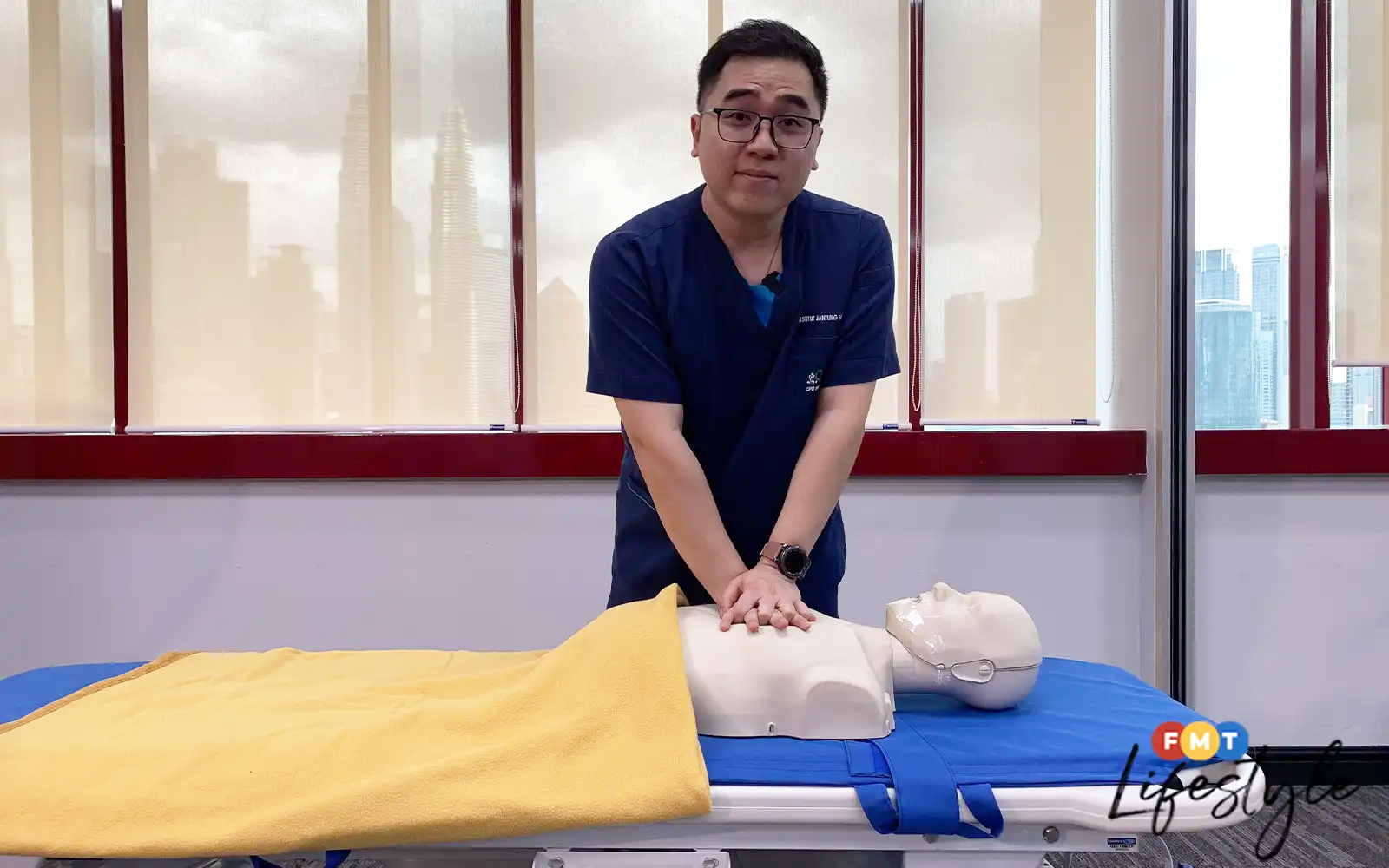
When a child’s heart suddenly ceases to beat, the seconds that follow can determine whether life is saved or lost. Recognising the warning signs and knowing how to perform cardiopulmonary resuscitation (CPR) can be the crucial difference between tragedy and survival for a child with heart issues. Dr Soo Kok Wai, a paediatric cardiologist at Institut Jantung Negara (IJN), urges parents and caregivers to familiarise themselves with CPR, especially for children with congenital heart conditions, severe left heart obstruction, cyanotic heart disease, abnormal heart rhythms, and those recovering from heart surgery.
Their hearts have less capacity to contend with stress, making them more susceptible to cardiac arrest.
The Paediatric Assessment Triangle helps identify these warning signs: a limp or unresponsive appearance, shallow or rapid breathing, and pale, grey, or blue skin. Dr Pan Kok Onn, a paediatric advanced life support instructor at IJN, demonstrates the steps to performing CPR on a child. Begin by checking surroundings for danger, followed by assessing for a response and signs of breathing and circulation.
If none are apparent, commence CPR. Place hands in the centre of the chest between the nipple line, and carry out 30 chest compressions followed by two rescue breaths. Maintain a rate of 100-120 compressions per minute, allowing the chest to recoil fully between cycles. Keep interruptions to a minimum and continue this cycle for five cycles, approximately two minutes, before reassessing the child’s condition.
While the core principles remain consistent regardless of the child’s age, the technique may vary. For infants, use the two-thumb encircling technique, placing both thumbs on the chest’s centre while supporting the infant’s back. For toddlers, the single-palm technique is employed, with the heel of one hand placed in the chest’s centre.
If a child collapses into cardiac arrest with no one else around, remain calm and initiate CPR immediately, continuing for two minutes while alerting emergency services. Your hands and breath become the child’s temporary heart and lungs; by providing effective CPR, you can potentially save a life.
Written by urgent.news from Free Malaysia Today's reporting — not their text. Machine-written — may contain errors; check the original before relying on it.
This story
This is one outlet's version. Read the fullest account.
- When every second matters: how CPR can save a child’s life freemalaysiatoday.com