When every second matters: how CPR can save a child’s life
Institut Jantung Negara’s Dr Soo Kok Wai and Dr Pan Kok Onn explain the warning signs of cardiac arrest and how to perform CPR until medical help arrives.
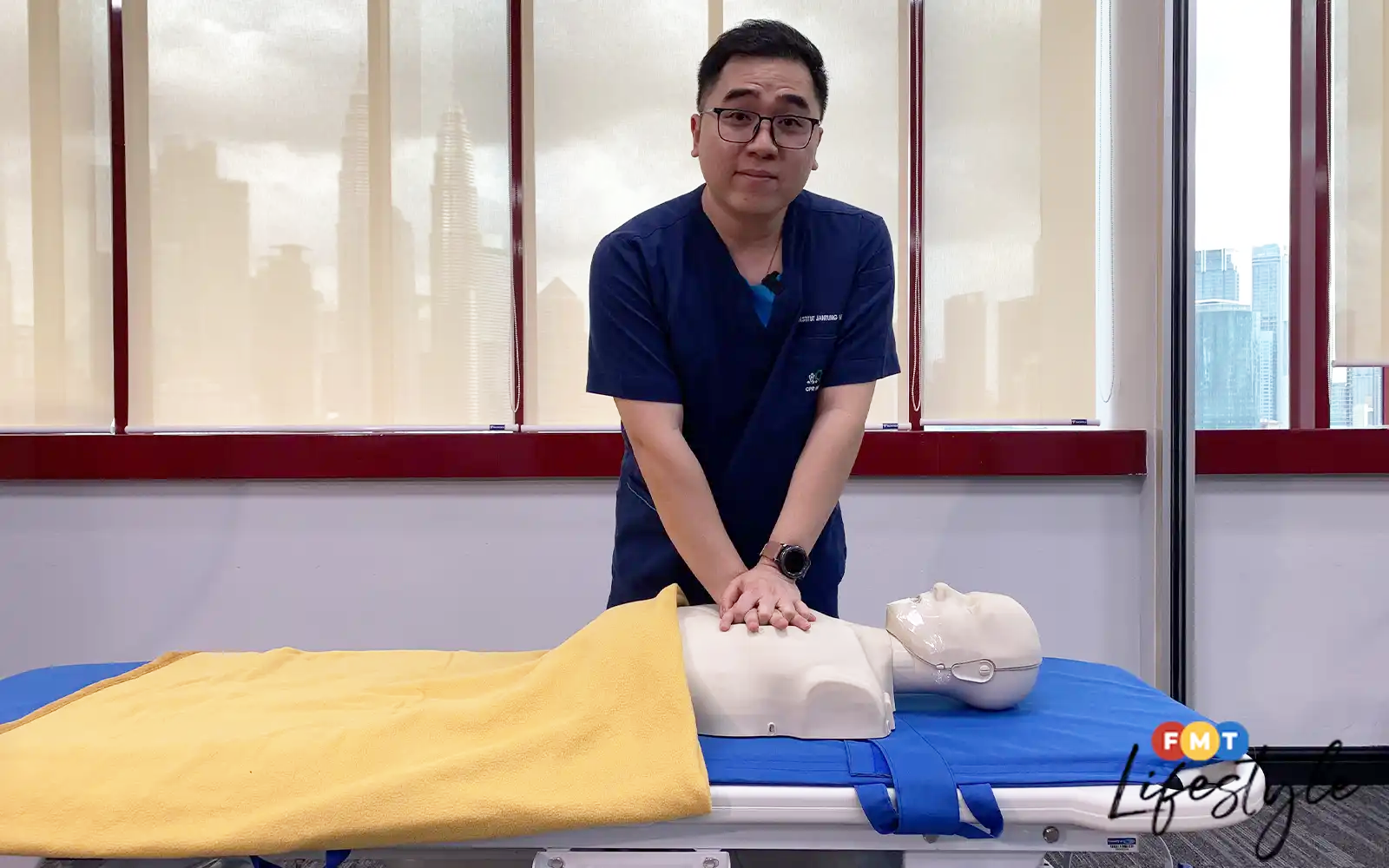
When a child’s heart suddenly stops, acting quickly can be the difference between life and death. Knowing how to perform cardiopulmonary resuscitation (CPR) is crucial, especially for children with heart conditions. Dr Soo Kok Wai, a consultant paediatric cardiologist, explained that children with congenital heart disease are at a higher risk of cardiac arrest due to their hearts having less capacity to cope with physical stress.
Parents and caregivers should be able to recognise the warning signs of cardiac arrest, such as the child becoming limp and unresponsive, experiencing shallow or rapid breathing, and having pale, grey, or blue skin. The Paediatric Assessment Triangle can help identify these signs, including changes in appearance, breathing patterns, and skin colour.
To perform CPR on a child, Dr Pan Kok Onn, a paediatric advanced life support instructor, demonstrated the following steps: ensuring the surroundings are safe, checking for a response and breathing or circulation, placing hands in the centre of the chest, performing 30 chest compressions followed by two rescue breaths, allowing the chest to recoil fully, and repeating the cycle of compressions and breaths for about two minutes.
In the case of infants, the two-thumb encircling technique should be used, with both thumbs placed on the centre of the chest while supporting the infant's back with both hands. For toddlers, the single-palm technique is used, placing the heel of one hand in the centre of the chest.
If a child goes into cardiac arrest and no one else is present, remain calm, begin CPR immediately, and continue for two minutes while shouting for help. If no one responds, call an ambulance on speakerphone and keep performing CPR until help arrives. The child's ribcage is flexible, so there is a low risk of serious injury during CPR. Remember, your hands and breath are the child's temporary heart and lungs, so by performing good CPR, you can save a life.
Written by urgent.news from Free Malaysia Today's reporting — not their text. Machine-written — may contain errors; check the original before relying on it.
Also reported by 1 other outlet
- When every second matters: how CPR can save a child’s life freemalaysiatoday.com