Pacific island states are trapped in Cold War 2.0
In early July, China fired a test missile from a nuclear submarine into the South Pacific for the first time, a weapon capable of carrying nuclear warheads. Washington and Canberra were livid. The Pacific has long been the exclusive testing ground for such long-range missiles from the United States. How dare China! The reaction from Pacific island states was more measured. While leaders from…
Pacific island states find themselves ensnared in the ongoing ideological struggle dubbed "Cold War 2.0". In July, China conducted an unprecedented test missile launch from a nuclear submarine in the South Pacific, marking a significant escalation. This weapon, capable of carrying nuclear warheads, was a stark departure from the United States' exclusive testing grounds in the region.
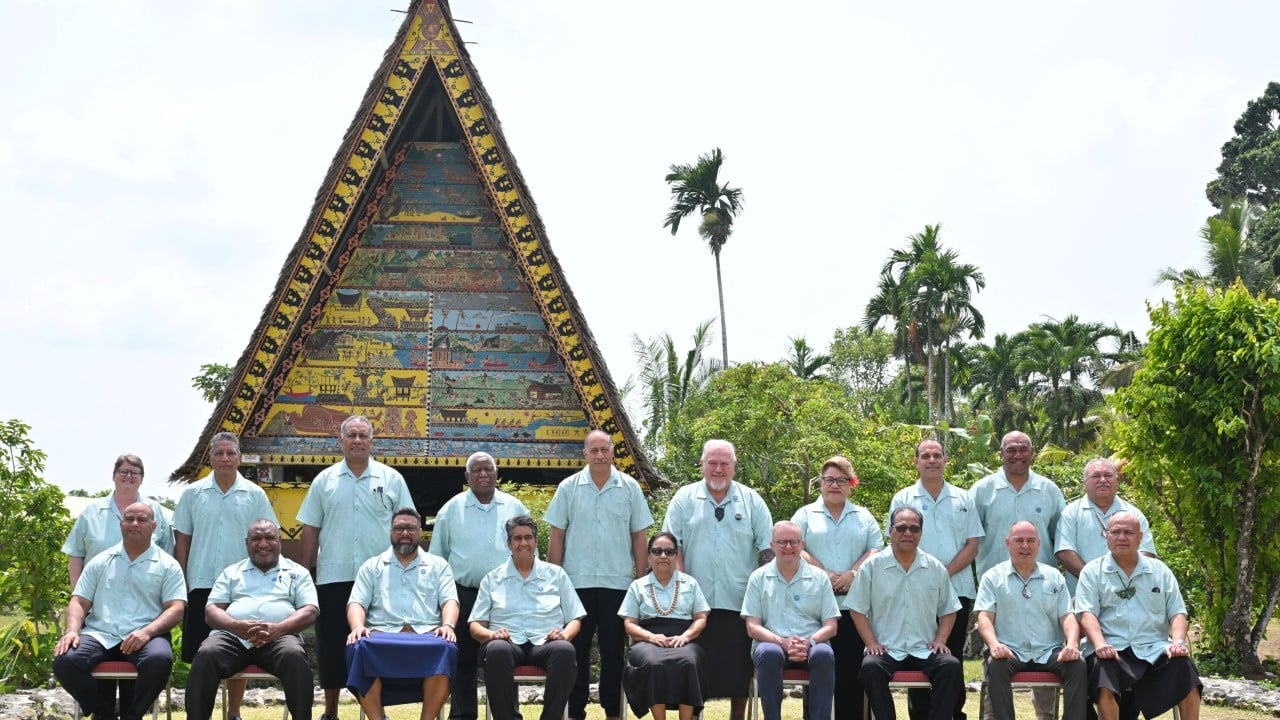
While Pacific island nations like Tuvalu, Palau, and the Solomon Islands vociferously criticized China's actions, the 18-member Pacific Islands Forum (PIF) struggled to issue a unified condemnation. Foreign ministers repeatedly failed to reach a consensus on the matter. In a move that drew criticism, Kiribati and Nauru reportedly refused to agree on any criticism of China.
Ultimately, a PIF statement expressing concern over the test was released, without specifically naming Beijing. Nauru distanced itself from the statement, citing unfairness in singling out China when the US frequently conducted similar tests near the Marshall Islands.
Historically, the US has conducted over 15 ballistic missile tests in the Pacific since 2021, continuing a pattern of nuclear testing that began in 1946 and lasted until 1996, resulting in extensive radioactive contamination and immense suffering for the affected populations. The double standard in this regard is glaring, with the US seemingly unburdened by the ramifications of its past actions.
Geopolitically, the Pacific region resembles a feudal hierarchy, with small island nations acting as vassal states to larger powers, including Australia, New Zealand, and the United States. Since forming an alliance with Britain and the US under Aukus, Australia has increasingly mirrored the behavior of a vassal state. According to a Guardian report, the US military controls or has access to over 100 defense facilities on Australian soil, leading some analysts to describe this as "colonization".
California’s Nautilus Institute data shows the US military controls 17 facilities on mainland Australia and has access to 75 more, with an additional 18 accessible through defense corporations.
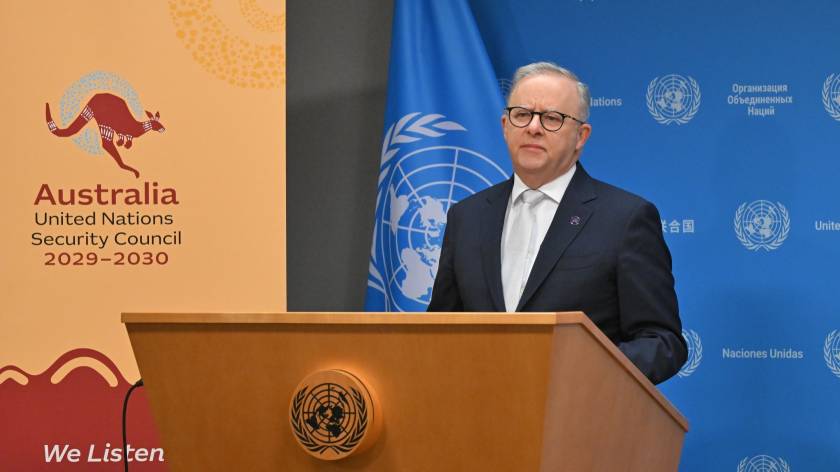
Under the Compacts of Free Association, the Marshall Islands, Micronesia, and Palau operate as US defense outposts, with Washington retaining the power to veto foreign relations decisions. Australia's shifting diplomatic stance towards China highlights a troubling inconsistency. Prime Minister Anthony Albanese, initially seeking stabilization following China's lifting of sanctions, now openly criticizes Beijing's potential for "hegemony".
While he acknowledges that the US missile tests cannot be compared to Chinese actions, his stance appears to be driven more by paranoia or exaggeration than a rational assessment. This shift coincides with troubling developments, as the US under President Donald Trump's erratic Asia policy undermines Washington's credibility. In response, Canberra is forging new defense pacts with Fiji, Papua New Guinea, and Vanuatu, signaling renewed great-power competition even as the Aukus submarine deliveries remain uncertain.
China has warned of "measures" over any challenge to its lease for the Darwin port, despite distancing itself from what it perceives as "selfish political gains".
Despite the prevailing hawkish assumptions in Australia, public opinion diverges significantly from the elite consensus. A majority of Australians view China as an economic partner rather than a security threat. However, as Laura Tingle, ABC's global affairs editor, aptly noted, the world is a "particularly confusing place" and no one seems more lost in this confusion than Australia.
Former New Zealand Prime Minister Helen Clark has warned that the rush into Pacific security pacts threatens to erode New Zealand's cherished tradition of independent foreign policy. Her warning echoes the discomfort felt by small nations caught in the middle of this new cold war, whose interests are being exploited and trampled upon.
Written by urgent.news from Reuters Business via SCMP's reporting — not their text. Machine-written — may contain errors; check the original before relying on it.
This story
This is one outlet's version. Read the fullest account.