Middle powers don’t have to wait for a Trump-Xi-Putin summit
The prospect of United States, Chinese and Russian leaders meeting at the Asia-Pacific Economic Cooperation (Apec) summit in Shenzhen this November has revived the Yalta analogy. Talk of a Trump-Xi-Putin summit – echoing the 1945 meeting that reshaped the world – surfaced during the first Trump term, and speculation returned last year with the 80th anniversary of the second world war. No such…
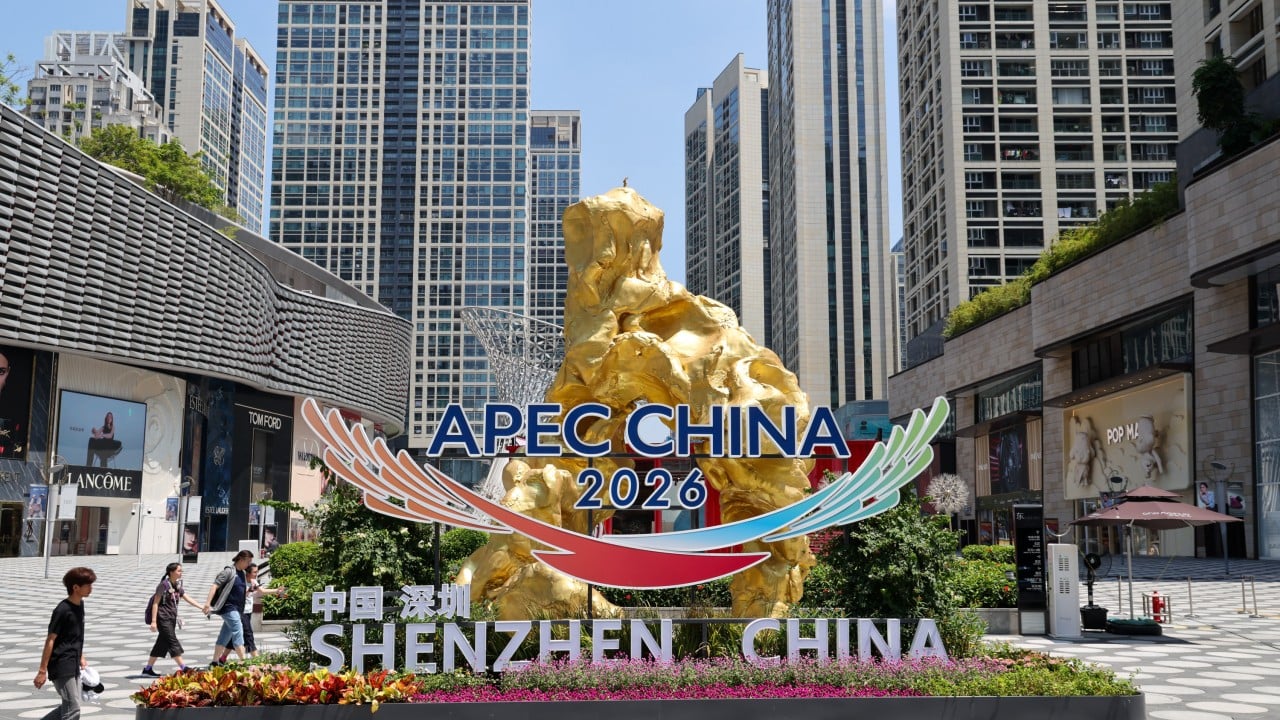
The idea of a summit involving the United States, China, and Russia at the Asia-Pacific Economic Cooperation (Apec) gathering this November has gained attention due to its resemblance to the historic Yalta conference in 1945. Speculation about such a meeting resurfaced last year when commemorating the 80th anniversary of World War II.
Despite no summit taking place, Chinese President Xi Jinping brought the two presidents together in Beijing in May, and Moscow now suggests a three-way meeting in Shenzhen is feasible. This prospect symbolizes the potential for international order to fragment, with all three leaders around the table. However, it also taps into a persistent belief that disorder is primarily managed by a select few great powers.
While a literal 21st-century Yalta seems unlikely, its underlying principles are gaining prominence as trade, technology, finance, infrastructure, and development are increasingly shaped by great-power alliances and rivalries. Middle powers possess limited capacity to prevent great powers from competing or coordinating, but they hold significant potential in hindering such competition or coordination from becoming the primary framework for international cooperation.
Their chance lies in an underutilized aspect of global politics: the geography of multilateralism. Global governance is organized through various specialized hubs, such as New York for political legitimacy, Geneva for trade, health, labor, humanitarian, human rights, and technical institutions, Vienna for nuclear governance and arms control, Nairobi for environmental governance, Brussels for regulatory power, Basel for central banking, Bangkok for regional development, Singapore for finance and shipping, and emerging centers like Shanghai for the World Artificial Intelligence Cooperation Organisation (Waico).
To enhance cooperation across geopolitical divides, a system of polycentric functional multilateralism is necessary. This would link specialized centers through recurring institutional relationships, allowing collaboration beyond great-power summits. A functional multilateral corridor, such as one connecting Geneva and Shanghai for AI governance or Geneva and Nairobi for energy and environmental costs of AI infrastructure, could facilitate such cooperation.
These corridors require more than conferences; they need regular working groups, staff secondments, shared data sets, compatible reporting systems, pooled funding, and predictable annual work cycles. The host states, including Switzerland, Kenya, Thailand, Singapore, and the United Arab Emirates, play a crucial role by providing the necessary infrastructure.
Middle powers with no major international headquarters can also serve as connectors, financing cross-hub initiatives, bridging regulatory approaches, integrating regional organizations into global processes, and co-chairing functional coalitions. Their leverage comes from shaping the boundaries between institutions. Regular connections can foster institutional momentum, as each layer raises the cost of rupture and lowers the cost of cooperation.
The Bank for International Settlements (BIS) Innovation Hub exemplifies a partial model, with teams operating across multiple countries while maintaining strategic partnerships with the US Federal Reserve. The United Nations is also moving towards internal polycentricity with regional commissions as physical hubs and developing joint knowledge hubs.
Beyond the UN system, extending this logic could connect established institutions with regional and emerging centers. Cross-bloc connectivity must be the measure of success, as it helps contain rivalry's spillovers and maintain technical cooperation during diplomatic crises. While technical cooperation alone cannot dissolve strategic rivalry, its strategic value lies in preserving stability in crucial areas like finance, health, climate, AI safety, humanitarian affairs, and trade when relations among major powers deteriorate.
Written by urgent.news from South China Morning Post's reporting — not their text. Machine-written — may contain errors; check the original before relying on it.
This story
This is one outlet's version. Read the fullest account.