Escalation fears in Middle East as Houthis attack Riyadh
The United States warned yesterday that hostilities between Saudi Arabia and Iran-backed Houthis could "escalate rapidly" after a missile attack targeted Riyadh for the first time since the Yemen conflict resumed.
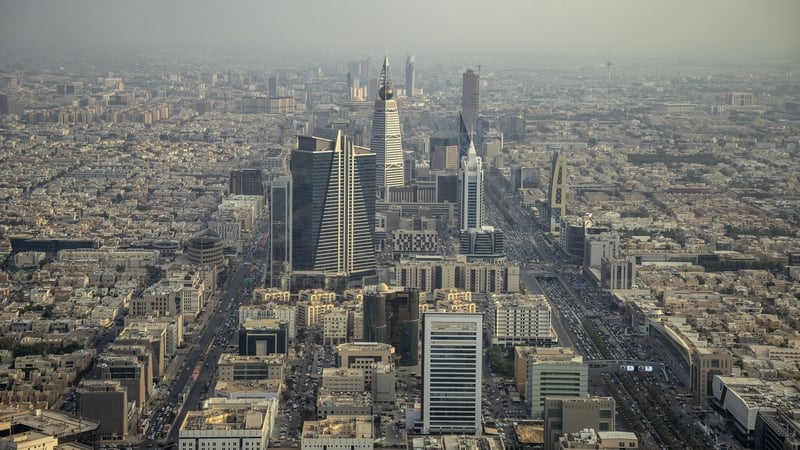
The United States has expressed concerns that hostilities between Saudi Arabia and Iran-backed Houthis could rapidly escalate following a missile attack that targeted Riyadh for the first time since the Yemen conflict resumed. President Donald Trump cut short a weekend at his rural Maryland retreat to return unexpectedly to the White House, though the White House gave no explanation for the early departure.
The conflict's escalation is especially concerning given the recent advances made by the Houthis, who control a large part of Yemen and are fighting against government forces backed by a Saudi-led coalition.
Loud explosions were reported in the Saudi capital yesterday, with footage showing a fuel tank bearing the logo of oil giant Aramco on fire near the airport. US officials warned that the conflict has the potential to escalate quickly, advising American citizens outside the Middle East to reconsider travel to and through the region.
The Houthis' rapid offensive in recent weeks has left hundreds dead and displaced over 110,000 people, according to the UN. The Riyadh-led coalition confirmed that a missile launched by the Houthis was successfully intercepted, but the attacks have still disrupted Saudi Arabia's oil exports and maritime traffic as the world's leading crude oil supplier.
The Saudi coalition claimed that the Houthis had tried to target civilians and civilian infrastructure in several cities, including the port of Yanbu on the Red Sea, which is a crucial export hub for Saudi oil. In response, Saudi Arabia launched scores of airstrikes on Houthi-held areas, but it has struggled to halt the Houthis' advance.
The Houthis retaliated with two successful military operations using a large number of ballistic and cruise missiles and drones, targeting sensitive sites in the Saudi capital, Riyadh, and Aramco facilities in Yanbu. Residents of Riyadh heard what sounded like explosions early in the morning, and the Saudi civil defense agency lifted a previously issued air raid alert later that day.
The attack on Riyadh marks the first time since the Yemeni civil war resumed that strikes have threatened the Saudi capital, adding further pressure to an economy already shaken by seven months of war between the US and Iran. The area has been under a hostile aerial threat, according to a message sent to Riyadh residents before 3am, urging them to stay indoors.
The Houthis have repeatedly denied accusations of targeting Mecca, Islam's holiest city, which welcomes millions of pilgrims each year. The group claims to have carried out daily retaliatory strikes since their offensive to take over Yemen's Red Sea coast, giving them control over the Bab al-Mandab strait. The US last week refused a Saudi request to strike the Houthis and approved a $24.3 billion sale of 48 F-35 fighter jets to Riyadh to help deter current and future threats.
Written by urgent.news from RTE News's reporting — not their text. Machine-written — may contain errors; check the original before relying on it.
This story
This is one outlet's version. Read the fullest account.
- Sources: the US "almost started a war" after an AI-assisted report hallucinated that a Chinese ship in the Middle East was carrying nuclear weapons components (CNN) cnn.com
- AI, Middle East escalation, Ukraine-Russia war on agenda for upcoming UN General Assembly jpost.com
- US military AI blunder: False intelligence on Chinese ship ‘almost started a war,’ report claims hindustantimes.com
- US Military Nearly Started World War III After AI Chatbot Hallucinated Nuclear Weapons Aboard a Chinese Ship futurism.com
- AI hallucination of Chinese nuclear components almost led to US military attack arstechnica.com
- US nearly raided Chinese ship after AI falsely flagged ‘nuclear’ cargo for Iran — CNN timesofisrael.com