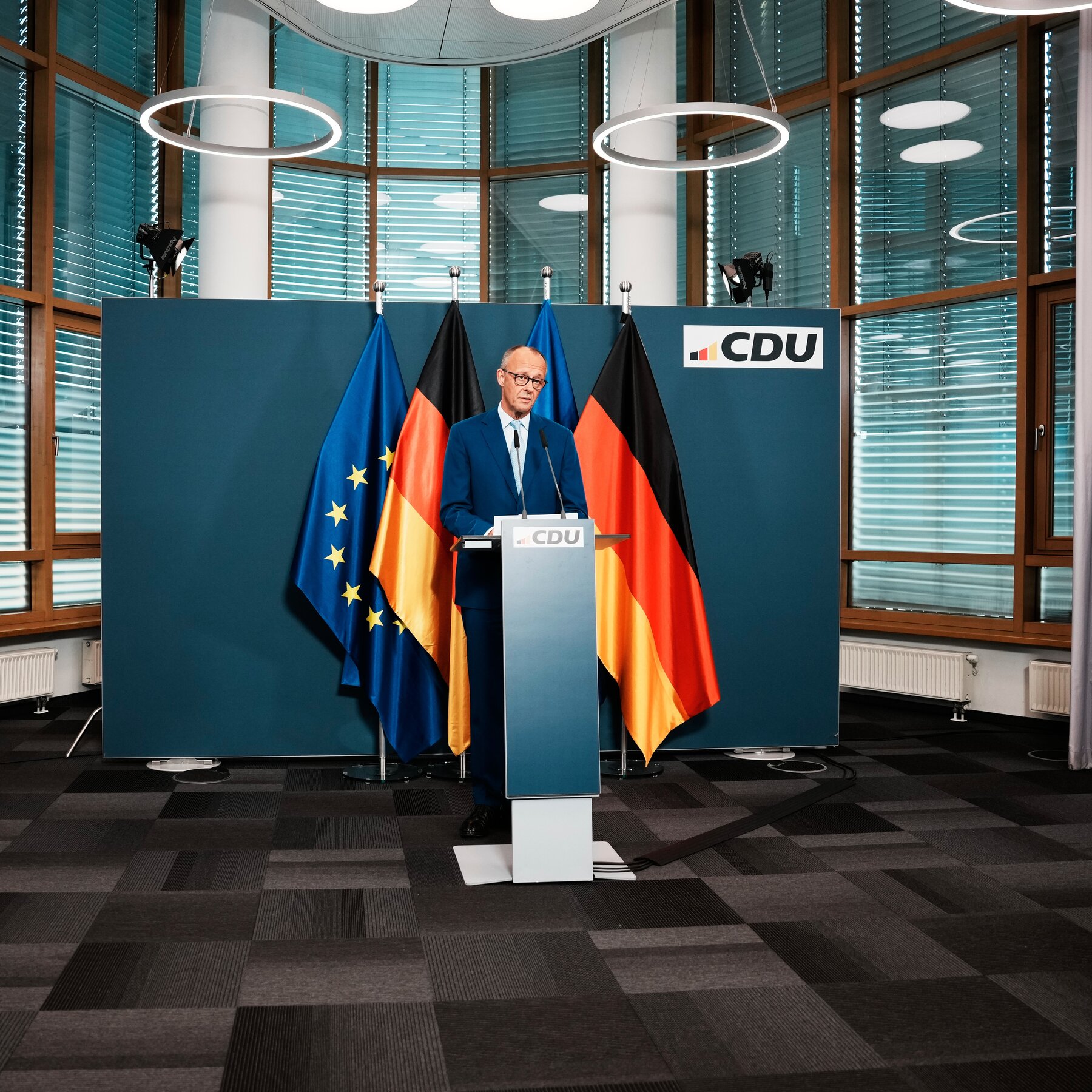
Merz stumbles on after another big election defeat. But for how long?
Pressure is growing on the German chancellor, with the hard-right AfD party projected to win key state elections, delivering the worst result for his conservative CDU party since 1949.
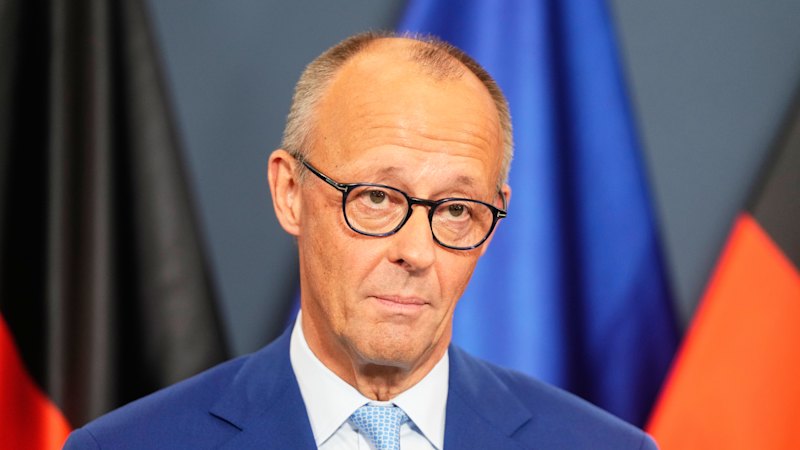
Recent German state elections have dealt a significant setback to Chancellor Friedrich Merz and his Christian Democratic Union (CDU). In two of Germany's 16 federal states, Berlin and Mecklenburg-Western Pomerania, the CDU's performance in the elections underscores the party's struggles both nationally and internationally.
In Mecklenburg-Western Pomerania, projections show the CDU narrowly failing to clear the 5% threshold for representation in parliament, marking a historic first for the party. Meanwhile, in Berlin, the party that previously led the state government, has lost nearly a third of its support, now standing at around 20%. Shortly after the initial projections, Merz made a statement: "We can't sugarcoat the results in Mecklenburg-Western Pomerania — it was a disaster." He described the heavy losses in Berlin as "reasonable."
This marks the third electoral defeat for the CDU in just two weeks. The party's performance at the federal level is equally concerning, as Chancellor Merz currently governs in coalition with the center-left Social Democratic Party (SPD). At the federal level, Merz is facing mixed results, as the SPD saw a 36% vote share, placing it just behind the far-right Alternative for Germany (AfD) in the state elections, which nearly doubled its vote share compared to 2021, coming in first at 38%.
In Berlin, the SPD's vote share fell by a third to 12%, while the AfD became the third-largest party, winning 16% of the vote. The Left Party, which has emerged as the new frontrunner in Berlin, with about 25%, is projected to form a coalition with the SPD and Greens if they are successful.
The election results reflect widespread dissatisfaction with Merz and the ruling coalition. In nationwide opinion polls, the governing coalition no longer holds a majority, with the AfD leading and the SPD narrowly ahead of the Left Party. Parties on the political fringes are gaining significant support, outpacing the ruling parties, who have been embroiled in internal disputes.
Despite these setbacks, Merz insists on pushing forward with the reforms, stating, "The reforms must go ahead." These reforms include increased costs for health, long-term care, and pension insurance, as well as scaled-back family insurance coverage. However, these measures are unlikely to win new support for the unpopular government.
Merz remains confident, asserting, "I want to move our country forward. I am also firmly convinced that the success of our reforms will not only improve our society but also boost our self-image and our image in the world." However, the election results have put additional pressure on the federal government, particularly as the AfD opposes military support for Ukraine in its fight against Russia's invasion.
Written by urgent.news from DW News's reporting — not their text. Machine-written — may contain errors; check the original before relying on it.
This story
This is one outlet's version. Read the fullest account.
- German state elections deal a blow to Chancellor Friedrich Merz dw.com
- Germany’s Merz vows to press ahead with reforms after historic state election defeat scmp.com
- German Chancellor Merz vows to stay on despite 'disaster' in state election bbc.co.uk
- Germany's Merz vows to press on with reforms despite state election defeat rfi.fr
- Germany's Merz vows to press on with reforms despite state election losses to far-right AfD cbc.ca
- Germany's Merz vows to press ahead with reforms after historic state election defeat npr.org
- Merz stumbles on after another big election defeat. But for how long? theage.com.au
- Merz vows to press ahead with reforms after historic German state election defeat cnbc.com