Leo XIV, first US pope transcends his restrained style
PRUDENT yet conciliatory, Pope Leo XIV has gradually imprinted his style on the leadership of the Catholic Church, finding his voice as he takes on some of the world’s most pressing issues, from bloody conflicts to artificial intelligence.
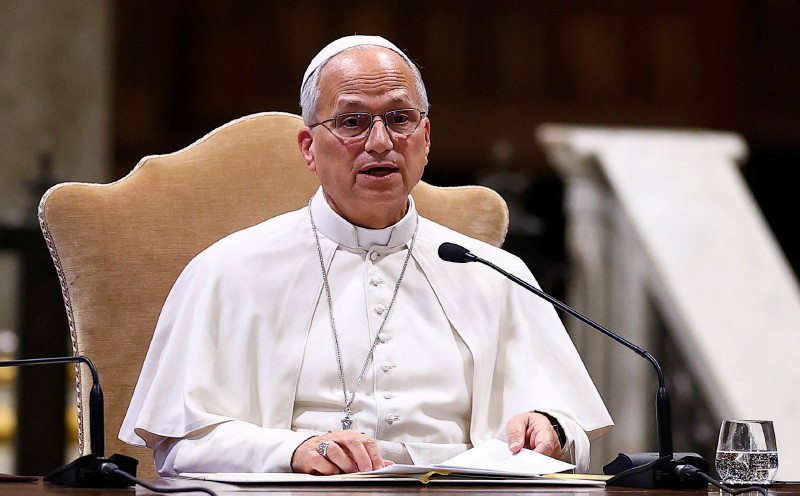
Pope Leo XIV, the first American pontiff, has quietly established his unique style within the Catholic Church, addressing pressing global issues from armed conflicts to artificial intelligence. Elected on May 8, 2025, after a two-decade career as a missionary in Peru, Pope Leo XIV leveraged his prior knowledge of the Vatican and Roman Curia to take on the world's 1.4 billion Catholics.
Over the past 18 months, his character and priorities have become clearer, demonstrating a willingness to intervene in society’s most challenging problems, including steering the development of emerging technology and advocating for the disadvantaged.
In recent months, Leo has embarked on a series of international trips, including visits to Italy, Africa, and Spain, before heading to France from September 25 to 28. Born in 1955 to Franco-American heritage, Leo XIV is fluent in French, Spanish, Italian, Quebecois, and Monegasque, as well as English. While initially appearing reserved, he has gradually developed a more vocal presence, earning the admiration of scholars like Martin Dumont, secretary-general of the Research Institute for the Study of Religions at the Sorbonne University in Paris.
Pope Leo XIV’s first encyclical, published in May, called for integrating artificial intelligence in a way that respects human dignity, a message that has resonated beyond Catholic circles. As an advocate for peace, Leo has offered the Holy See as a mediator between Russia and Ukraine and maintained a strong stance against the Russian invasion of its neighbor. His opposition to US President Donald Trump has further endeared him to many, positioning him as a symbol of resistance against authoritarian populism.
Written by urgent.news from New Straits Times's reporting — not their text. Machine-written — may contain errors; check the original before relying on it.