Diplodocus fossils found in Spain challenge North America’s dinosaur monopoly
A significant paleontological breakthrough has occurred in Spain, where researchers have identified the first confirmed Diplodocus fossils beyond North America. Found in Teruel, these tail vertebrae date back around 150 million years. The discovery implies that during the Late Jurassic era, declining sea levels could have permitted dinosaurs to migrate between continents.
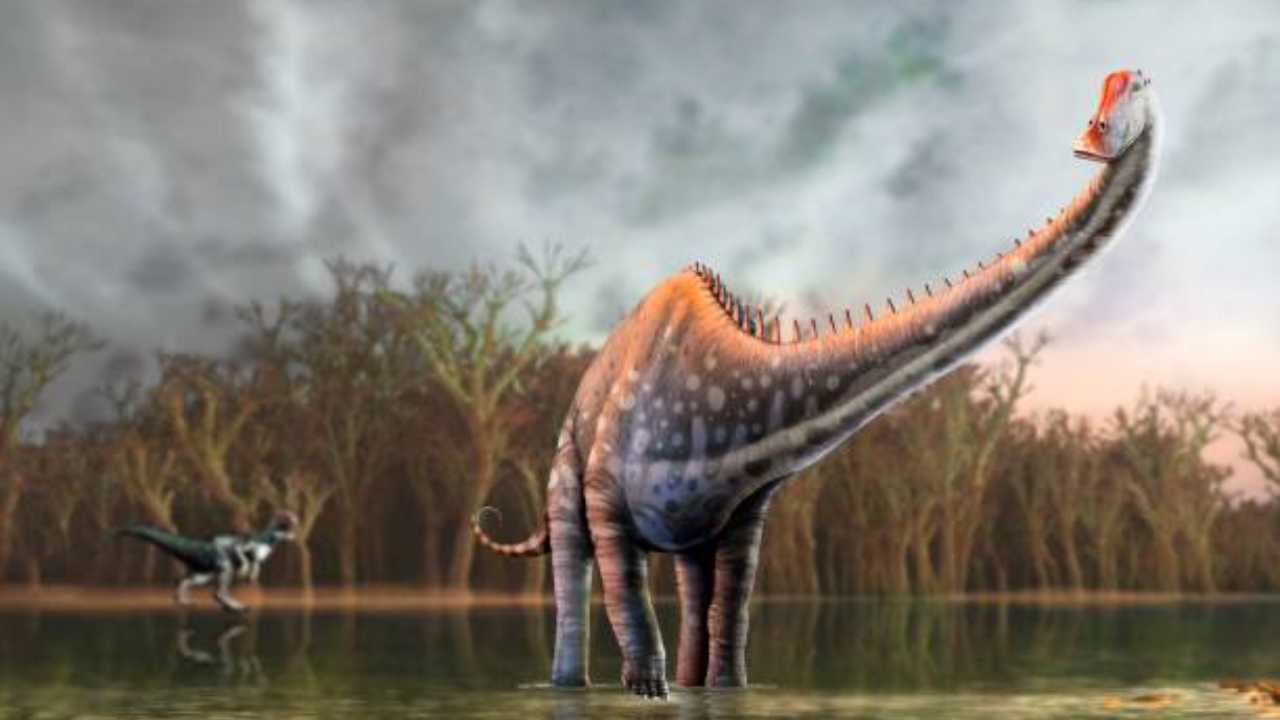
Spanish scientists have made a groundbreaking discovery, unearthing the first confirmed Diplodocus fossils outside of North America. This marks the first-ever sighting of the dinosaur species outside its traditional habitat in the western United States. For centuries, all confirmed bones of Diplodocus were found within the Morrison Formation of the US.
However, recently, a team led by Sergio Sanchez Fenollosa found matching anatomical features in the tail vertebrae from Teruel, Spain. These roughly 150-million-year-old remains are the first confirmed Diplodocus fossils discovered beyond North America, according to a report in the Journal of Vertebrate Paleontology.
The roughly 150-million-year-old remains, dated to the Late Jurassic period, belonged to an animal that measured about 82 feet long. The exceptional preservation of the specimen allowed researchers to identify several unique anatomical traits associated with Diplodocus, including deep grooves and forked chevron bones. The team compared their findings with published descriptions of other long-necked, plant-eating sauropods, confirming that the vertebrae and chevrons shared distinctive features with Diplodocus.
While Diplodocus was initially discovered in the United States in 1878, its international recognition has grown, appearing in major natural history museums worldwide during the early 20th century. Diplodocus gained international fame due to its enormous length, long whip-like tail, and relatively small head. Although the exact route Diplodocus took between North America and Spain remains unknown, researchers speculate that falling sea levels may have exposed temporary land bridges between the continents during that era, enabling dinosaur migration.
Despite finding a Diplodocus species, the tail remains incomplete, making it impossible to pinpoint its exact species. However, the Spanish Diplodocus is closely related to the North American species Diplodocus hallorum. The discovery of more complete skeletons in Europe could help determine the precise relationship between the two species.
The sediments surrounding the fossils were deposited on a coastal plain shaped by rivers, along with other large plant-eating dinosaurs, such as Turiasaurus and Losillasaurus. These dinosaurs belong to a different branch of the sauropod family. The tail bones are now on display at Dinópolis in Teruel, while replicas can be found at El Castellar.
Written by urgent.news from Times of India's reporting — not their text. Machine-written — may contain errors; check the original before relying on it.