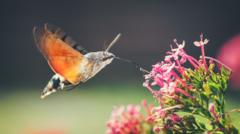
Have you seen the hummingbird hawk moth?
Hummingbird hawk moths - often mistaken for small birds - are being spotted in the West Midlands.
This summer, warmer temperatures in the West Midlands led to an increase in sightings of species previously considered uncommon in the region, such as the hummingbird hawk moth, ivy bees, and the wasp spider. James Benwell of the Birmingham and Black Country Wildlife Trust noted that 2026 was a record year for these sightings, which were often mistaken for small birds.
The hummingbird hawk moth, characterized by its furry grey body, orange hindwings, and long proboscis, migrates from southern Europe and north Africa to the UK during summer months. Its wings beat about 80 times per second, making it appear as if it's hovering over flowers. Benwell expressed his envy for those who had spotted the moth this year, stating that it was truly remarkable.
Ivy bees, which feed mainly on ivy flowers, have also become more prevalent in the Midlands. These bees, first recorded in the UK in 2001, are slowly spreading north after being initially discovered in Stourbridge in 2015. Other notable species experiencing population increases in the area include the clouded yellow butterfly, a European migratory species known for its peak years during unusually hot summers.
However, despite the rise in some species, others, like the small tortoiseshell butterfly and two-spot ladybird, are experiencing dwindling numbers. The Butterfly Conservation charity stated that while some common species are now rare, recording today's common species may help preserve them for the future.
Written by urgent.news from BBC Science's reporting — not their text. Machine-written — may contain errors; check the original before relying on it.