Our brain evolved from two primitive nervous systems that merged
The front and back parts of our brain come from different progenitor cells in embryos, which suggests they evolved as separate entities
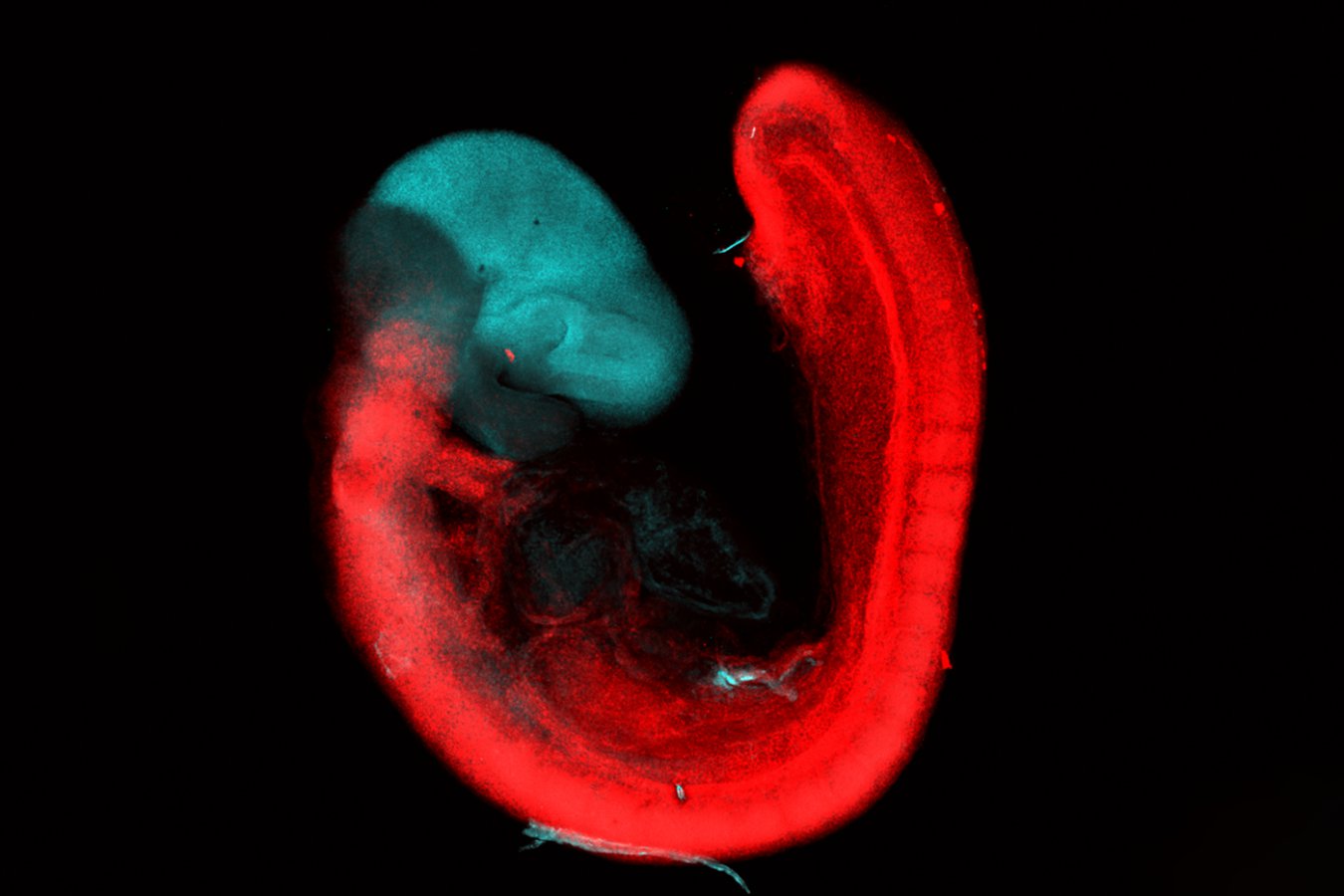
Our brain may have evolved from two ancient nervous systems that merged hundreds of millions of years ago, according to new research. The front and back regions of the human brain, as well as other species, develop from two distinct cell types in embryos, rather than sharing a single origin. Kyle Loh, a researcher from Stanford University, suggests that evolution took existing neural systems and combined them spatially, making a single-brain organ more efficient, despite relying on the two-separate-systems method.
The study examined early stages of mouse embryo development, finding that the brain forms from two types of early progenitor cells. One type expresses the OTX2 gene and develops into neurons of the front part of the brain, including the forebrain and midbrain. The other type expresses the GBX2 gene and becomes neurons in the hindbrain, which is located at the back of the brain. This discovery explains why lab-grown hindbrain tissue has been difficult to produce, as previous attempts used cells destined for the forebrain.
The researchers then conducted experiments using human cells in a dish and found that hindbrain and forebrain neurons also develop from different progenitor cells. This knowledge enabled them to grow functional human hindbrain motor neurons for the first time, which are crucial for essential life-sustaining processes such as breathing, sleeping, eating, and heartbeats. In contrast, the forebrain is responsible for higher-level thought processes.
These findings could significantly impact research into conditions like amyotrophic lateral sclerosis (ALS) and spinal muscular atrophy, which affect the hindbrain. By growing human hindbrain neurons in a dish, researchers can better understand the mechanisms behind GLP-1 drugs, which are used to manage appetite and have recently been linked to the hindbrain.
The researchers also observed similar brain development patterns in early-stage embryos of chickens, zebrafish, and acorn worms. This suggests that our shared two-origin brain system likely arose around 550 million years ago. However, simpler organisms like jellyfish possess two separate nervous systems, possibly joined together in our distant ancestors to enhance overall processing power.
The integration of these two nervous systems could have facilitated the evolution of complex thought by allowing the hindbrain to focus on vital functions while the forebrain developed for higher-level cognition.
Written by urgent.news from New Scientist's reporting — not their text. Machine-written — may contain errors; check the original before relying on it.