North Korea’s nuclear tests awaken fault lines pointing to huge volcano at China border
North Korea’s underground nuclear tests have triggered a chain of seismic events, activating ancient fault lines that stretch towards one of the most dangerous volcanoes on Earth, about 100km (62 miles) away, according to a paper published by the journal Science. The joint Chinese and South Korean study, which appeared on Thursday, found that the five nuclear explosions conducted between 2013 and…
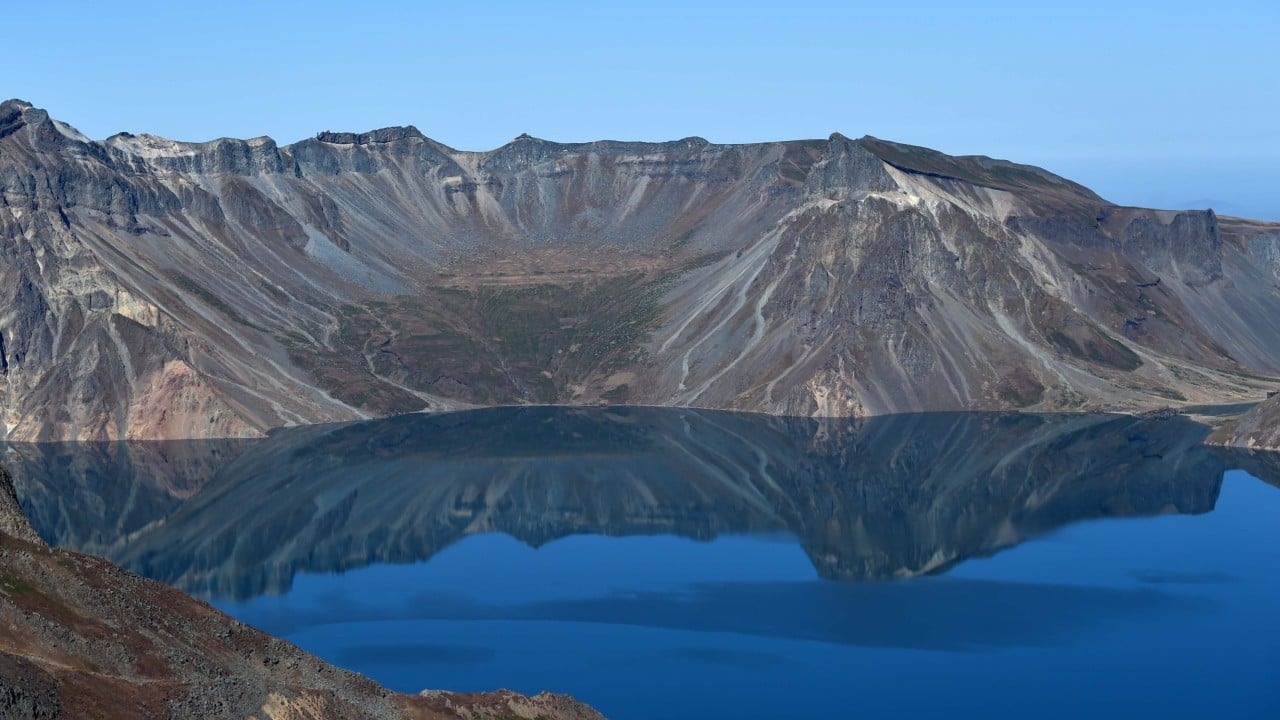
North Korea's nuclear tests have set off a series of seismic events, activating ancient fault lines that approach a massive dormant volcano located near the China-North Korea border, according to research published in the journal Science. The study, a collaborative effort by Chinese and South Korean scientists, reveals that the five nuclear explosions conducted between 2013 and 2017 at the Punggye-ri test site, situated beneath Mount Mantap, have fundamentally changed the region's geological stability.
The seismic activity triggered by these tests has not only persisted for nearly a decade but also intensified over time. The research indicates that these fault lines extend directly towards Changbai Mountain, also known as Mount Paektu, a dormant but restless volcano that last erupted in AD946, one of the largest volcanic eruptions in the past 2,000 years.
While the scientists conclude that the possibility of the nuclear tests influencing the volcanic system of Mount Paektu is physically conceivable, they emphasize that direct observational evidence confirming this influence remains absent. The tests, particularly the largest one in 2017 with an estimated yield of 100-250 kilotonnes of TNT, have the potential to affect the volcano, although the researchers stress that no direct evidence currently exists linking these events to any change in volcanic activity or increased likelihood of an eruption at Mount Paektu.
The study's findings were based on high-precision relocation of seismic sources recorded after the tests, which showed the seismic events formed coherent fault-scale structures pointing north-northwest from the test site. This suggests that the nuclear tests have altered the local stress field and progressively damaged the shallow crust, facilitating the delayed reactivation of pre-existing structural weaknesses.
However, the researchers acknowledge the limitations in investigating the Mount Paektu area, stating that the exact state of the volcanic magma chamber remains unclear. Historical records from ancient Japan and Korea suggest that the AD946 eruption of Changbai Mountain released volcanic ash that drifted as far as Nara, accumulating several centimeters of ash in northern Japan and causing a continuous drum-like roar in Goryeo and Kyoto that persisted into the following spring.
Written by urgent.news from South China Morning Post's reporting — not their text. Machine-written — may contain errors; check the original before relying on it.
This story
This is one outlet's version. Read the fullest account.