IHC says political protests cannot infringe citizens’ fundamental rights ahead of PTI march
Says besieging Islamabad, and suspending citizens’ rights cannot be claimed as protest rights
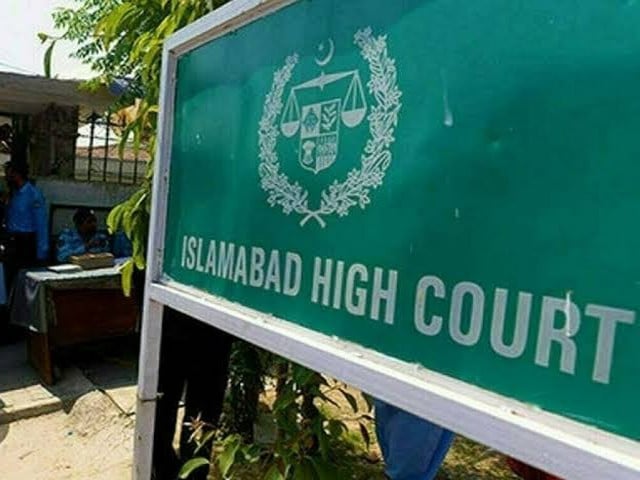
The Islamabad High Court (IHC) has issued a ruling that any action infringing citizens' fundamental rights constitutes a breach of the Constitution. This decision was made in response to a petition concerning a nationwide protest organized by the Pakistani Tehreek-e-Insaf (PTI) planned for September 27, 2026, with the objective of demanding the release of party founder Imran Khan and advocating for the supremacy of the Constitution.
The petition was filed by a citizen named Waqas Ahmed, who argued that the protest could disrupt the daily lives, traffic, and business activities in Islamabad.
The IHC, in a 37-page judgment, emphasized that while political parties are entitled to protest, their activities must comply with the Constitution and relevant laws. The court acknowledged the right to peaceful assembly but stressed that it cannot be exercised in a manner that infringes upon the fundamental rights of other citizens, such as their rights to life, liberty, dignity, free movement, trade, business, property, and access to essential facilities like hospitals, schools, courts, and workplaces.
The court rejected several objections raised by the Khyber Pakhtunkhwa (KP) advocate general. One objection concerned the IHC's territorial jurisdiction over provincial authorities operating outside Islamabad. The court dismissed this concern by citing Article 199(1)(c), which empowers a high court to issue directions when a governmental power or function is being exercised within or in relation to its jurisdictional territory.
However, the court clarified that this provision does not grant a high court general supervisory authority over another province.
Additionally, the court rejected the argument that the petitioner lacked an adequate alternative remedy under the Peaceful Assembly and Public Order Act, 2024. It noted that no application had been filed under Section 3 of the Act and observed that the KP chief minister and others who had announced their intention to march towards Islamabad had not adhered to the provisions of the Act.
The IHC's ruling was influenced by previous Supreme Court decisions, particularly the Faizabad sit-in case and the PTI's protest on May 25, 2022. The court highlighted the Supreme Court's judgment in the Faizabad sit-in case, which upheld the constitutional right to assemble and protest but allowed for restrictions when such activities disrupted the rights of others.
The court also referenced the Supreme Court's judgment related to the PTI march in May 2022, where the failure to honor assurances of a peaceful rally and non-obstruction of the Srinagar Highway had led to damage to public and private property, injuries to police personnel, and the subsequent invocation of Article 245 to deploy the armed forces.
Moreover, the IHC cited its own November 21, 2024 order, which had directed that no protests, rallies, or sit-ins could be held in violation of the Peaceful Assembly and Public Order Act. The court observed that this order had also been disregarded. During the proceedings, the court permitted the placement of electronic material on record, including video clips of the 2022 and 2024 protests, which depicted highly disturbing scenes of violence and aggression.
The court noted that the PTI had been in power in KP during both instances and that resources from provincial government funds were utilized to advance political objectives.
In conclusion, the IHC's ruling directed that no political party, political leader, provincial government, or public office holder could legally occupy roads, highways, interchanges, toll plazas, buildings, or similar public spaces in and around Islamabad in a manner that obstructs free movement or impedes trade, business, professions, or access to essential facilities.
The provincial governments and chief ministers were instructed to ensure that government resources, public funds, officials, vehicles, machinery, or equipment were not used directly or indirectly to facilitate any march, rally, or procession leading to Islamabad. Furthermore, the court emphasized that no public servant should be compelled, coerced, or induced to participate in such unlawful activities.
Written by urgent.news from Dawn - Pakistan's reporting — not their text. Machine-written — may contain errors; check the original before relying on it.
This story
This is one outlet's version. Read the fullest account.