'Human-caused warming helped prime slope for deadly Nepal-Tibet flood'
Researchers described it as a cascading disaster rather than conventional flood. Around 2 sq km of rock wall and glacier ice collapsed from Langtang Lirung at about 5,150 metres, plunging around 1,400 metres before turning into a debris flood. Water, rock, ice and sediment then travelled around 22km to Rasuwagadhi in seven minutes, leaving downstream settlements with almost no warning.
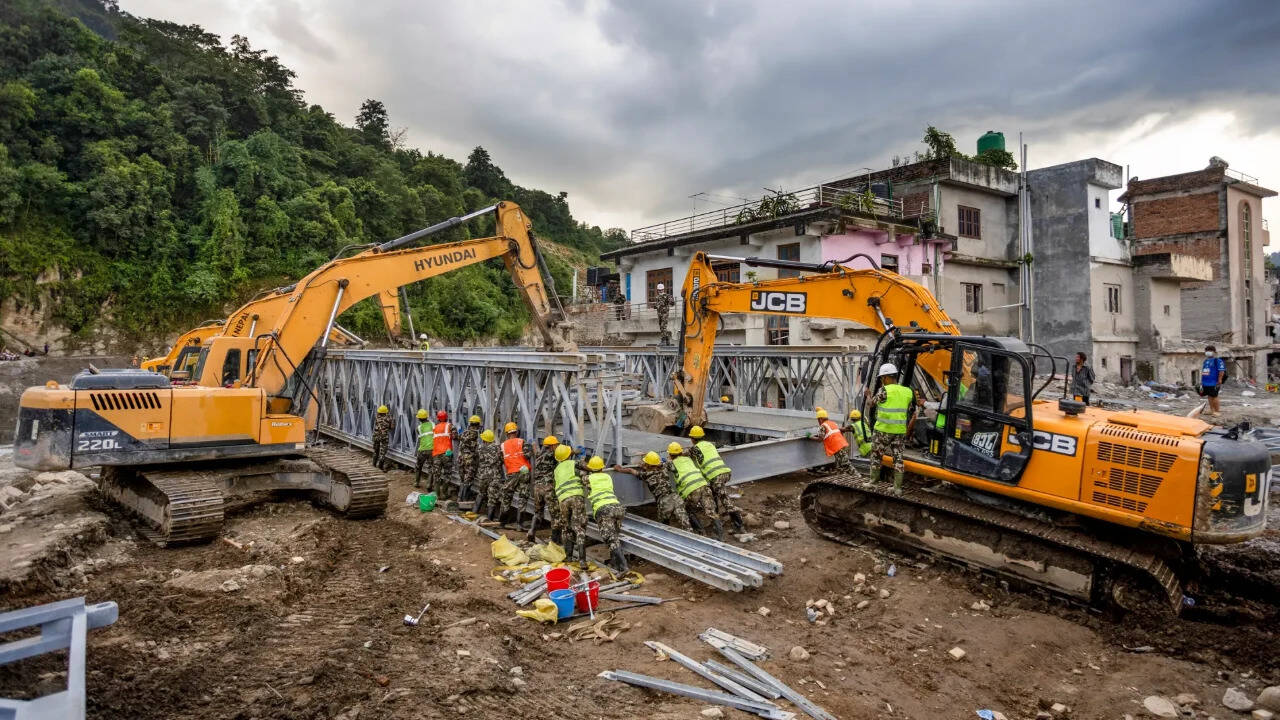
Human-induced climate change likely played a key role in destabilizing a rock-and-ice slope that collapsed in Nepal's Langtang region on August 26, triggering a devastating flood, according to the first scientific assessment of the disaster. The study, released Thursday, links decades of warming to a cascade of factors including permafrost thawing, glacier thinning and increased rain replacing snow.
Climate scientist Friederike Otto of Imperial College London told reporters, "There's absolutely no doubt that human-induced climate change played a role here in the preconditioning of the disaster through permafrost thawing, through thinning of the glaciers, and having more rainfall instead of snow." The Langtang Lirung peak, at 5,150 meters, saw around 2 square kilometers of rock wall and glacier ice collapse, triggering a debris flow that traveled 22 kilometers to the town of Rasuwagadhi in just seven minutes, leaving little warning for downstream communities.
The research found that long-term warming had pushed freezing levels higher, exposing previously frozen rock and permafrost to prolonged thawing, which weakened the material binding the steep slopes. The researchers estimated that human-caused climate change added around 1.5°C to temperatures during the July and August months leading up to the disaster.
Heavy snowfall in late 2025 may have contributed additional meltwater. Nepal's 2015 magnitude-7.8 earthquake could have also weakened mountain slopes, though researchers could not quantify its impact.
Written by urgent.news from Times of India's reporting — not their text. Machine-written — may contain errors; check the original before relying on it.