High tech projects dominate foreign capital inflows in Ho Chi Minh City
HCMC has successfully attracted billions of US dollar in FDI capital by late 2026, transitioning toward advanced technology sectors while establishing rigorous standards for sustainable macroeconomic growth.
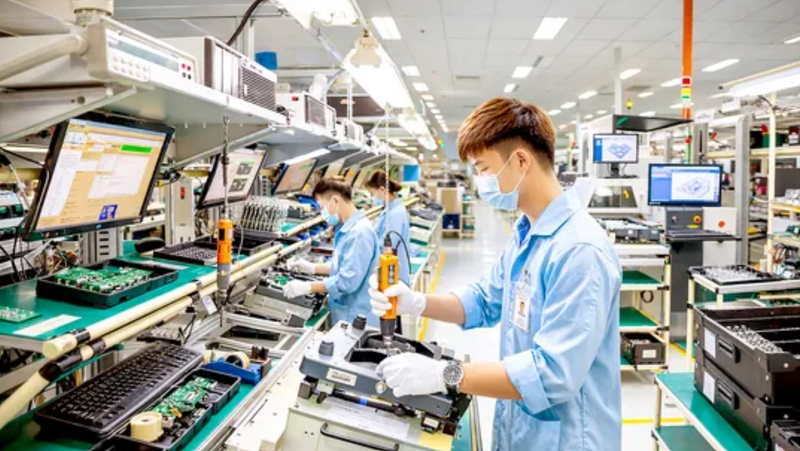
Ho Chi Minh City (HCMC) has attracted a record $10 billion in foreign direct investment (FDI) capital during the third quarter of 2026, marking a 167.3% increase from the same period in 2025. The city, which accounts for 91.5% of Vietnam's total FDI, has registered 1,364 new projects worth over $3.73 billion, along with $2.8 billion in capital from foreign investors.
The shift in FDI from traditional manufacturing to advanced technology sectors, including data centers, digital infrastructure, and services, highlights HCMC's transformation into a high-tech economic hub.
February 2026 saw the G42 Group from the UAE and a domestic joint venture led by FPT, Viet Thai, and VinaCapital sign a framework agreement to develop a $2 billion hyperscale data center. By late April, Saigon Hi-Tech Park (SHTP) attracted four high-tech projects with a combined capital exceeding $1.23 billion, focusing on data centers, biomedical technology, and smart electronic devices. TikTok invested over $1 billion into e-commerce and logistics, areas HCMC aims to lead in the region.
The Vietnam International Financial Center (VIFC-HCMC) has emerged as a crucial channel for capital flow, contributing to improved capital quality and economic restructuring. To capitalize on this momentum, HCMC must focus on policy solutions and shift from event-based investment promotion to pre-prepared project portfolios with cleared land, environmental assessments, power schemes, and incentive frameworks.
Authorities must develop comprehensive FDI project evaluation criteria examining linkage to domestic firms, supply chain participation, localization rates, land and energy efficiency, and environmental standards.
A dedicated monitoring mechanism for projects over $100 million, with clear progress milestones and accountable points of contact, is essential. Regular reporting on the realized capital-to-registered ratio, integrated with attraction targets, will serve as a macroeconomic management indicator. Adopting a cluster-based promotion model anchored to international financial centers, free trade zones, and high-tech/digital tech parks, rather than isolated projects, will ensure HCMC reaches its FDI target through a superior investment climate, skilled workforce, and robust support services.
Written by urgent.news from SGGP English Edition Business's reporting — not their text. Machine-written — may contain errors; check the original before relying on it.