Engineering Debt at Scale: Three Structural Failures in Production AI Systems
AI codebases rarely fail because of the model, they fail because of the plumbing.
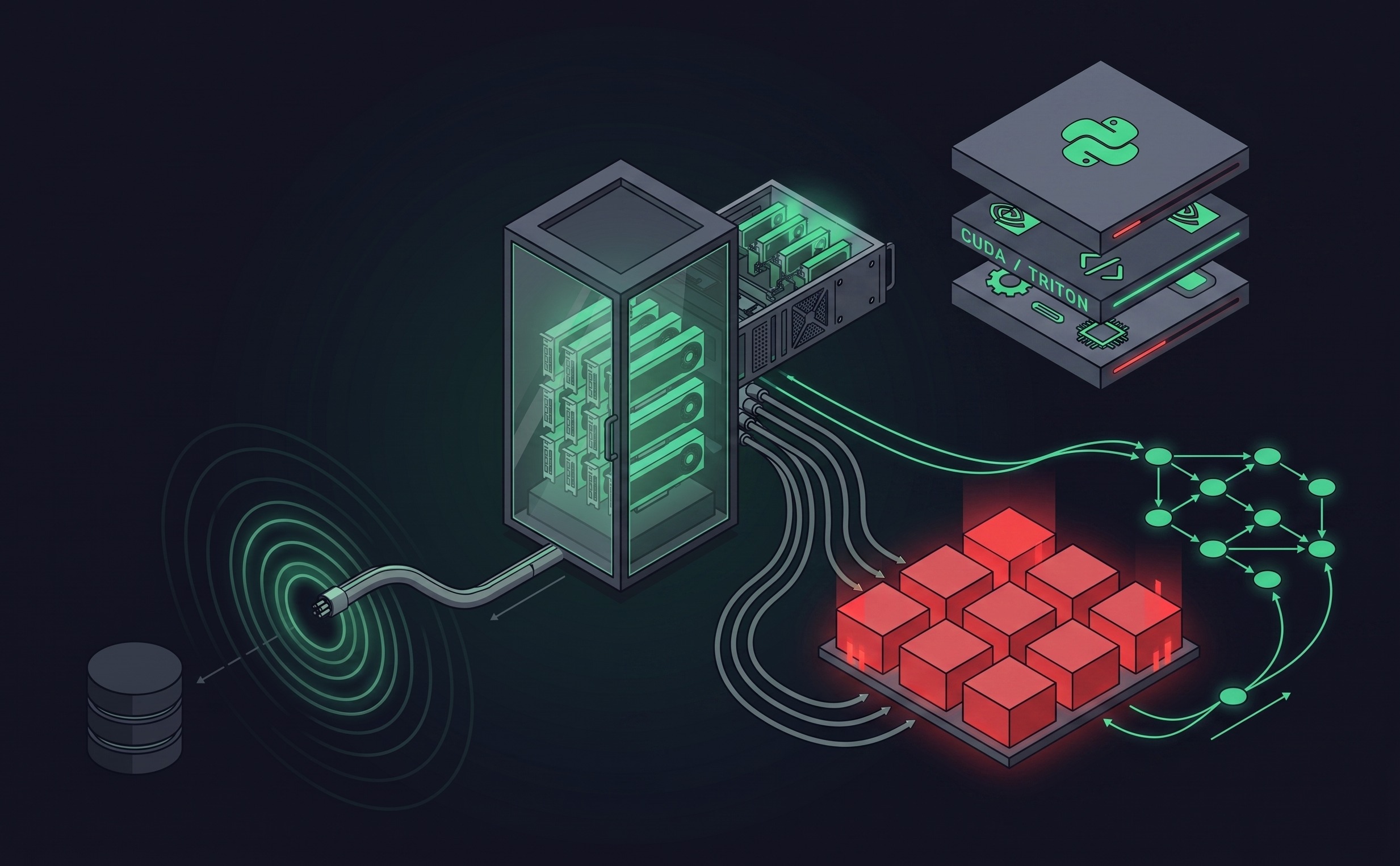
Three Architectural Flaws in Production AI Systems
1. Notebook-Driven State (Memory Bleed)
When transferring habits from notebooks to production, engineers encounter memory issues. In notebooks, global state allows loading large models and retaining them throughout the session. However, in long-running production systems like FastAPI workers or Celery consumers, this leads to unbounded growth and Out-Of-Memory (OOM) crashes.
To prevent this, treat models and caches as scoped, injected resources rather than module-level singletons. Constructor injection for models, devices, and allocators ensures nothing hides in module globals. Use scoped allocation, such as LRU ring buffers, instead of unbounded lists or dicts to prevent memory issues.
2. The Happy-Path Network Trap
AI systems often interact with external services like vector databases and model routers. Many repositories neglect to account for network limitations, assuming local, cheap, and infinite connections. This leads to thread pool exhaustion and cascading outages when encountering hung connections. To address this, implement timeouts, circuit breakers, and exponential backoff with jitter in network calls.
Use persistent clients and pooled connections instead of creating new connections for each request. Additionally, employ failure-safe retries and avoid exceptions that could lead to hidden risks like memory leaks.
3. Dependency Anarchy & Non-Deterministic Builds
Building AI systems on top of other libraries and tools can be challenging due to the intricacies of the Python packaging ecosystem and CUDA toolkits. Repositories may rely on flat requirements.txt files, lack locked transitive dependencies, and assume everyone runs the exact CUDA minor version. This results in silent format shifts and broken builds.
Address this by committing a hashed, cross-platform lockfile (e.g., uv.lock or poetry.lock), running CI across a real Python × CUDA/architecture matrix, and degrading gracefully on unmapped hardware. Use tools like conda or explicit driver-matrixed CI alongside Python dependencies to handle non-Python binary layers.
Written by urgent.news from HackerNoon's reporting — not their text. Machine-written — may contain errors; check the original before relying on it.