Could Chinese explorers have settled New Zealand before the Maori?
For generations, the narrative of New Zealand’s human settlement has held that Polynesian voyagers – the ancestors of the Maori – arrived and settled the islands in the 13th century, followed by European explorers in the 17th century. This timeline underpins New Zealand’s history and its political model. The Treaty of Waitangi, signed in 1840 between the British Crown and about 540 Maori chiefs,…
For decades, it has been widely accepted that Polynesian voyagers, the forebears of the Maori people, arrived in New Zealand during the 13th century. This settlement, followed by European explorers in the 17th century, forms the basis of New Zealand's history and political framework. The Treaty of Waitangi, signed in 1840 between the British Crown and roughly 540 Maori chiefs, marked New Zealand's founding document, enabling Britain to claim sovereignty and integrate the nation into the British Empire.
However, two independent researchers, scholar Sheng-Wei Wang and her team, are challenging this established timeline. Their investigation hinges on submerged shipwrecks, carbon-dated structures, and odd artifacts as evidence of a possible pre-Maori Chinese presence in New Zealand, dating back to around 1435-1436. Wang's theory suggests that a Chinese "treasure ship" fleet met its demise in New Zealand due to a meteorite impact.
Wang argues that Chinese mining and trading activities in New Zealand can be traced back to 190BC, which contradicts the generally accepted timeline of Maori settlement. While mainstream academics and Maori groups remain skeptical of these claims, Wang contends that acknowledging this lesser-known history could significantly alter New Zealand's national identity and enhance its relationship with China.
Wang presented her theory at the Commonwealth of World Chinatowns conference in Malaysia, pondering if Admiral Zheng He, who led seven extensive naval expeditions during the early Ming dynasty, might have died in New Zealand during his seventh voyage. Zheng is believed to have perished in 1433 in Calicut, India, after setting sail in 1431. However, Wang suggests that his demise could have occurred in New Zealand after a meteorite struck the Tasman Sea, southwest of New Zealand, during the expedition.
The evidence Wang presents includes magnetic anomaly surveys conducted by the late British surveyor, T.C. Bell, which identified 78 shipwrecks, 24 of them being super-junk or treasure-ship size, featuring unique double-fluke anchors. Wang proposes a route for Zheng's last voyage that would have led the expedition to America, then westward to New Zealand.
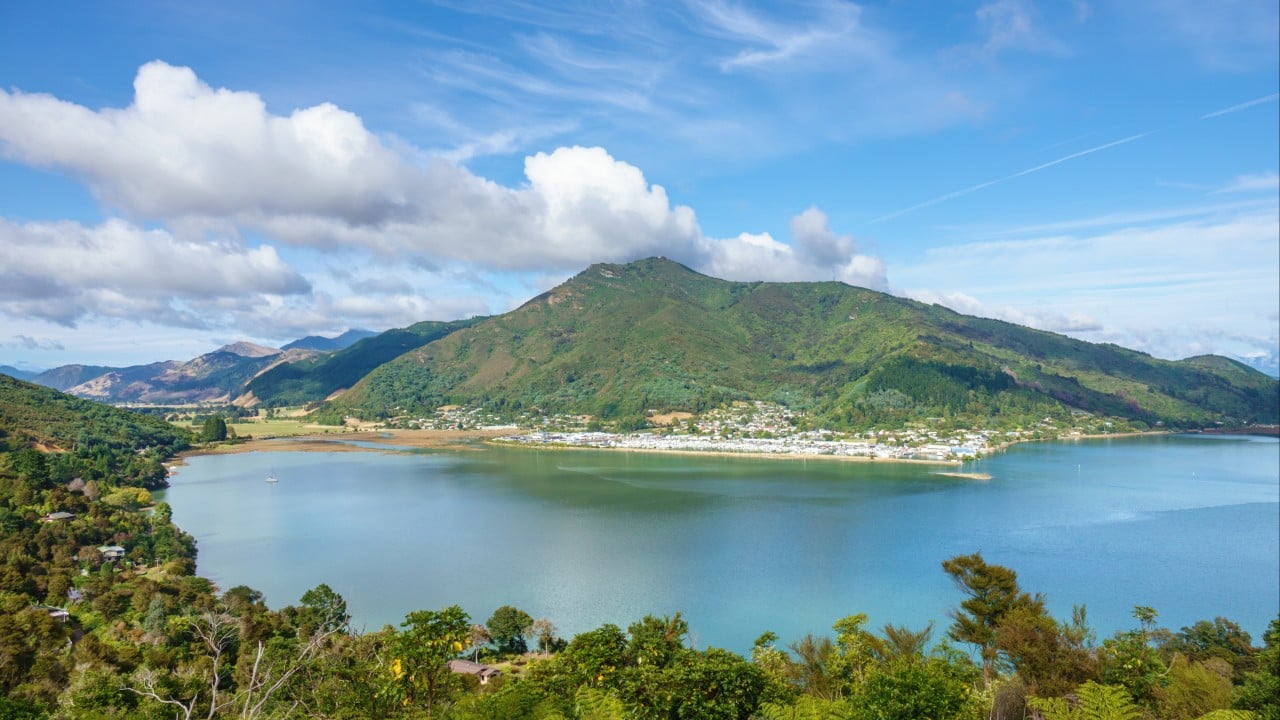
Carbon dating of various artifacts supports Wang's claims, revealing a Chinese presence in New Zealand dating back to as early as 190BC and continuing until the tragic meteorite event. Among these findings are a small wooden fort platform near Governors Bay on the South Island, dated to 190BC, and the presence of canals, smelter sites, and barrack blocks with Chinese characteristics.
Additionally, a massive gateway rock on the North Island, featuring an elephant petroglyph and linear script, is thought to be another piece of evidence, as New Zealand lacks native elephants and Maori had no history of carving such figures. However, Wang's claim is met with skepticism from Li Yuelin, a physicist and president of the Seven Seas Institute of Chinese Calligraphy, who asserts that the workmanship on the elephant rock carving appears primitive and its origin remains uncertain.
Written by urgent.news from Reuters Business via SCMP's reporting — not their text. Machine-written — may contain errors; check the original before relying on it.
This story
This is one outlet's version. Read the fullest account.